
The bees were in high spirits when I arrived. A group of beginner beekeepers had finished looking at David Pugh’s hive, and were floating about the apiary like drones.
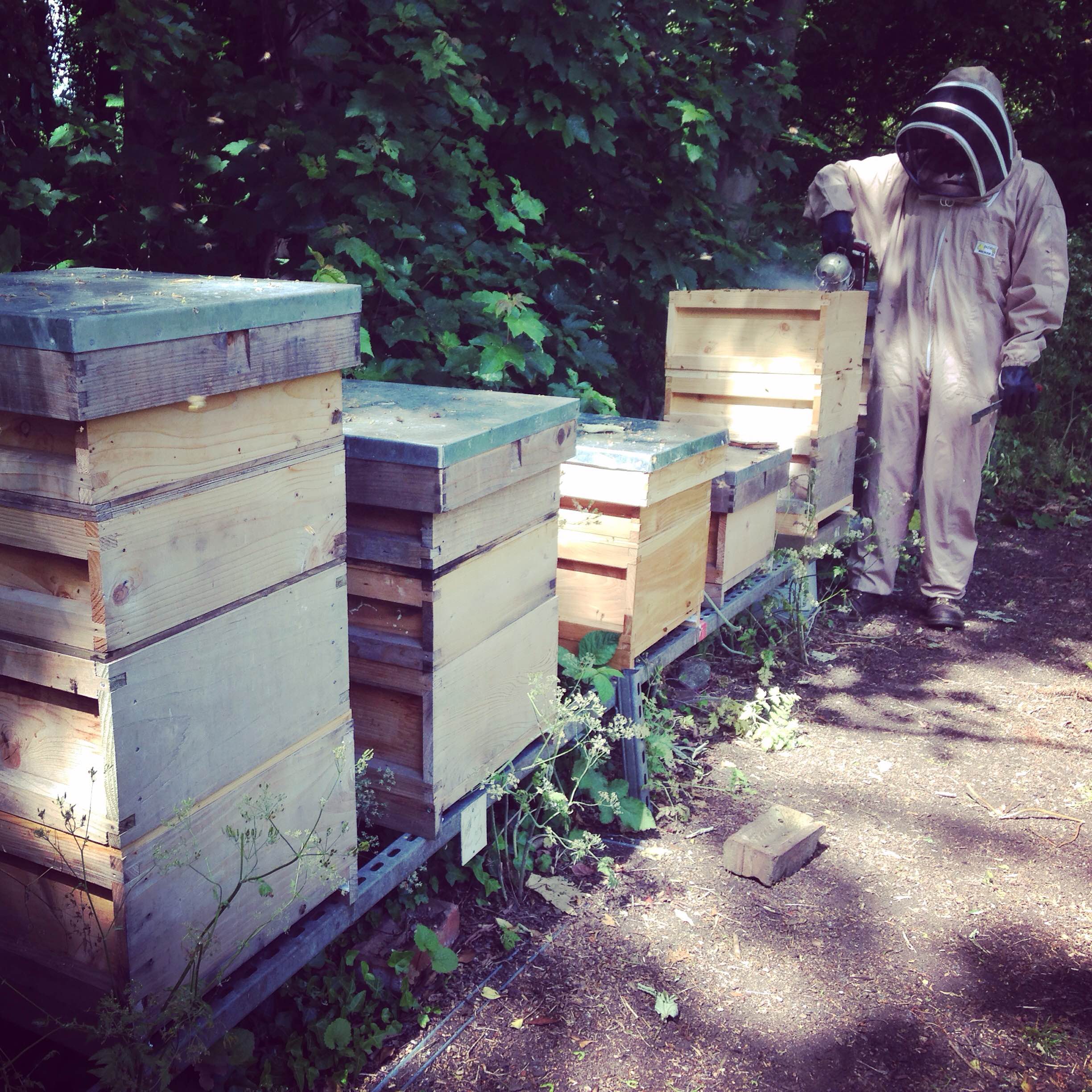
I took my time in lighting the smoker and opening up the hive belonging to our queen Melissa. After a few weeks spent away for illness, and with Emily at her allotment bees this weekend, it felt like my first proper inspection for a while. I was surprised to find that I needed to steady my nerves before getting on.
A heavy super lifted out of the way and I was inside the nest. The workers were busy, the drones were buzzing loudly, and the queen was spotted on the third frame that I pulled out. I was glad to see that I hadn’t lost my queen-spotting skills, but as the buzzing got louder I imagined the queen hadn’t recognised me. “Who is she?” The bees were saying, “What is she doing looking here?”

The beginners who had bought Chili’s and Chamomile’s colonies from Emily while I was away were asking questions. I really wasn’t much help, I’m afraid, as I was trying to focus my breath and my thoughts on what I was doing. They had found two queen cells with the old queen in the small colony, and were wondering what to do. I suggested that they could do an artificial swarm with the old queen if they were worried about the bees swarming (although the colony was small for a split), or wait till next week as more than likely the workers were trying to supersede the two-year-old queen, and as there were only two queen cells (unless they had missed more). The beginners had already decided to wait and see.
As the new beekeepers left, I finished inspecting the top brood box and then looked inside the bottom brood box for the two queen cells listed as found in our hive records two weekends ago. The cells were gone as I imagined they would be.

The two queen cells were found on my first Saturday back inspecting the hives with Emily, and when the Bailey comb change was underway. I suspect that either a small swarm was missed in late April to early May, or that the bees were starting to make preparations to swarm that were thwarted by the late Bailey comb change. Perhaps with the queen being in the top brood box and a queen excluder beneath, the bees were unable to swarm away unless they starved her smaller. I doubt the bees were trying to supersede young Melissa who is laying nicely, but it’s just guesswork as I haven’t been able to do much with the bees this spring and I’m still catching up.
I closed up the hive as best as I could, but the weight of the heavy super felt the crunch of some bees beneath.

Pepper’s hive was split during a beginners’ session last weekend. Interestingly that colony also was in the middle of a Bailey comb change with the queen found in the bottom box and the queen cells found in the top box. The top box was removed to make a new hive leaving the colony ‘artificially swarmed’ in a less than usual way.
Pepper’s bees can be feisty and, as they had already been split, and as I’m supposed to be taking things slowly for another few weeks, I stopped at one inspection hoping that the original colony wasn’t busy casting off.

At the apiary table Andy Pedley, John Chapple and Alan Gibbs were talking about the record number of swarms reported in London this year. What could be causing this? The rise in ‘middle-class’ beekeepers as one newspaper reported, the surge in inexperienced beginners, or ailing beekeepers like myself failing to check for cast offs? Perhaps it was due to the changeable spring weather with spurts of warm sunshine taking bees and beekeepers by surprise? Or had there been a sudden surge in nectar, because the apiary bees were bringing home a wealth of stores? It could be all of the above, although the newspapers often don’t reflect the world of possibilities in beekeeping.
I left the apiary as Tom was leading Jochen to see the hives. I had more bees waiting for me at home, as well as fish and birds.
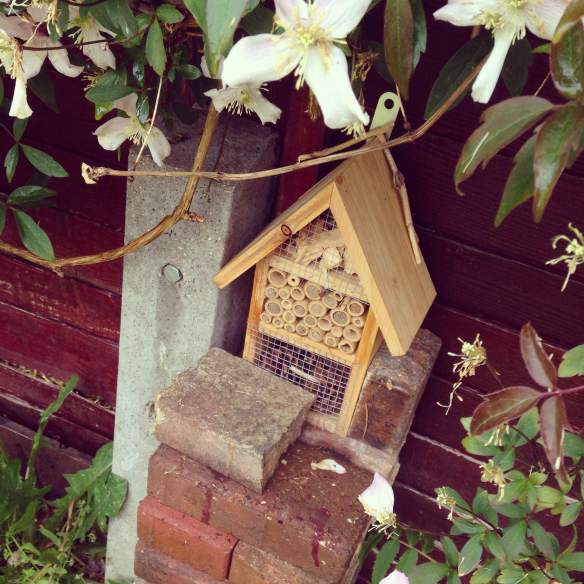
We have bees at the bottom of the garden, which is something that I’ve dreamed about since I first started beekeeping. Our bees aren’t honeybees, they are red mason bees, I think!
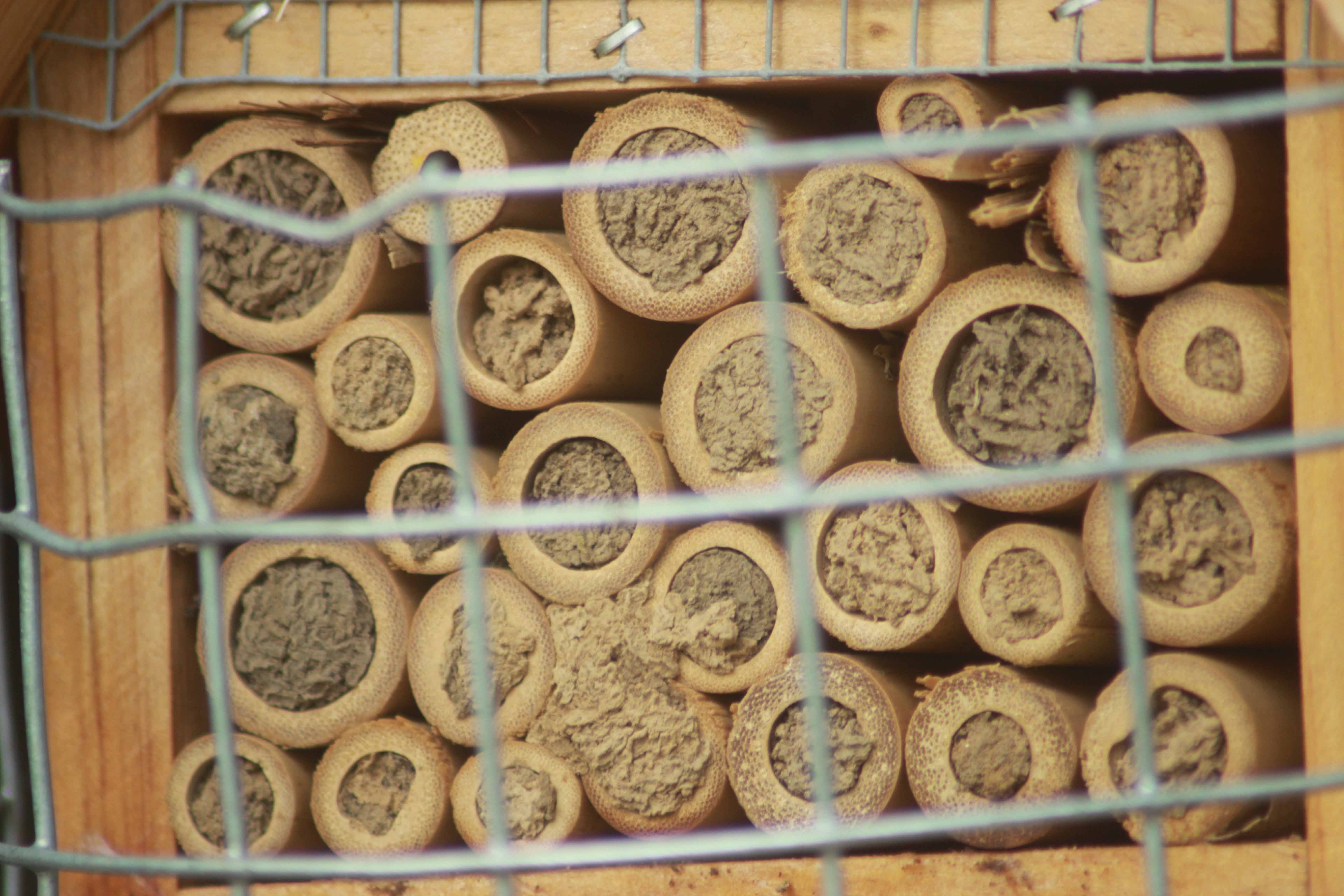
The bug house that I planted beside the plot of earth, which will be next year’s vegetable patch, has taken up residents. The mason bees moved in a few weeks ago and have been so busy occupying each tube that they are now looking for more holes in the two sheds for homes. I’ll have to buy another bug house!

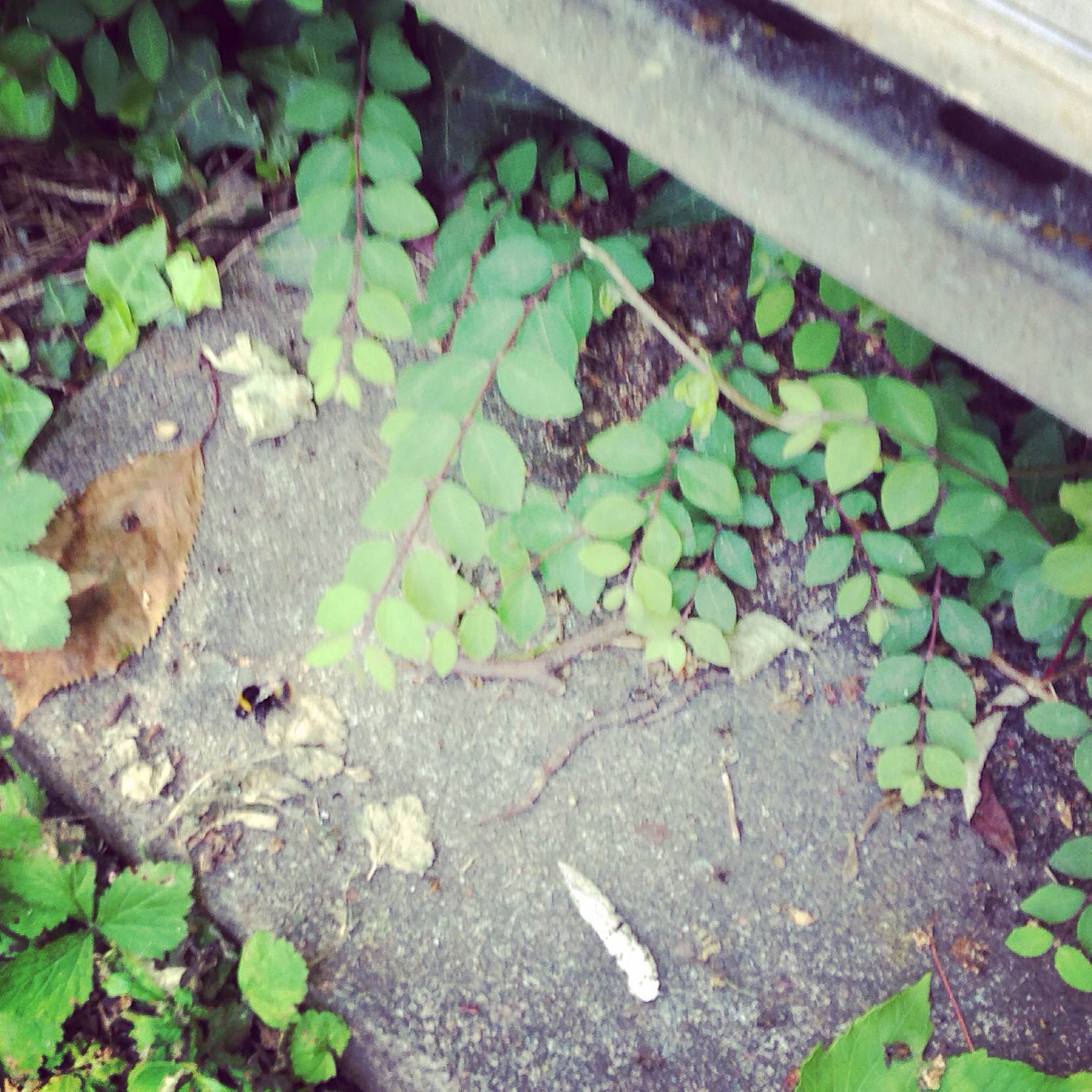
It’s good to see Myrtle’s Palace so well used and I’m learning lots about my new bees, the solitaries, along the way. My early morning walks around the garden have revealed that red mason bees like to have a lie-in…

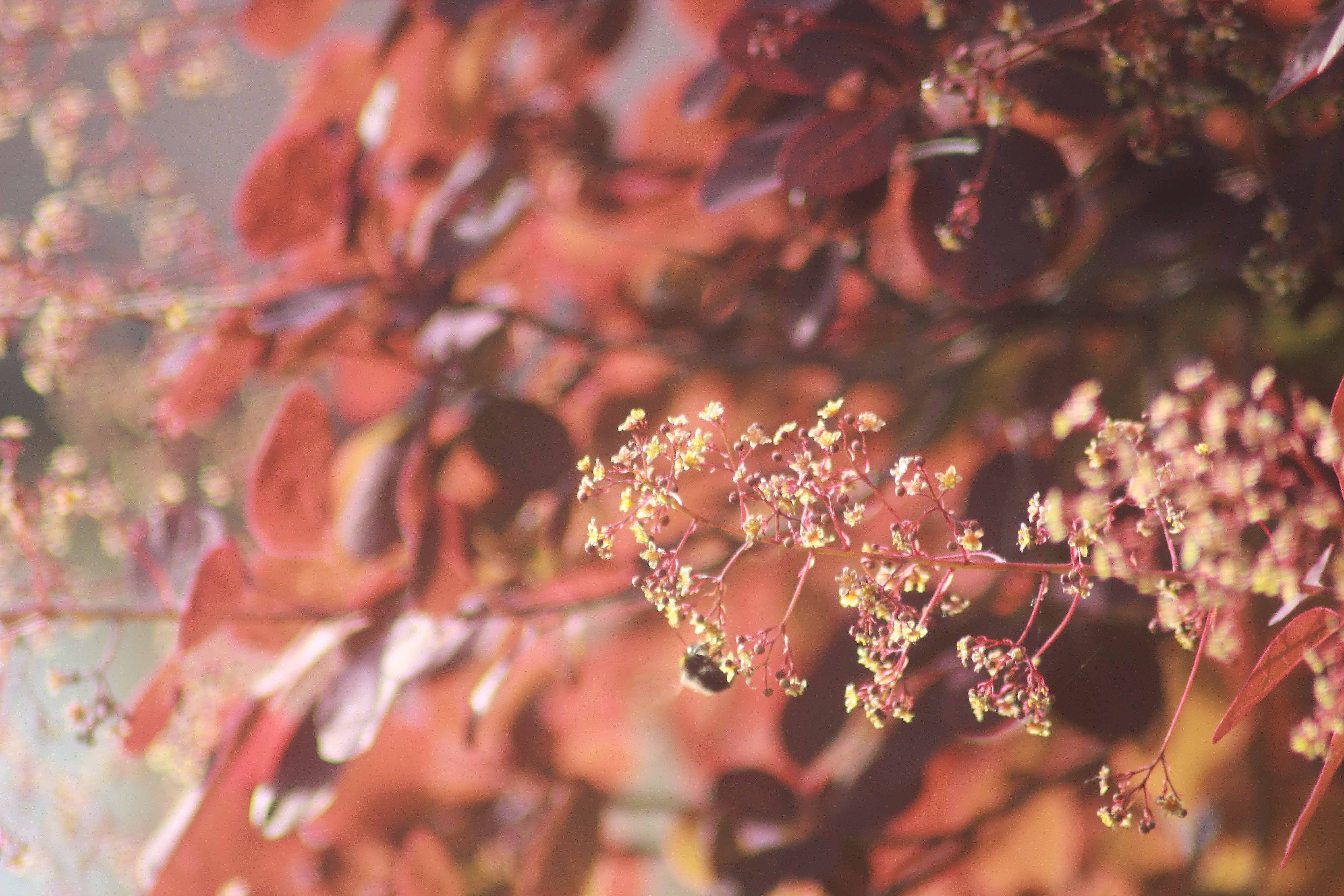
And apparently the bees lose their red colour as they get older, becoming more yellow…

I also learned one evening, after finding a few ants casually walking in and out, that bug hotels need some keeping too. A night spent reading how to care for a solitary bee home, including how to protect it from predators like ants, spiders and birds, had me awake early the next day to rebuild the stand higher up with a water tray ‘moat’ and Vaseline-smeared bricks. This seems to have done the job of deterring the ants for now.

The fish at the top of the garden are doing well. They had a visit from two local garden and pond fish experts, Sylvia and Paul, who said the pond was doing just fine. Sylvia kindly brought some cuttings of a yellow flower from her pond to put into ours, because “it grows beautifully and the fish love it”.

I was relieved to hear that I’d been feeding the fish and topping up the water levels correctly. The garden has buckets to collect rainwater to help top up the pond and I use Fresh Start when topping up with tap water, though Sylvia also reassured me that leaving a bucket of tap water to stand outside for a few days would make “the chlorine fly away”.

The collected rainwater is also useful for feeding the Venus flytraps in our kitchen, one of which is now flowering.

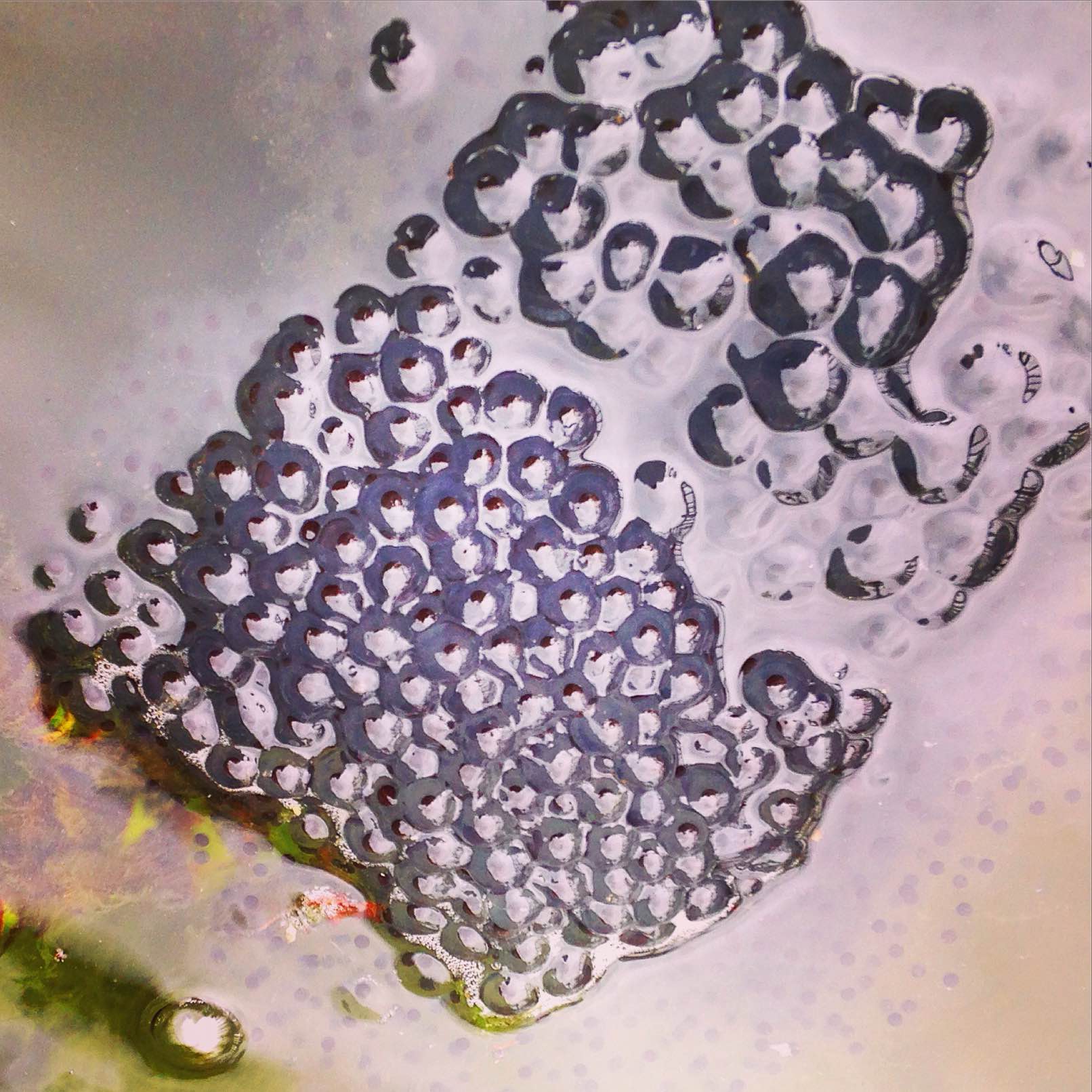
I discovered that we have a hidden well, which Sylvia and Paul thought had once been a frog pond. “Look out for frogs in the fish pond” they said when I told them about the frog spawn, “the frogs can strangle the fish if they start competing for space or want something to mate with!”

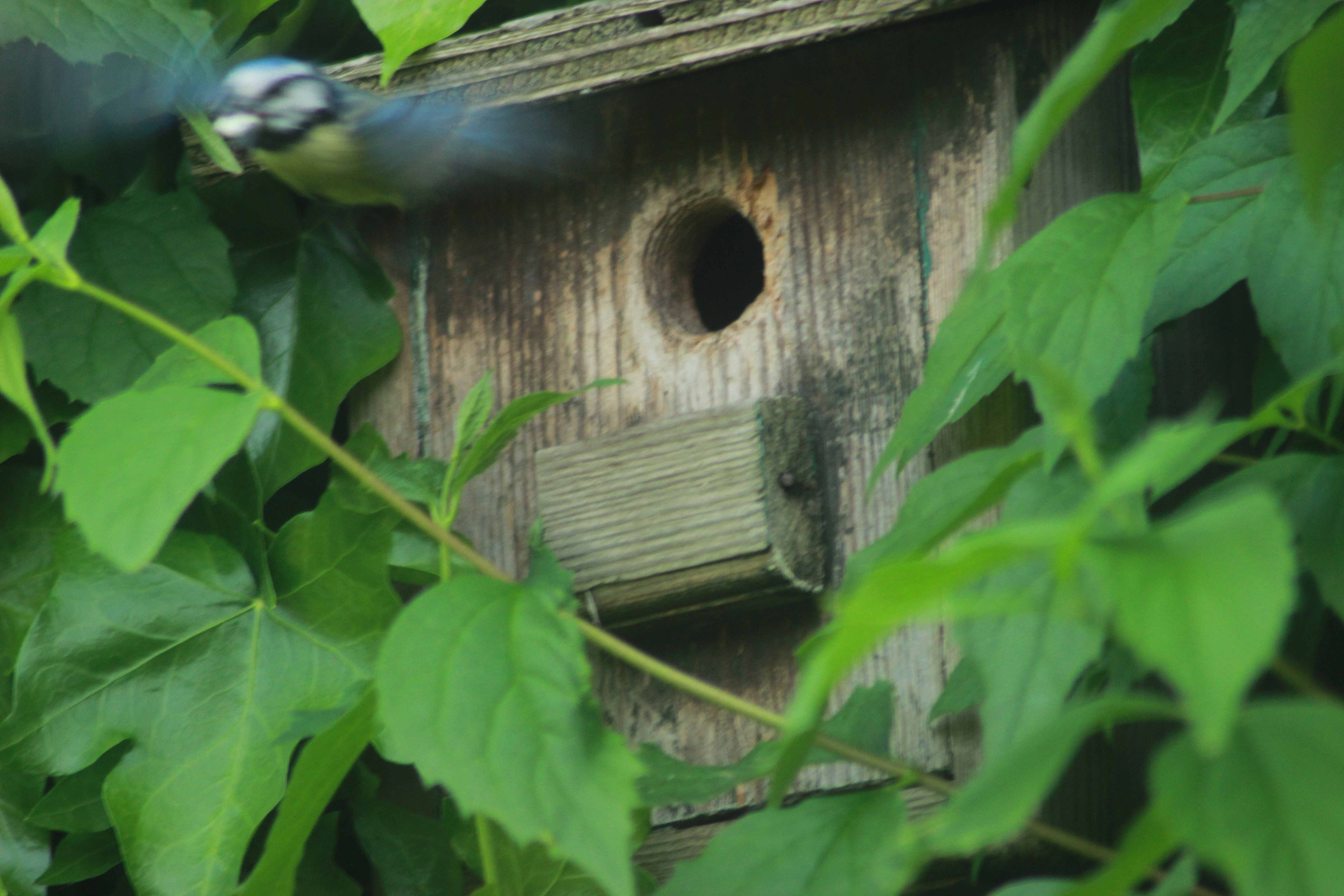
A stroll around the middle of the garden and past the blue tits’ nesting box (I’ve not been fast enough to get a picture of the birds coming in and out) allowed Sylvia and Paul to helpfully point out weeds…

…and give me some useful gardening advice, in particular how to control our rampaging bamboo and how to repair the Yorkshire stone paving. “Don’t throw it away or give it to me!” said Sylvia.
There is a world of discovery waiting for us in the garden, I wish that I had more time to spend there. I’m so grateful for Sylvia’s and Paul’s visit and for their generous advice. I’ve given them details of visiting our apiary in return.

My next post will be in two weeks’ time bringing more stories from the hive and unlocking more secrets from the garden. Thank you for reading and have a wonderful week ahead.







 Mrs Apis Mellifera