Olympic Queens!

A spectacular opening ceremony on Friday night started the London 2012 Olympic and Paralympic Games in style. The Queen made her acting debut leaving Buckingham Palace with James Bond to climb aboard a helicopter and arriving at the Olympic Stadium for a surprise entrance. My family and me watched in astonishment – it was an Olympic gold moment!

Excitement was building last week as the Olympic Flame drew nearer and those strange London 2012 mascots, Wenlock and Mandeville, were suddenly everywhere. I took a stroll through Regent’s Park one evening after work and spotted an American tourist sitting in the sun with Wenlock.

There are Monsters in Regent’s Park, but don’t worry. Someone told the Americans.

Good fortune shone on the first day of the Games with glorious sunshine and I hoped that luck would shine on our bees too. The celebrations had reached the apiary where a small crowd gathered and three cakes were on offer. I enjoyed munching lemon cake baked by a novice beekeeper before visiting the hives.

Thomas was inspecting a hive from one of the Osterley nucs, which after an uncertain start is doing well. Thomas is a great believer of using insulation to help the hive stay warm, particularly for small colonies: ‘A hive needs to maintain a temperature of around 30 degrees which is quite hot. The warmer it is inside the hive the more bees can fly out and forage, rather than stay at home and heat the colony.’
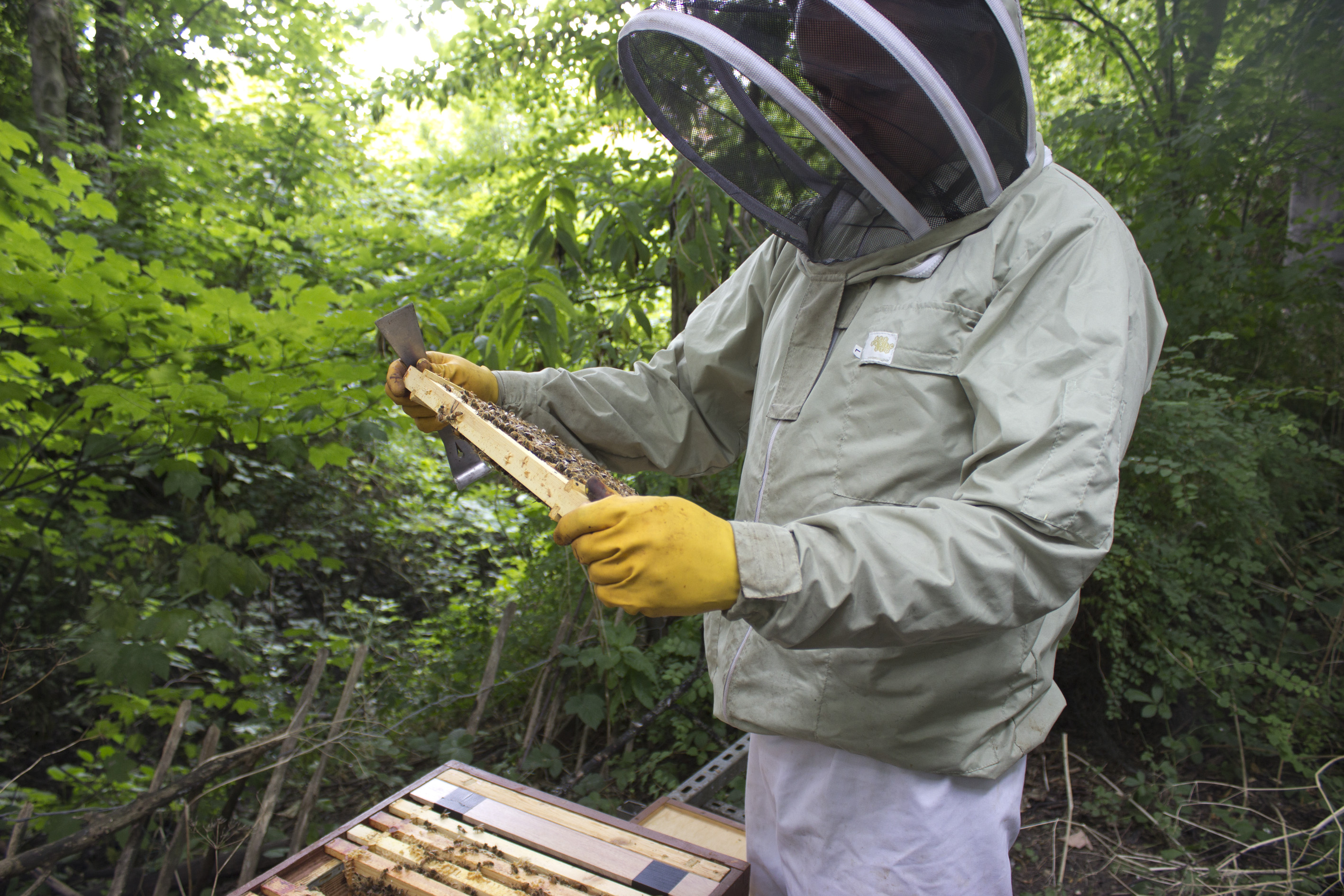
Thomas is a great beekeeper who has a very natural way with bees.

An insulating dummy board helps this small colony that was recently transferred from a nuc to stay warm inside a National brood box.
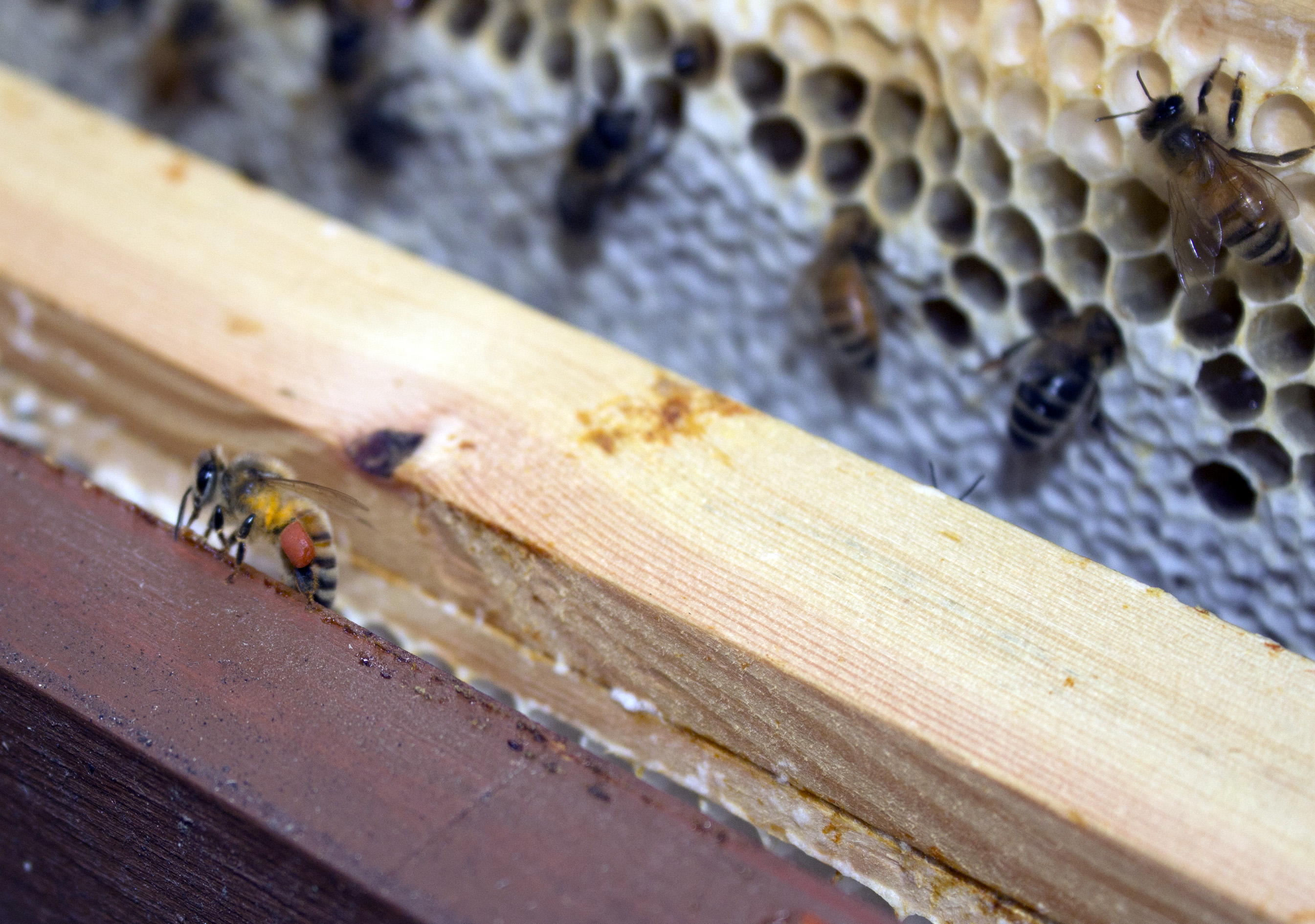
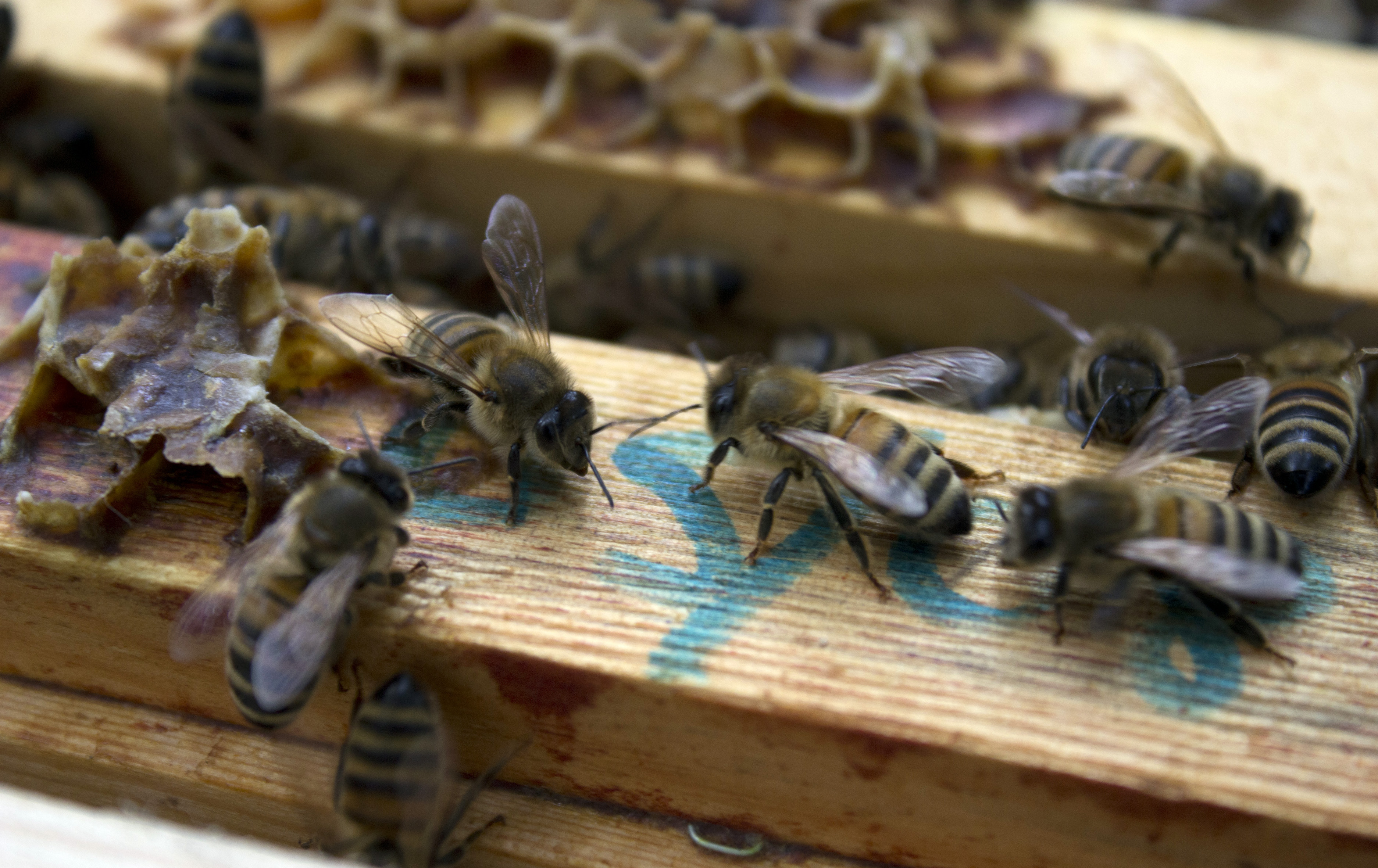
This little bee has flown home with beautiful terracotta-coloured pollen in her baskets. Our pollen chart suggests she has foraged dahlias.

Happy to see the Osterley bees settling in, we went to check on our new queens. Both Neroli and Ginger were superceded about a month ago, causing another setback for the colonies because of the three- to four-week period for a virgin queen to hatch, mate and begin to lay.

I opened the hive formerly ruled by our Jubilee queen, Neroli, now ruled by an Olympic queen! The bees had not made much progress in terms of brood and stores since last week, probably due to replacing the queen. A beginner spotted her on a frame looking for cells to lay eggs. She seemed nervous of the crowd, flexing her wing muscles, so I carefully returned the frame in case she took after her flighty great aunt Rosemary! We didn’t see eggs but there were young larvae curled in their cells, so the queen is laying. We have named her Myrtle.

A few frequently asked questions

The beginner beekeepers are very curious about our bees and ask lots of questions. I thought it might be useful to start putting frequently asked questions here.

FAQ: What are you looking for?
The most common question is: ‘What are you looking for?’, which is on the syllabus of the British Beekeepers Association basic assessment. The answer depends on the time of year, although Ted Hooper’s advice is very useful and is included on my study notes.

1.4 the reasons for opening a colony
Here I refer to Ted Hooper’s advice:
‘Every time you open a colony you should ask these five questions. They are vital and should be memorised.

  1. Has the colony sufficient room?
  2. Is the queen present and laying the expected quantity of eggs?
  3. a (early in season) Is the colony building up in size as fast as other colonies at the apiary? b (mid season) Are there any queen cells present in the colony?
  4. Are there any signs of disease or abnormality?
  5. Has the colony sufficient stores to last until the next inspection?’

FAQ: Do the bees get cold when the hive is open?
A visitor asked if the bees can get cold during inspections – the answer is ‘yes’. A routine hive inspection should take between 10–15 minutes so that the colony does not lose too much heat. The hives at the apiary are used for training which means that inspections may take longer than usual.

If the colony is small (or bad tempered) or if the weather is cool, use a cover cloth or clean tea towel to shelter half the brood nest during an inspection. This helps to keep the colony warm and makes sure less bees fly out to say hello!

FAQ: Why should you put brood frames back in the same order?
It takes a colony two days to recover from a hive inspection and repair any damage that is caused by the beekeeper. So it is important to handle the hive gently and carefully, and to avoid disrupting the nest by putting brood frames back in the same order and facing the right way. (However, I aptly demonstrated my clumsiness after saying this by accidentally dropping one side of a frame. Luckily there were few bees on it and they didn’t seem to mind.) Inspections should be no more frequent than once a week during swarming season and perhaps fewer at those times of the year when it is less necessary to inspect the hive.

Emily shows our bees to the beginners.

Emily opened Ginger’s old hive which is now ruled by our second Olympic queen, Mandarin. The bees were irritable and had not done much to draw out comb and collect stores. There was little worker brood and the drone brood was peppered in the middle of the frames when it should be on the outer edges.

Before we could fear the worst, Thomas advised us to wait another week. It was good that he was there to look over our shoulders as we were reassured that the new queen may need more time to settle in. Mandarin was running all over the frame, but Thomas said that she may be the progeny of drones that run about a lot and has inherited this trait.

Myrtle and Mandarin make the sixth and seventh queens this year – Rosemary, Lavender, Myrrh, Neroli and Ginger were superceded, de-throned or swarmed – presenting a challenge to our hives and making it difficult to track hive records. I have started a family tree to trace the generations of our bees: the Rose Dynasty and the Osterley Dynasty!

The family tree of our queens since Emily and me became hive partners last year. Although as my friend Chris would say, that I have made this perhaps proves beekeeping like many hobbies straddles the line between ‘hobby’ and ‘mental illness’…

It will fall to the Olympic queens to get both colonies through winter and we’ll be closely observing that the hives progress sufficiently in August. Ted Hooper says that late summer queens can be good news for colonies. The virgins mate later in the year and continue laying for longer to produce younger bees for overwintering. Hives with late summer queens often overwinter better than hives with spring queens, which was proven by Rosemary and Lavender this year. Rosemary, our spring queen, came out of winter a drone layer, while Lavender, our July queen, came out of winter laying strong.

There is a lot to know about bees and each year we learn more.

Inspections done for the day we went to watch the Italian bees crowding at the entrance of John’s hive. Italian bees love to fly and there is always a lot of traffic. It is the job of the guard bees to protect the hive from intruders and to make sure that the only foragers who enter have the ‘right smell’ of the colony. Occasionally, foragers from other colonies try to go inside because they lose their way and will display submissive behaviour or bribe the guards with goods of nectar and pollen. Drones are allowed to enter any hive.

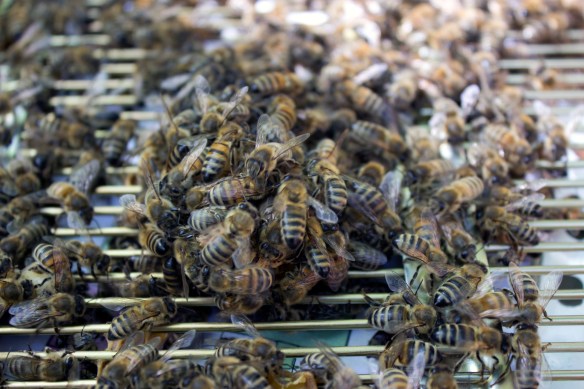
I noticed these bees patiently waiting to be let in by the guards at the nest entrance (see the bee looking out on the other side of the mouse guard). Are they returning foragers or drifters trying to bribe their way inside?

The bumblebees were also out on her majesty’s secret service yesterday – on a mission to collect lots of lovely lavender nectar and wildflower pollen. I spied on them for a while and took some photos. Notice the smaller honeybee foraging with the bumbles in the third picture below. To paraphrase Bond, ‘Hope you enjoy the show’.

Poems written at the hive

‘The smaller bees are kittenish.
Tapped hive, the noise continues long.
Supposed to be a sign of health.
The drones are vast, bothersome.’

I6TH JULY

As the beekeeping year draws to an end I have been reading Sean Borodale’s Bee Journal, a collection of poems written at the hive. The poem-journal gives an account of the relationship between a beekeeper and his first hive. It is intimate and beautiful storytelling.

The journal starts in May with the collection of a small nucleus hive, charting the life and death of the colony and the arrival of a swarm two years later. Each poem freezes a moment in time like bees frozen on the comb. Queens, drones, summer, honey, wasps, spiders, winter, varroa… it is all here: ‘All day they have dragged in jewel-pins of nectar’.

As the seasons pass, the colony casts its spell upon the beekeeper who, like many before him, reorients his life around the hive. ‘Bees at the bottom of the garden’ becomes ‘the house at the bottom of the apiary’ as Borodale begins to see the world through the multifacted eyes of a bee: sources of pollen, waggle dances, locality of water, the position of the sun.

As a beekeeper I understood the author’s initial curiosity and fascination, recognised as this turned to awe and wonder, and smiled as it became affection. The poems gave me nostalgic feelings for my first summer of beekeeping with my first hive and my first queen, the long dark-gold Jasmine.

‘Jewellery box: I did not expect this strange calmness.
Eyes go steady with study of larvae,
womb, light, wax, bee eggs.

Still I have not seen the fountain of all,
where is
she?
Must learn to find this instrument by heart.’

30TH MAY: EXAMINING BROOD

Non beekeepers will love Borodale’s exquisite description of life inside the hive and beekeepers will enjoy his expression of familiar thoughts and emotions. A poem about inspecting the brood nest made me remember my first visit. Like the author, I found a strange calmness in holding before my eyes the frame of bees, eggs, larvae, comb – and my mind was consumed with the thought of finding her. Borodale doesn’t name his queens, but she is never far from his thoughts.

The author’s observation of the bee world is poignant. As a keeper of bees he becomes more aware of the changing seasons, more observant of what is in flower, and more interested in local weather patterns. The single-line entries for March are simply: ‘Catkins’ (1st March) and ‘Snowdrops’ (7th March); just as my thoughts in spring this year were ‘Daffodil’ and ‘Crocus’.

My favourite poem is of the little bee drinking water…

‘I assume this creature is my bee.

There it is: one pulsing abdomen;
light brown, familiar, gently striped. Tongue
at drinking water.

Frail, how it concentrates
not solely for
itself.
It makes one part.’
26TH JULY: IN THE GARDEN

I shared this poem with a beekeeping friend. He appreciated ‘the author’s perception of the paradox of individual drinking, but being one part of the organism, while the organism would not exist without its components…’ This is something that all beekeepers come to grasp but it never ceases to amaze.

I went through a box of tissues as the author gives a stark account of the death of the hive and releases an intense feeling of loss, ‘I go to the shelf where the honey lives, and say, this is testament: bees did exist’. All beekeepers who have lost a hive will know what he is feeling. The discovery of Jasmine’s dead city after our first winter was devastating: grief, guilt, disappointment, frustration.

But there is also hope with the arrival of a new swarm and a surprise revelation of the circle of life.

This is Borodale’s debut as a poet as well as his genesis as a beekeeper, and you can tell that there is a deep discovery taking place. Bee Journal is a soulful reflection of a year in beekeeping that captures the thoughts and emotions of a novice beekeeper. I am even more impressed that the author wrote this poetry in veil and gloves, while I struggle to make notes for our hive records!

‘bees batting this pen and poem’s paper.
Bee on my gloved hand,
heads of bees brushing over.’
25TH JUNE

Related links

Bee Journal
Sean Borodale
Published by Jonathan Cape, Random House; London: 2012
ISBN 978-0-224-09721-5

A useful tip from my hive partner, Emily, if you access Amazon via this link on the Bumblebee Conservation Trust website they receive a donation worth 8% of the total purchase, at no extra cost to you. The Bumblebee Conservation Trust says: ‘Last year, we raised in excess of £3,500 through this Amazon associate scheme. That’s a lot of wildflowers for our bees.’

Also read:

The Urban Beekeeper and Bee Journal: review by Ian Douglas
Sean Borodale biography

More goodbeereads!

A Honey of a Good Book: review of The Beekeeper’s Bible by The Garden Diaries
‘Travels in Blood and Honey: Becoming and beekeeper in Kosovo’ review by Adventuresinbeeland’s blog
On the trail of honey and dust in Rome

My book reviews are collected on my blog page here.

The Apocalypse and what happened next

In what has been a good news, bad news week, here’s the good news – I passed my British Beekeepers Association (BBKA) basic assessment! Andy emailed our group: ‘I had news last night that ALL of you passed the basic assessment… well done all. You’ll get letters and certificates and a badge, and all sorts of things!’

What’s next? BBKA examinations run throughout the year and exams for the next set of modules are held in November. I’d better keep my books out. The module on honeybee behaviour sounds particularly interesting.

Unfortunately, The Guardian reported this week that this year’s bad weather has proved almost apocalyptic for UK wildlife: ‘Apocalyptic’ summer for wildlife – except slugs, says National Trust. The articles says, ‘Conservationists fear local extinctions of insects, as wet conditions leave many species of plants and animals struggling.’

This has been a hard year for our bees with rain making it difficult to forage and failing queens causing set backs throughout the season.

While our bees have struggled to survive the rain and failing queens, they have had a little help. Emily and me often wonder about the bumbles and solitary bees who don’t have keepers to feed them sugar syrup and insulate their homes. It seems butterflies, bats, birds, amphibians and wildflowers are having a bleak time too. Let’s hope for an Indian summer.

With this in mind, I arrived at the apiary this afternoon expecting to see two colonies on the verge of collapse. We lost our Jubilee queen, Neroli, at the start of July with the discovery of two emergency queen cells inside her hive. What happened to her is a mystery as she appeared to be laying well. Emily thought the queen may have been accidentally squashed during an inspection, as sometimes happens, however a video of her last sighting showed the queen safely returned to the hive. We can only speculate what happened, but the bees know best and had decided to make a new queen.

Ginger’s hive was also in a state of regicide. The bees had overthrown their drone-laying ruler and a new queen had torn down the cells of her sisters.

Emily and me were nervous what we would find in our hive this week…

This is all very late in the season. The bee year ends towards late August/early September as the colony prepares for overwinter: workers evict drones, queens slow down laying, and the hive is propolised. It’s not an ideal time to make new queens, but Emily and me could only wait a few weeks as the new girls settled in.

So we couldn’t have been happier today to find two queens in our hive, both mated and one already laying eggs. Well done, girls! Our bees have persevered through this year’s misfortune and deserve the best chance of surviving over winter. John was there to have a look at our hives and he was positive that the signs were good for both queens.

John Chapple is a well-known authority on beekeeping and he gave our new queens the thumbs up.

Of course, now we need to think of new names for our late July queens. Emily and me coronate our queens after essential oils, which began because I am an aromatherapist but seems fitting because of the close relationship between flowers and bees. The names should reflect steadfastness and determination but also the gentle nature of our queens and, as Emily pointed out, that they are orange! I have been thinking about the essential oils of myrtle and mandarin, which are gentle oils but effective in their actions.

I spotted two worker bees with shiny orange propolis on their legs – a sign that the hive is already thinking about winter as propolis is used to both disinfect the hive and insulate it. Emily pointed out that this will also be an interesting month for pollen. We keep a pollen chart in the roof of our hives to identify the trees and flowers that our bees visit.

Emily and me keep a pollen chart in the roof of our hive to identify the different-coloured pollen brought home by our bees.

There was also a bit of show-and-tell at the apiary this afternoon as Thomas had brought along two frames from his hives. Thomas emailed me this interesting nugget of information during the week after making a discovery in his hive:

‘The angle of worker cells slope at approximately 8 degrees and comb for honey at 20 degrees, although this only works on natural comb because wax foundation is angled at 8 degrees so the bees think they are building worker comb from the size of the printed foundation. Yesterday, as I have extracted some honey, I checked the super frames with natural comb and there was a noticeable difference in the angle. I may get the bees to clean up a couple of contrasting frames, as I have some supers with foundation, and bring them to the apiary as I think people may be interested.’

We were interested. The honeycomb drawn on wax foundation was a perfect uniform structure but the natural comb was irregular with cells of various sizes. Thomas thinks that there was a sudden flow of nectar and the normally meticulous worker bees made the honeycomb in a great haste! It was a fascinating insight into life inside the hive.

Honeycomb drawn out by bees on a base of wax foundation, which encourages them to build uniformly-sized worker cells at an angle of 8 degrees.

Honeycomb drawn out by bees without a base of wax foundation – completely natural – and made in great haste as shown by the irregular shapes.

A mini heatwave is forecast this weekend and everyone left the apiary fairly early to enjoy the sunshine. But not before we finished eating Emily’s strawberry-and-raspberry cake, still warm from the oven! The best kind of cake!

Emily’s delicious homemade strawberry-and-raspberry cake! Perfect for a spot of beekeeping on a sunny Saturday afternoon.

Taking the BBKA basic assessment on a rainy Sunday afternoon

They say that your third year of beekeeping is when everything starts to go wrong. This is my third year as a beekeeper and things have not gone well, so I decided it was time to test my competency and take the British Beekeepers Association (BBKA) basic assessment.

The BBKA basic assessment is for beekeepers who have kept a hive for a year and puts to the test your practical skills and basic knowledge about bees and beekeeping. If you have a bee brain, like me – the size of grain of sugar – the syllabus looks daunting, but as the BBKA says, ‘It merely lists the basic things which all beekeepers should know’. Luckily, I benefit from being a member of an association that runs revision classes for the BBKA basic assessment.
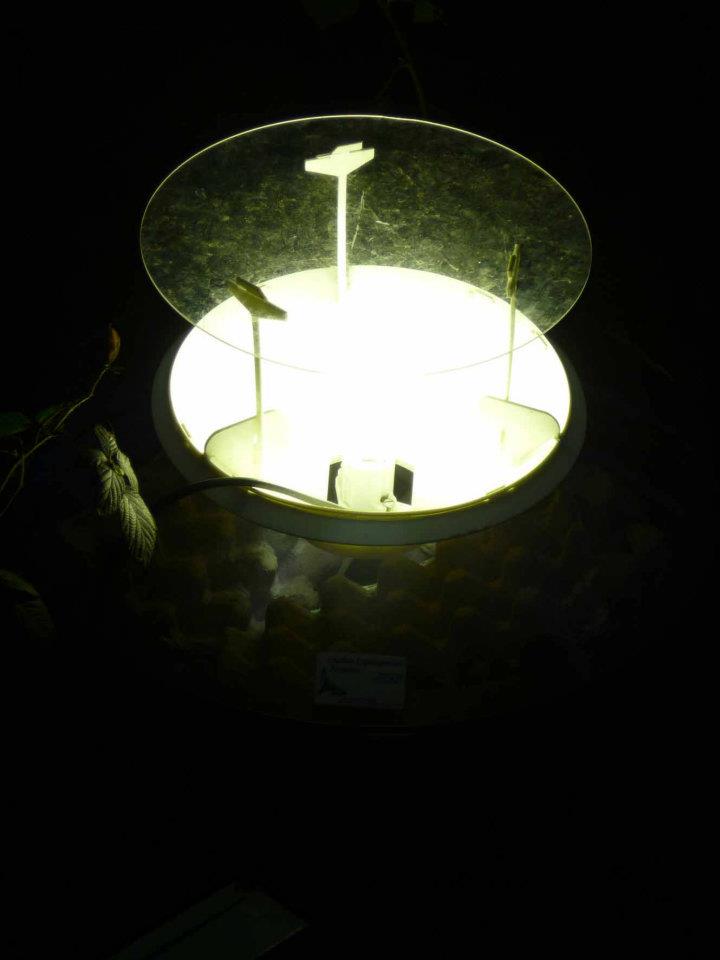
The beekeeping reference bookshelf on my iPad was an invaluable study tool for revising the BBKA syllabus and reading my notes on the tube to work each day.

Andy Pedley led the revision classes this year for Ealing beekeepers with five members in our group: Alan, Charles, Clare, Angela and me. We met on Monday evenings at the headquarters of the Selborne Society in Perivale Wood to talk about bees. The secret of successful examination preparation is a good study group. We stormed through the syllabus, shared advice, discovered information, and inspired each other. ‘Every bee is a loved bee,’ said Angela at class on a rainy Monday. Angela is the most delightful lady beekeeper that I have ever met and I could have listened to her talk about bees all evening.

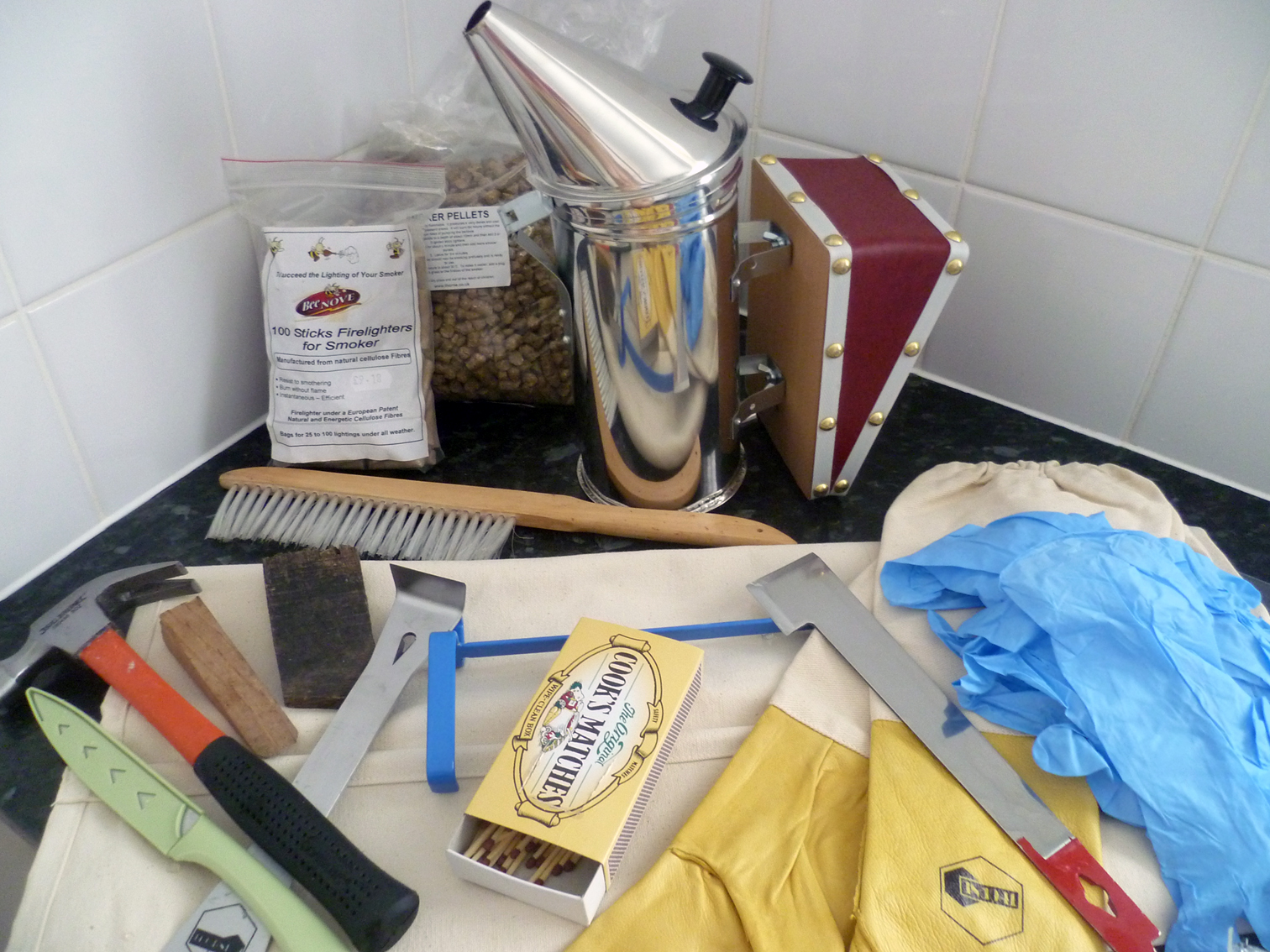
My beekeeping equipment shiny and clean including smoker and fuel, cover cloth and frame hanger, gloves, hive tools, bee brush, wedges and matches, and a hammer and knife for making a frame.

On the day of my assessment I awoke feeling fully prepared. My suit, hive tools and equipment were cleaned and ready to go, I had a new smoker and fuel to use, and it was raining. Hoping that the assessor had brought an umbrella for the bees, I arrived at the apiary early and waited outside as Alan and Charles finished their assessments. Alan was shaking his head when he came to collect me. ‘I failed my tea-making test,’ he said glumly, which is a shocking admission from an Ealing beekeeper.

My frame-making skills are average but worsen under pressure, so I was relieved that Sheila had asked me to make a frame as Charles did his practical. ‘I’m not going to watch you, that would be horrible.’ The frame-making instructions of Mid Bucks Beekeepers Association Blog were impressed on my brain as I laid out my tools. A nail hammered into the bottom bars went awry and there were a few splits in the wood – it was the most beautiful frame that I had ever made.

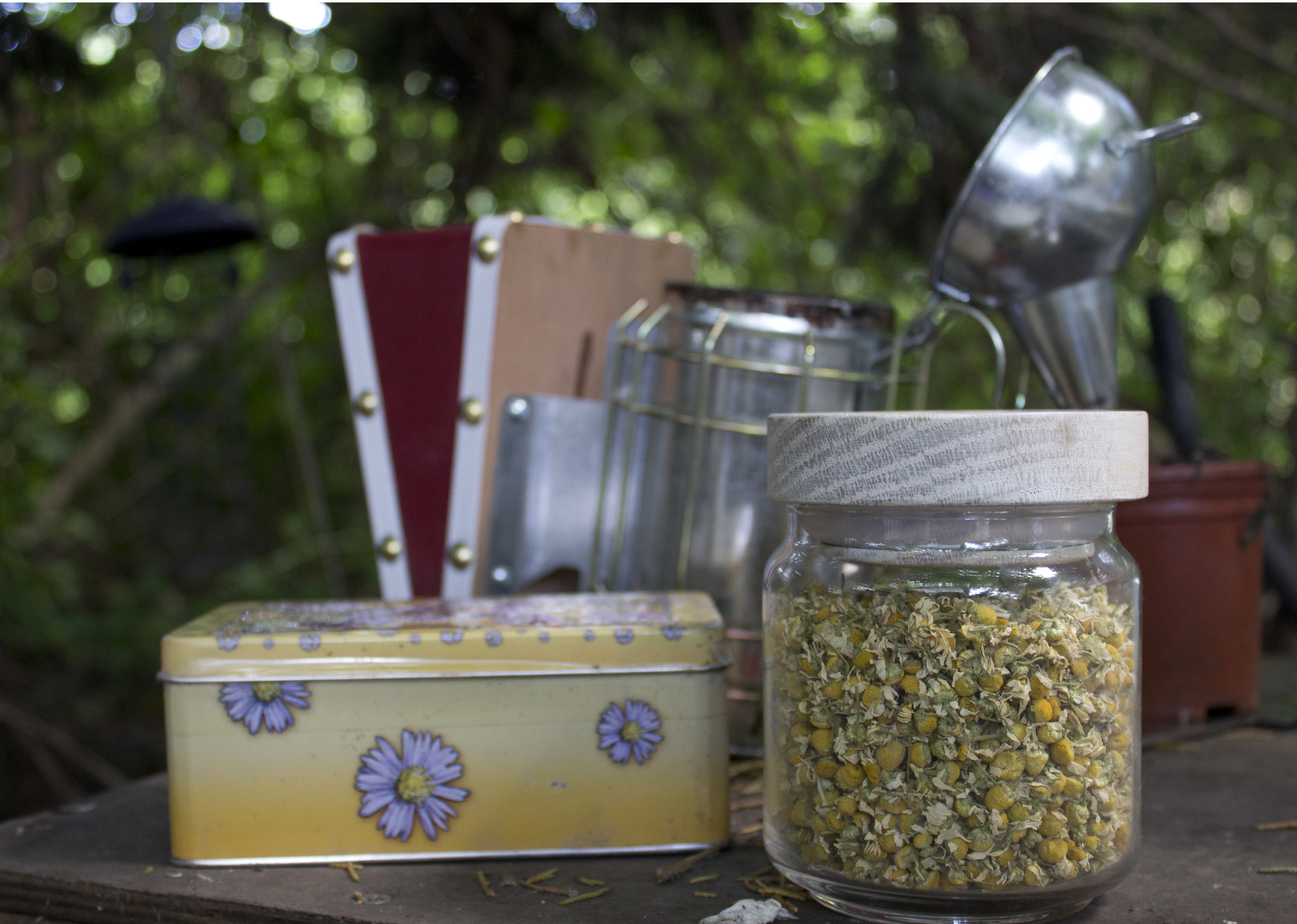
Emily and me like to use herbs in our burner to calm the bees and make them pleasant. Chamomile failed to burn very well the previous week, perhaps the herb is too oily, so I had bought grass pellets for my assessment. In hindsight, I should have used egg boxes!

The rain was spitting as I lit my smoker for the practical and the ‘best smoker fuel in all the land’ refused to light. Tummy butterflies started to flutter, but Sheila was unflappable. ‘You are all very nervous and not giving the flame a chance,’ she said. ‘Let it become a fire before using the bellows, then add more fuel.’ Sheila uses egg boxes for her smoker, which I also used in my first year of beekeeping. They light easily and last for ages, why did I stop using them?

My smoker was now bellowing a strong, clean smoke and it was time to show Sheila that I could inspect bees better than I could start a fire. ‘Which hive are you going to open?’ she asked. I pointed to David’s green hive boxes. ‘I don’t like those bees,’ commented Sheila, ‘Let’s check out these nice ones instead.’ She pointed to John’s hive.

There was lots of bee traffic at the entrance in spite of the rain and it was given a few puffs of smoke. ‘Why are you doing that?’ asked Sheila, prompting a commentary. I said: ‘The smoke makes the bees think there is a risk of fire and so they eat lots of honey and then their tummies get very full and they can’t bend their tummies to sting.’ Eloquent. Adding: ‘And it makes them really calm too.’

Bees are forest insects with an instinctive fear of fire. Smoking the entrance makes the colony think there is an impending risk and triggers the ‘fight or flight’ response. They eat up honey in preparation to leave the hive but this also makes them less inclined to sting.

Wishing the smoke had the same effect on me as it did a forest insect, I opened the hive. The assessment requires that the candidate identify stored nectar, honey and pollen, and demonstrate the differences between drones, workers and the queen, which are all things that I should know from weekly inspections. I was asked to look at a frame in the super and describe what was going on: ‘The bees have drawn out the wax foundation with honeycomb and the clear liquid in cells is nectar. When it is honey they will cap the cells.’ Sheila then asked if I could inspect the brood – sounded simple enough – but the queen excluder stuck to the super as it lifted. Bother. I ran my hive tool around the super again to separate the woodwork, squinting in the dim light and rain, and placed the top box to one side, mumbling: ‘Honey is a food source… so not on the ground… covered over to stop robbing… keep bees warm’.
Bees on a crownboard. When the super is taken off the hive during an inspection, cover it with a crownboard to protect the honey from robber bees and to keep the worker bees warm.
The normally mild-mannered Italian bees were furious to be disturbed by a big bear creature on a blustery day. ‘I will help you with the smoker,’ said Sheila, because conditions were poor and the bees were unhappy. I suggested putting my cover cloth over the hive, which made the inspection slower but immediately calmed the bees and gave them shelter. After inspecting a few brood frames, I successfully identified the different types of bee, worker and drone brood cappings, larvae and eggs, food stores, and even a play cup – but no queen; she was hiding. Emily and me explain the goings on inside the hive to beginners each week, so I said: ‘The worker brood is in the middle of the frame and the drone brood is around the edges. If it gets cold the bees will cluster around the worker brood to keep it warm, but the drones are expendable.’ Poor doomed drones.

Sheila seemed satisfied that I was reasonably competent and the rain wasn’t getting any better, so we closed the hive. The practical was done and perhaps it could have gone better, but at least we didn’t get stung.

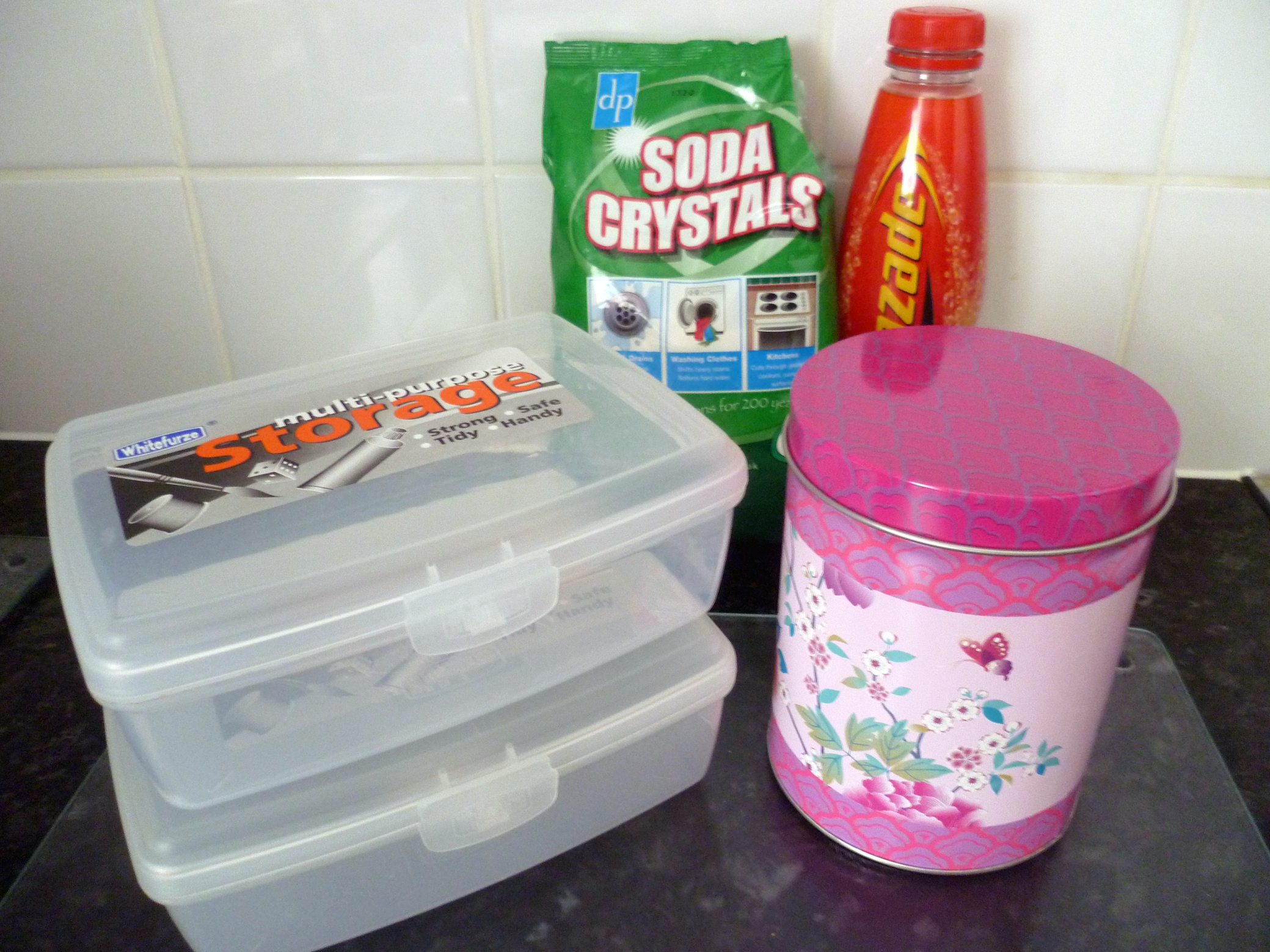
I had brought a bottle of soda water solution and tubs for collecting waste material from the hive, but there wasn’t much time to clean up wax or dead bees due to the inclement weather. The pink canister held my queen cages and markers (yellow for this year), but the queen didn’t feel like making an appearance.

The final part of the assessment was the oral examination, so we returned to the apiary benches and sat down to chat over tea. ‘I’d like you to describe the role and importance of the queen,’ said Sheila. I had nothing. The knowledge was hiding like a queen bee in the dark recesses of my mind. Taking a breath, I started at the beginning about how the queen lays eggs and constantly replenishes the hive with new bees. Sheila prompted a discussion about queen substance and we talked about the effect of pheromones on the colony.

It dawned on me that I was trying too hard to remember what the books said, rather than my own experiences of beekeeping. After that, the question-and-answer session flowed easier:

‘Why does a colony swarm?’
‘That’s how bees naturally reproduce as a species with the old queen flying away with her workers… ‘
‘Swarming is a natural way to control varroa? Why is that?’
‘Because the swarm flies away from the brood leaving the varroa behind and the swarmed hive has a break in brood… ‘
‘Interesting. Can you describe a method of swarm control?’
‘Last year we used the nuc method…’
‘Yes, it is a good idea to feed nucs. How do you feed bees?’
‘In winter we use fondant, and in spring and autumn we use syrup… ‘

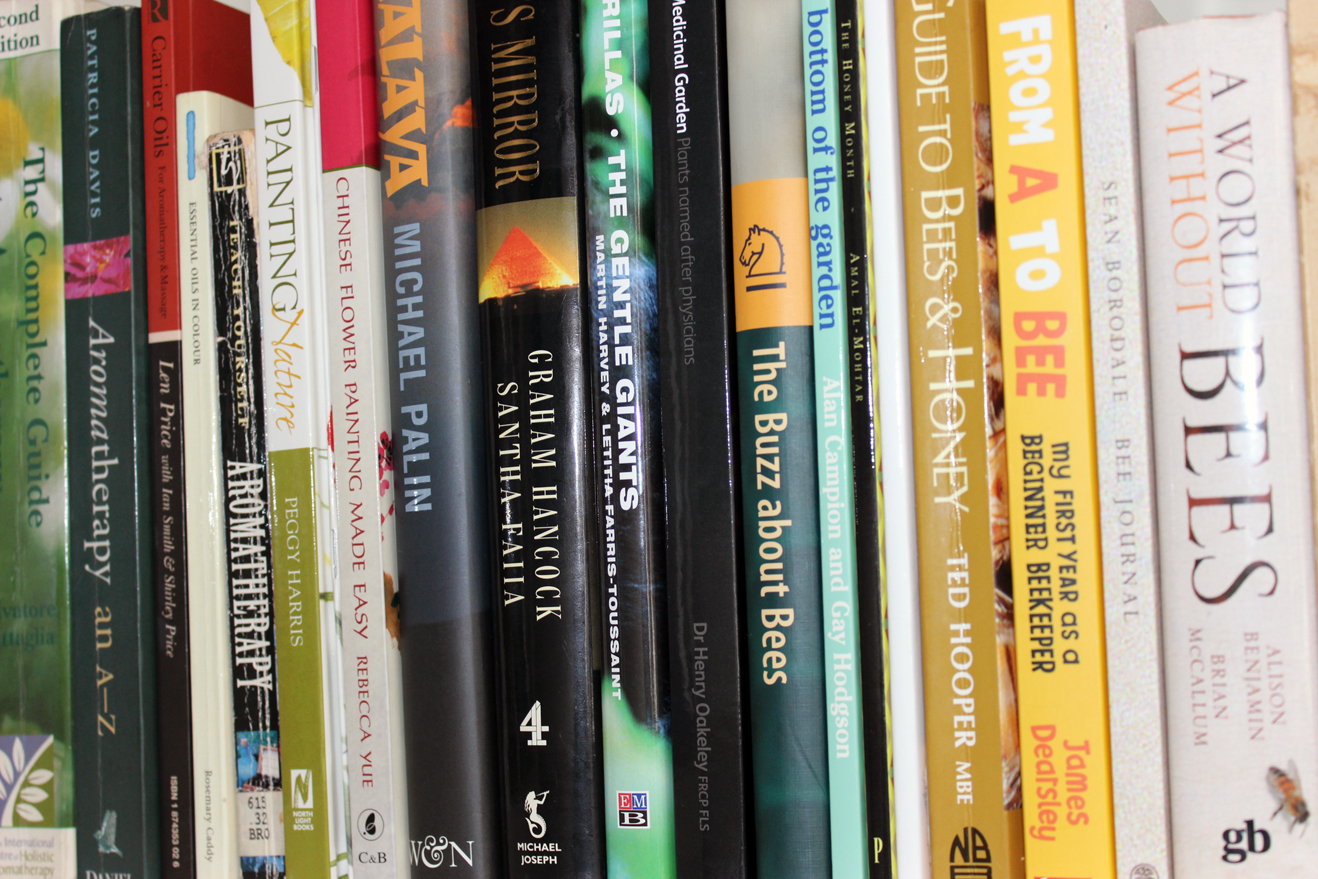
I often refer to the beekeeping books on my bookshelf but there is no substitute for real experience.

It felt like a regular Saturday afternoon at the apiary, I enjoyed talking about clearing bees, honey extraction, and other bee stuff that I had done and blogged about. Varroa and bee disease were fresh in my mind after attending the London Beekeepers Association Bee Health Day, and I answered the most important question on notifiable diseases and pests: ‘American foul brood, European foul brood, small hive beetle and tropilaelaps – call the bee inspector without delay!’

It was soon over and the sun had come out. Taking the BBKA basic assessment was a really useful experience. The assessment was more than a tick-box exercise and gave me something to aim for this summer. It made me refresh everything that I have learned over the past few years and highlighted areas where I need to improve. What’s next? If I pass the basic, the BBKA offer an entire programme of education and examination from merely competent beekeeper to Master Beekeeper!

My revision notes for the BBKA basic assessment syllabus are available on my blog pages with links to other study resources. I hope that you find them useful.

That done, back to catching up with the blogosphere!

Related links

BBKA basic assessment
Mid Bucks Beekeepers Association BBKA basic assessment study notes
Bee Health Day at the London Beekeepers Association
How to extract honey

An evening with the Selborne Society of Perivale Wood

Lying in wait behind the wrought iron gates of the Perivale Wood Local Nature Reserve was the lost British summer. The ancient oak woodland is a well-kept suburban secret that is deeply hidden in the heart of north-west London, and reveals a wildlife habitat that has remained largely unchanged for centuries. Perivale Wood is owned and managed by the Selborne Society who kindly invited me to attend their summer barbecue as a ‘thank you’ for writing an article in The Selborne Society Newsletter.

The society’s hospitality extended to two guests, my hive partner Emily and her boyfriend Drew, with whom I spent a sociable evening enjoying late summer sunshine, well-charred food and a little adventure in the wood.

The Selborne Society rustled up the sunshine for their summer barbecue.

Emily and me arrived at the barbecue with Andy Pedley, honorary secretary for the society, who kindly drove us from the apiary after beekeeping. It was a sleepy Saturday afternoon with balmy sunshine so much better than has been expected of this dreary wet summer. Drew turned up soon after and we were all surprised by the strong sun suddenly beaming down on the reserve.

Perivale Wood is the second oldest nature reserve in the UK, and the Selborne Society is also one of the oldest conservation groups in the country. The society was founded in 1885 to commemorate Gilbert White (1720–93), the Curate of Selborne, Hampshire, and the father of British natural history.

Perivale Wood has a rich variety of habitat and is home to hundreds of woodland species as listed on the Selborne Society website: 600 species of fungi, 544 species of moths, 30 species of molluscs, 17 species of mammals, 24 species of trees, 350 species of vascular plants, 36 species of mosses and liverworts, and 115 species of birds.

Sadly, the ancient woodland habitat and its creatures are now under threat by the government’s high-speed rail project HS2.

While we planned to explore the woods that evening, the reserve hut was also well-worth visiting – filled with home-made jams and several other curiosities…

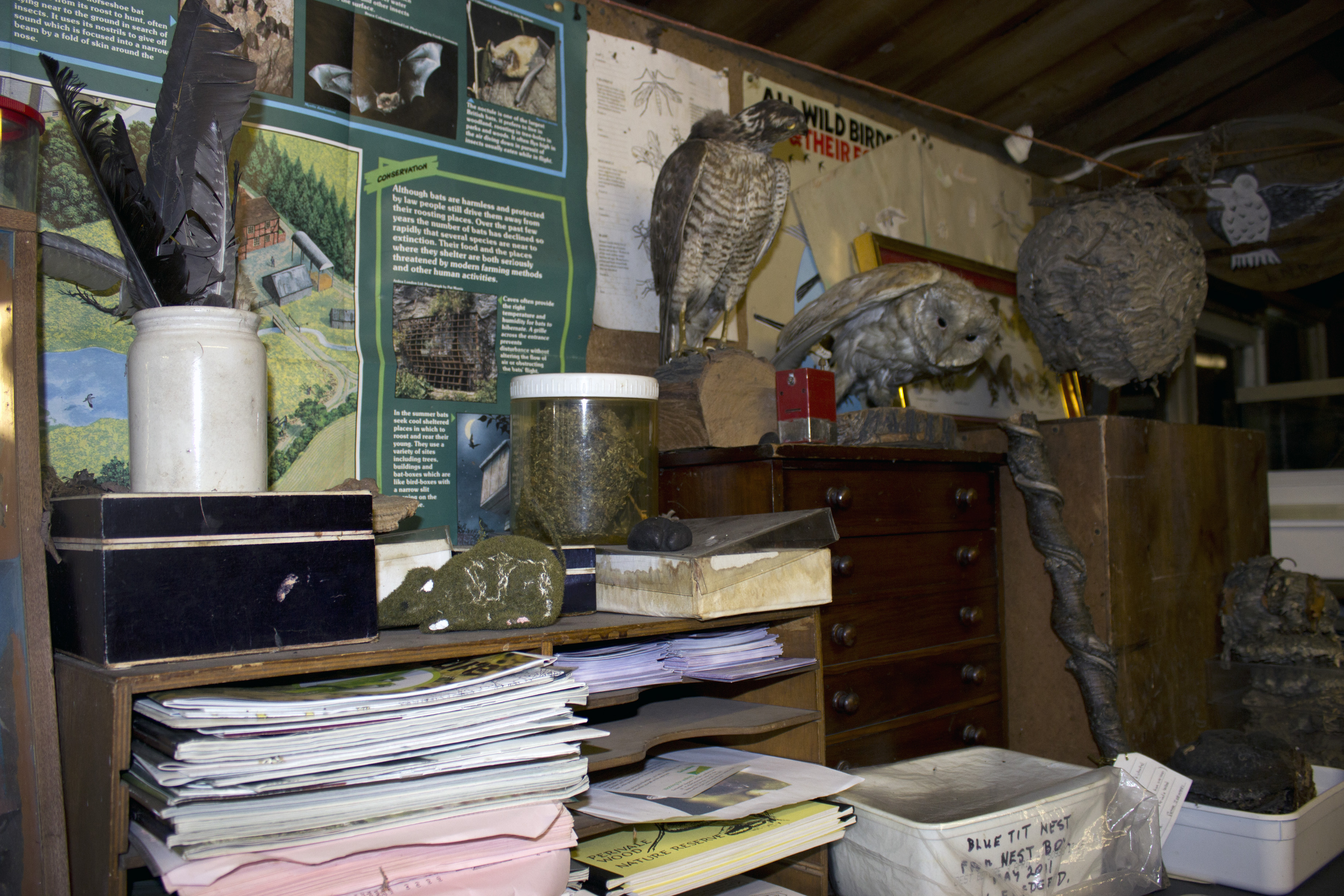
The nature reserve hut was like a scene from My Family and Other Animals.

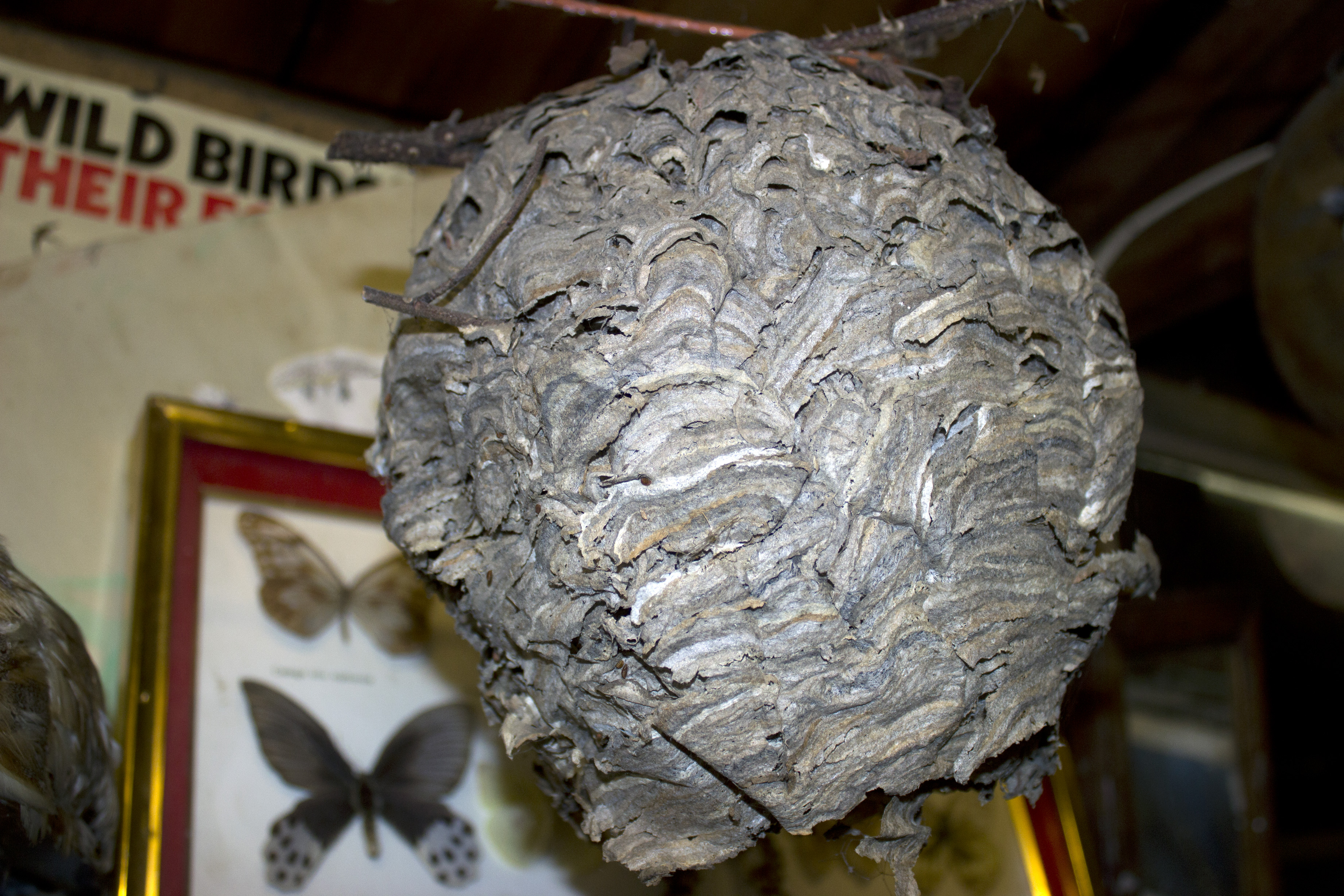
An old wasp nest displayed among pinned butterflies and stuffed birds. A naturalist’s treasure trove!

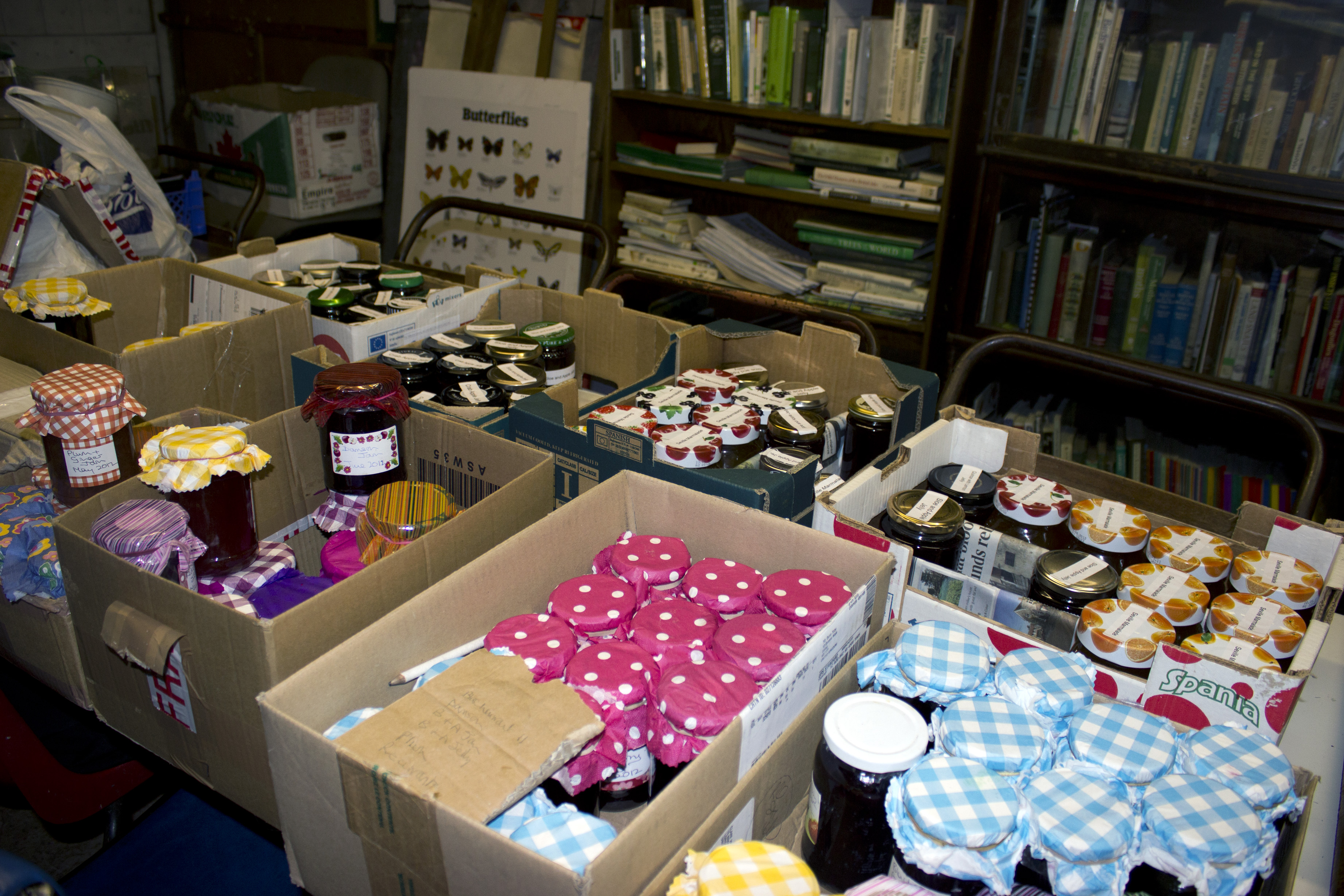
Home-made jams cooked with locally foraged ingredients by Clare, beekeeper and jam-maker extraordinaire!

A few sausages and fizzy drinks later, Emily asked if we could explore the wood past the meadow area. Elsa tried to give us directions to the location of the bees in the wood, but instead we managed to get ourselves hopelessly lost on the dense woodland trail.

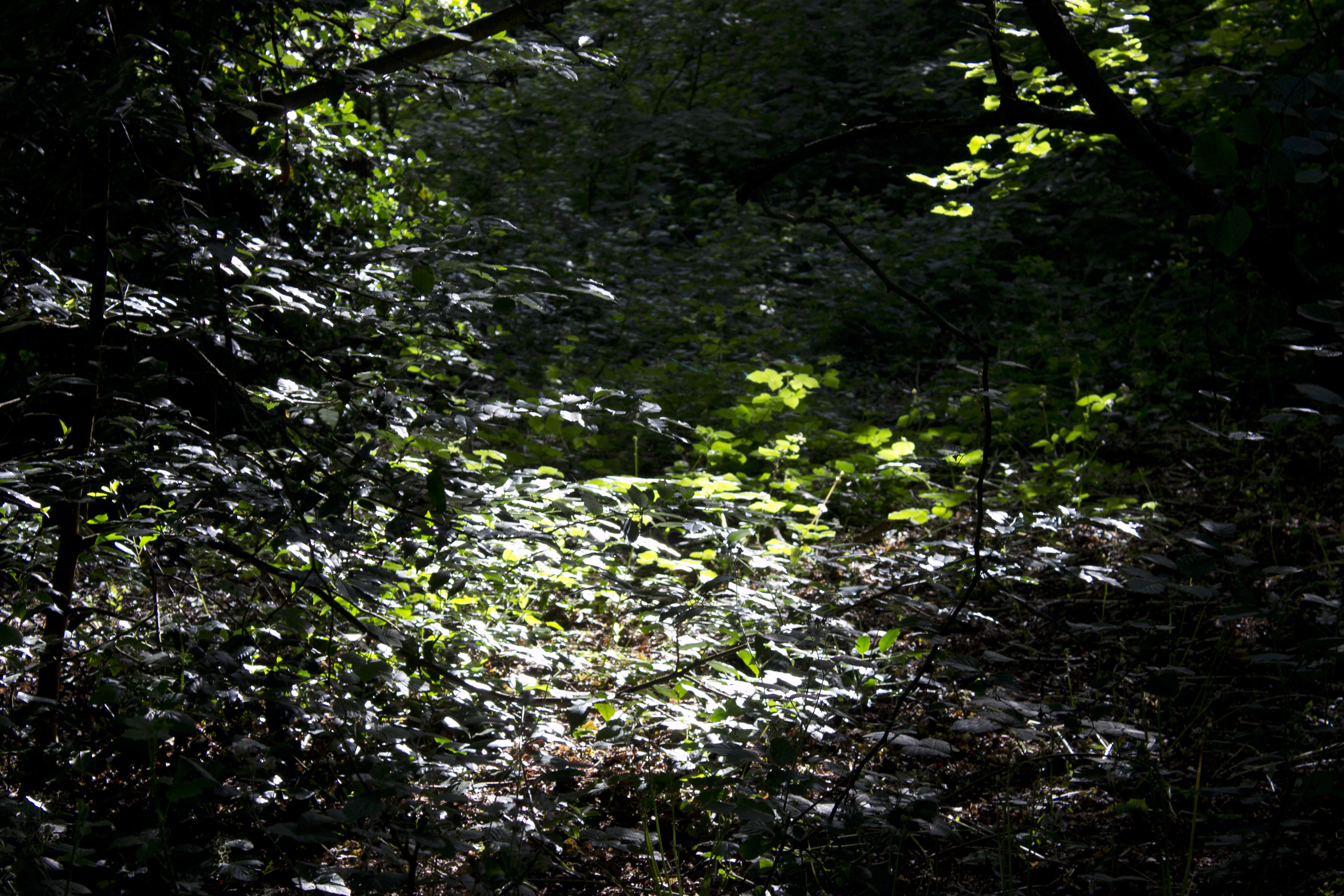
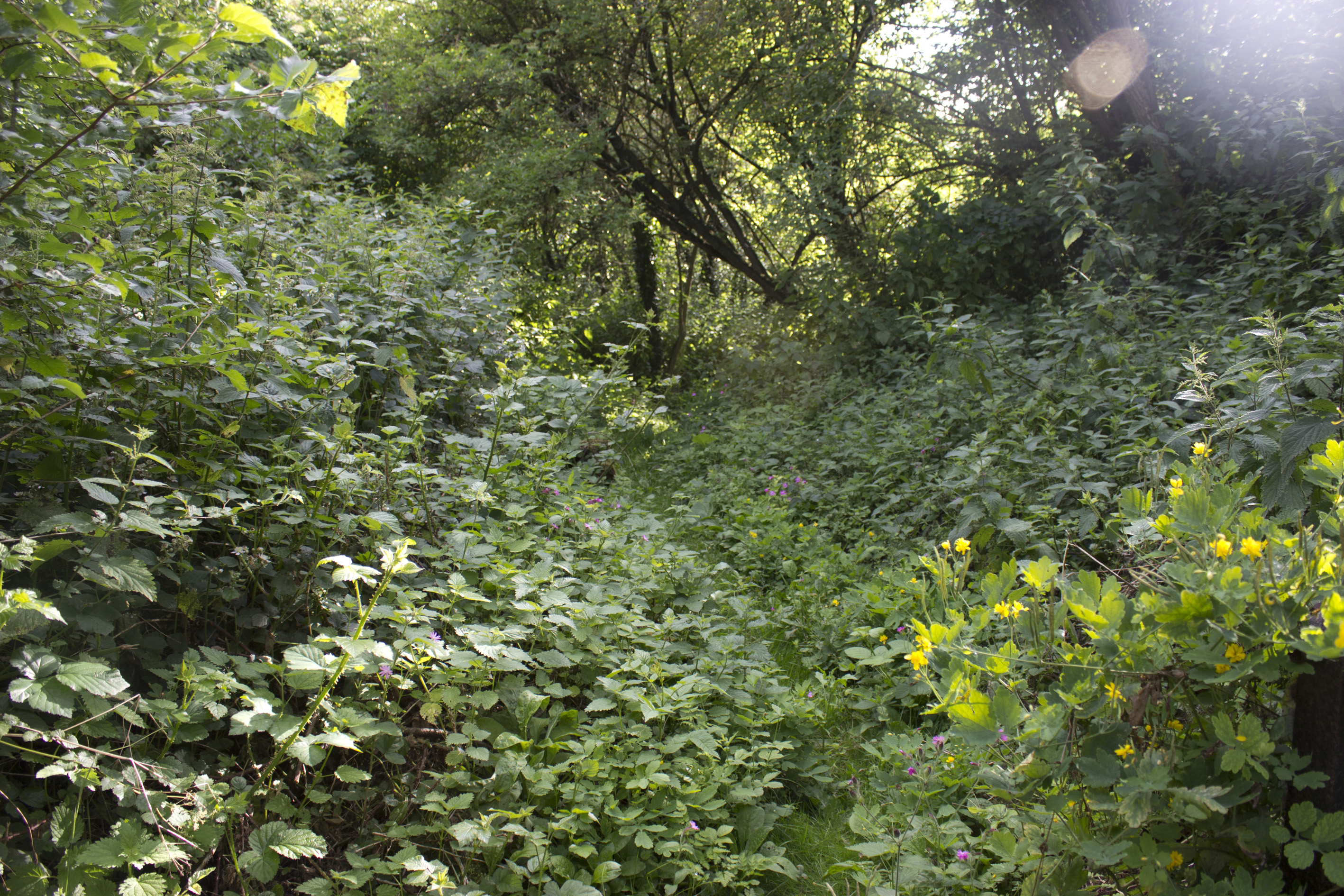
Perivale Wood is home to birds, mammals, insects, fungi and plants – all hidden inside the dense overgrowth.

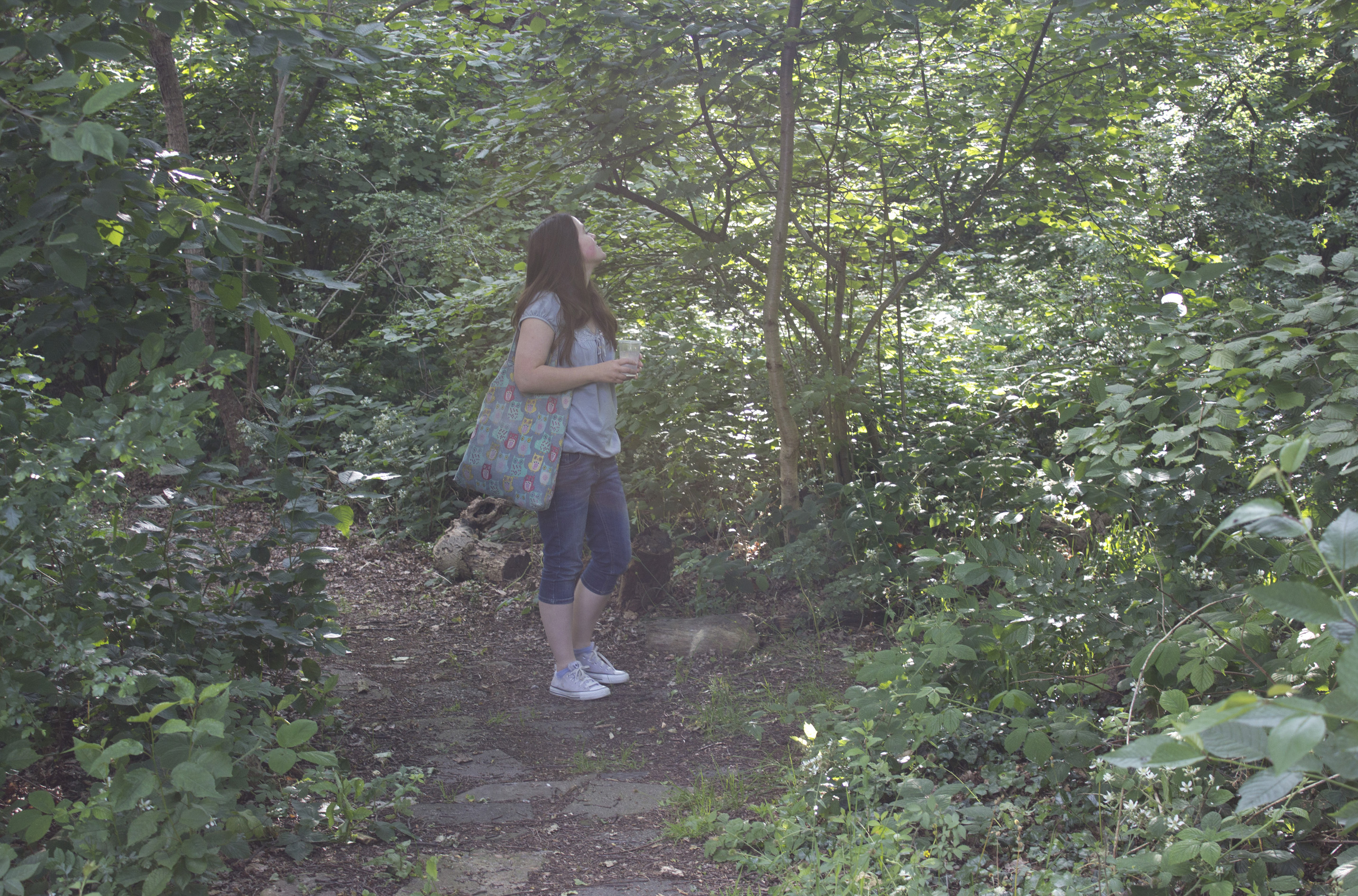
Emily exploring the wood.

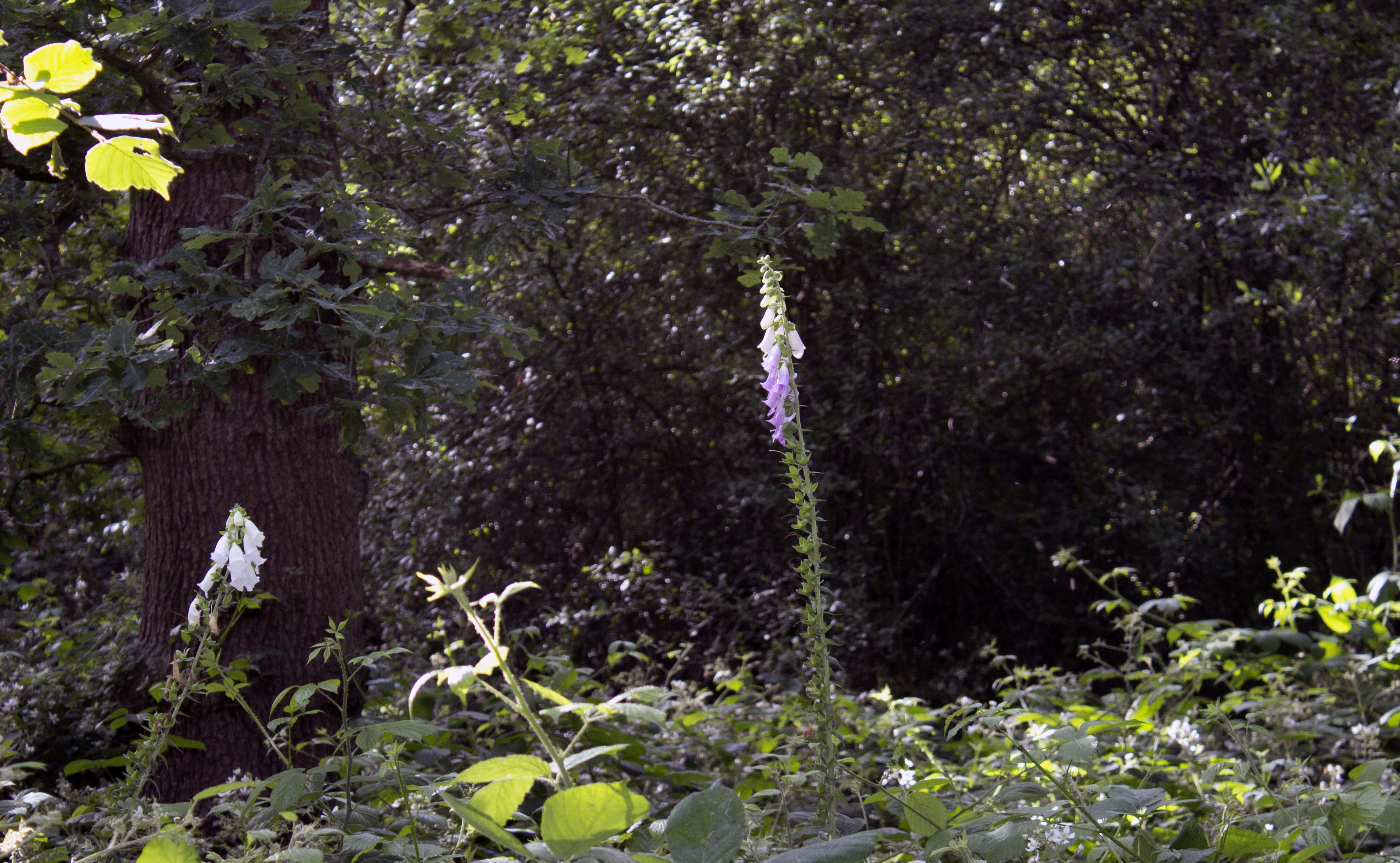
Woodland flowers reaching up to the sun.

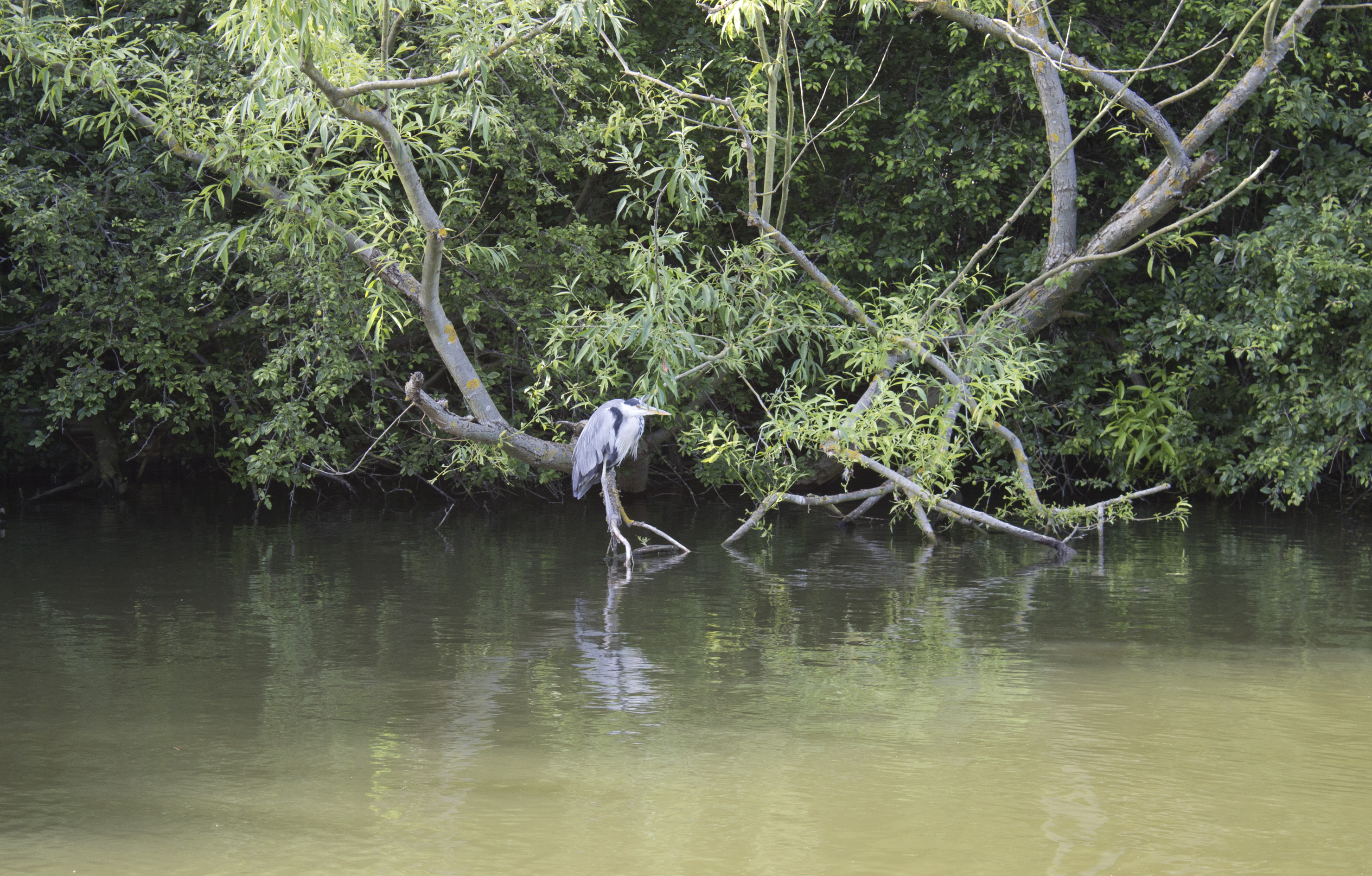
Spotted – a heron.

Although I had visited the hives in Perivale Wood in January, when the trees were bare and moth traps were being laid on the ground, I was not much good as a guide. Then Andy and Elsa had led the way through the dark with Elsa’s son, Chris, and myself following blindly behind.

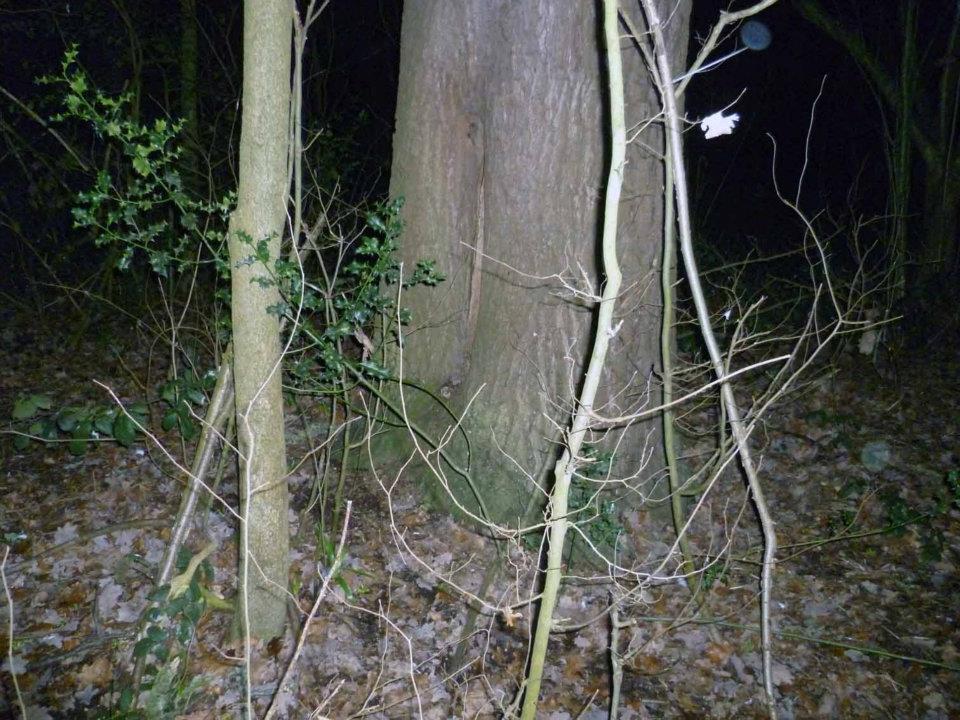
Night falls on Perivale Wood earlier this year in January.

The path is occasionally lit by spooky-looking moth traps for the 544 species of moths that roam the wood after dark.

The trail had led us past an oak that is home to feral honeybees, and a few feral mice too.

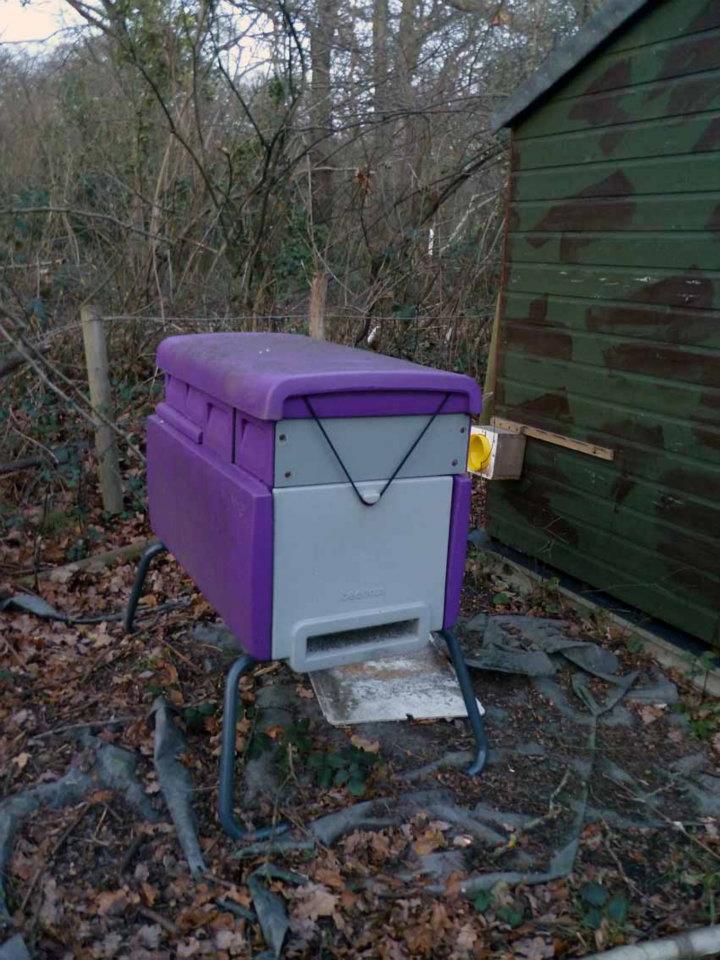
The Beehaus! A new Omlet hive provides a modern home for bees in an ancient oak woodland.

By daylight I couldn’t remember the way back to the hives and so the woodland bees remained undisturbed, but we did get to visit Elsa’s bees and her chickens.

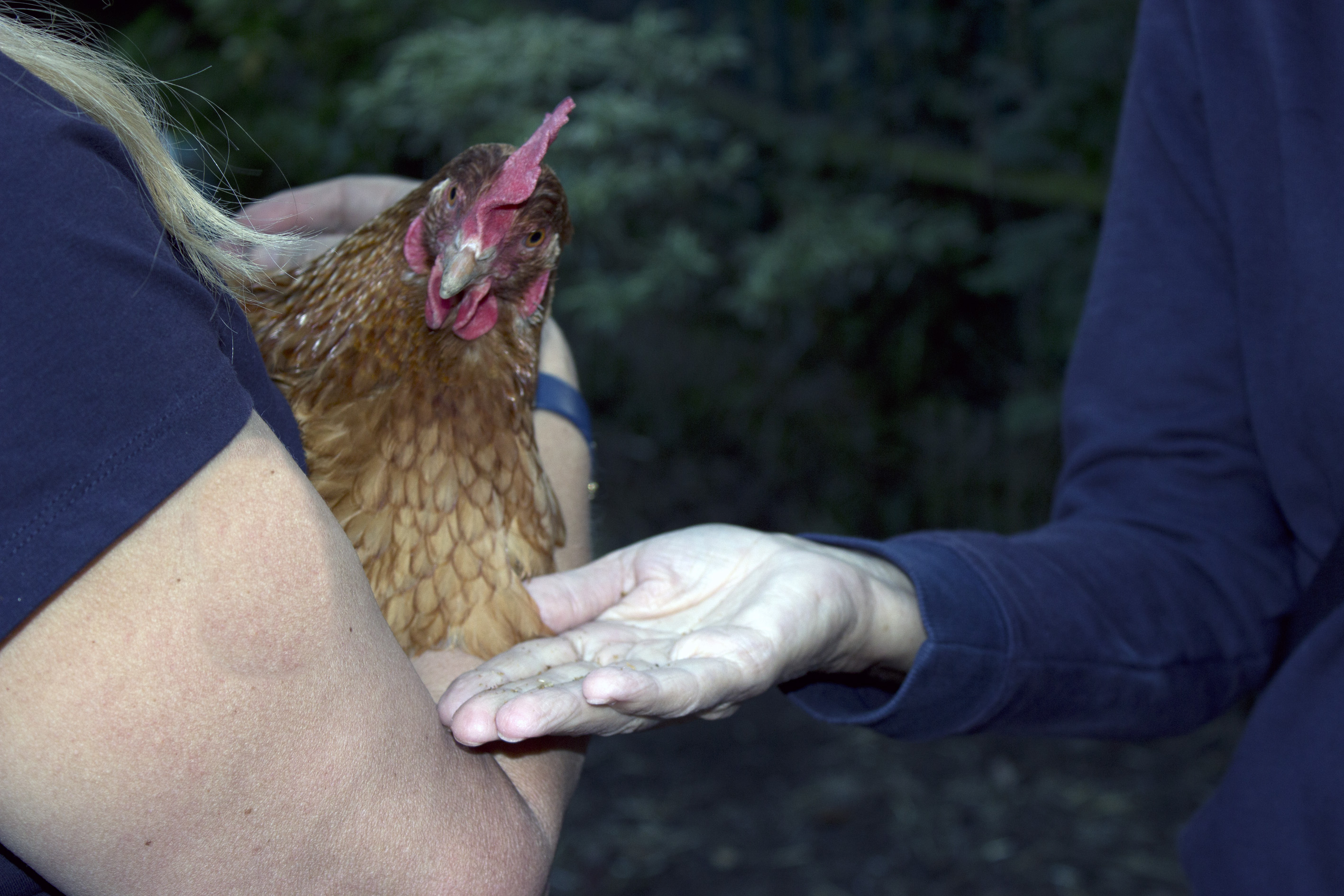
A hen walks past a bit indignant to have her pen disturbed.

Clare and Elsa placate the hens with mealworms.

Elsa’s bees live in a very charming hive beautifully crafted by her son, Chris.

Before we left for the day (with fresh eggs from Elsa and jams from Clare) Emily, Drew and me signed up as members of the Selborne Society having paid a staggering £4 annual membership fee!

As a new member I am looking forward to finding out what other secrets lie hidden in the wood. However, Perivale Wood – and blogging – will have to wait for a little while as I study for my first beekeeping assessment. Fingers crossed, I’ll pass!

Meantime, in spite of my rather rushed post between revision this week, our beekeeping adventures last week were beautifully posted by a very special guest, Deborah Delong of Romancing the Bee: My Visit To The Ealing Apiary.

Related links

Dances with bluebells and rain – my post on the Selborne Society Open Day
Perivale Wood Local Nature Reserve and Selborne Society website
North Ealing against HIGH-SPEED-RAIL (HS2)
STOP HS2 – the national campaign against high-speed rail 

In other news: I have started my blog award pages this week and will soon unveil the Bumblebee Award!

On the trail of honey and dust in Rome

When Rosemary, a lovely beekeeper at our apiary, gave me a book about the true story of a man who discovers the wonders of bees and honey on a farm in Italy, I packed it in my flight bag for a trip to Rome. I should have sub-titled this post: ‘A beekeeper in Rome’, because it is the story of my Roman holiday and the book that accompanied my travels.

Honey and Dust: Travels in search of sweetness by Piers Moore Ede begins as Piers, a young British environmentalist writer, is seriously injured in a hit-and-run accident in San Francisco and loses sense of his life’s purpose. He goes to recuperate on a farm owned by a beekeeper in Italy and rediscovers his passion for life with the help of Gunther and his bees.

Hillside views seen from the Colleseum. The opening chapters of Honey and Dust set in rural Italy were exciting in-flight reading on my way to Rome.

One sunny afternoon, Piers and Gunther take a walk, through a copse of trees, to a thicket of rosemary bushes, to where Gunther keeps his beehives. The gentle Italian bees are busy foraging nectar from the heavy-scented rosemary, ‘Rosmarino. Strong honey’. Gunther cuts a wedge of honeycomb from one of the hives to share with Piers:
‘That was my first taste of honey straight from a hive. We stood there in the clearing, with the afternoon sun warm upon our faces, honey running down our fingers, and let the sweetness wash over our tongues. The honey, indeed, had a strong taste of rosemary, and to see the spiny green bushes right beside us, and then to taste the result here and now, was by no means any great scientific discovery, but it felt strangely wonderful – like an insight into the order of things.’
It is a magical moment for the reader too, and I knew then that I would love this book. By the time our plane landed in Rome, I had joined Piers in the Middle East as he began his quest to find and taste the world’s most wondrous honeys.

A beekeeper in Rome

Rome is an amazing city. The ancient world sits comfortably with the modern world. It has style and glamour alongside history and tradition. The coffee is amazing too.

Rome – The Eternal City.

The story of the ages is told on every street. Here is the Colleseum.

The Papal Swiss Guard at Vatican City is the only Swiss Guard that still exists.

Ah, Roma! Romance in Rome as we come across an Italian TV crew filming a love story.

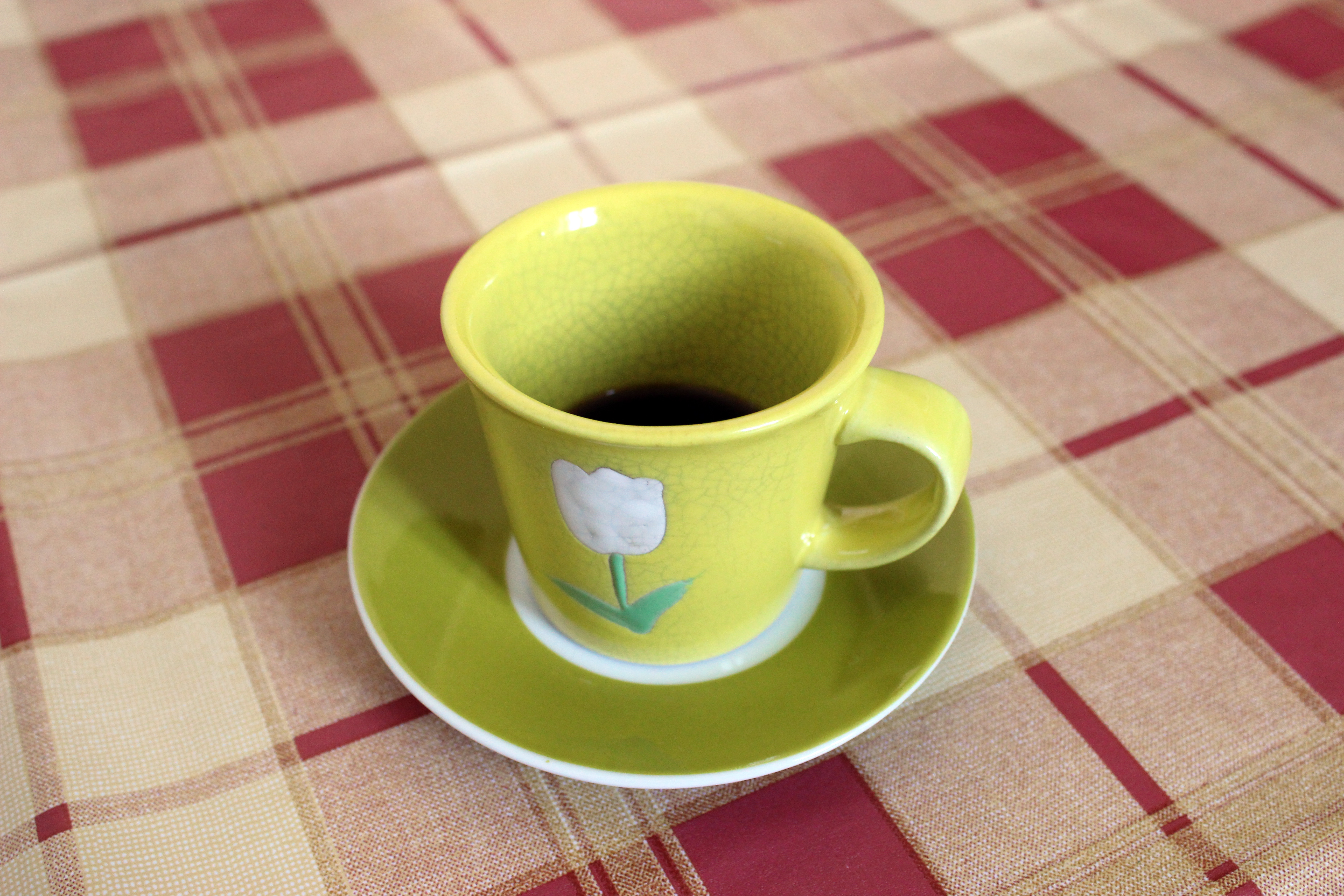
I like tea not coffee. Italian coffee is delicious!

Sitting with my friends in a cafe overlooking the Colleseum, I reflected how my journey was similar to Piers: exploring a vibrant and beautiful world which in parts has vanished.

A disappearing world

Honey flowed like rivers in ancient times. The Romans were Master Beekeepers with a particular fondness for thyme honey. Virgil and Pliny expounded the health-giving virtues of this golden nectar, and wrote detailed descriptions of beekeeping and the qualities of bees. However, Virgil thought queen bees were kings and warned of finding king cells in hives. The art of beekeeping declined in Ancient Rome with the fall of the Roman Empire.

Piers’ first stop on his tour of the world of apiculture is Beirut, but sadly he encounters varroa early in his journey. Wadih Yazbek, the son of a famous Lebanese beekeeper, explains that the honey-gathering traditions of the mountains was a practice of happier times:

‘It is not just us, the people, who have suffered in this last century. The land itself has taken many savage blows. And the wild bees, in consequence, have grown quiet. Of course, we beekeepers make sure that the bees survive – but in the wild, in caves and trees, they no longer make their homes as they used to. The varroa mite has hit us badly here.’

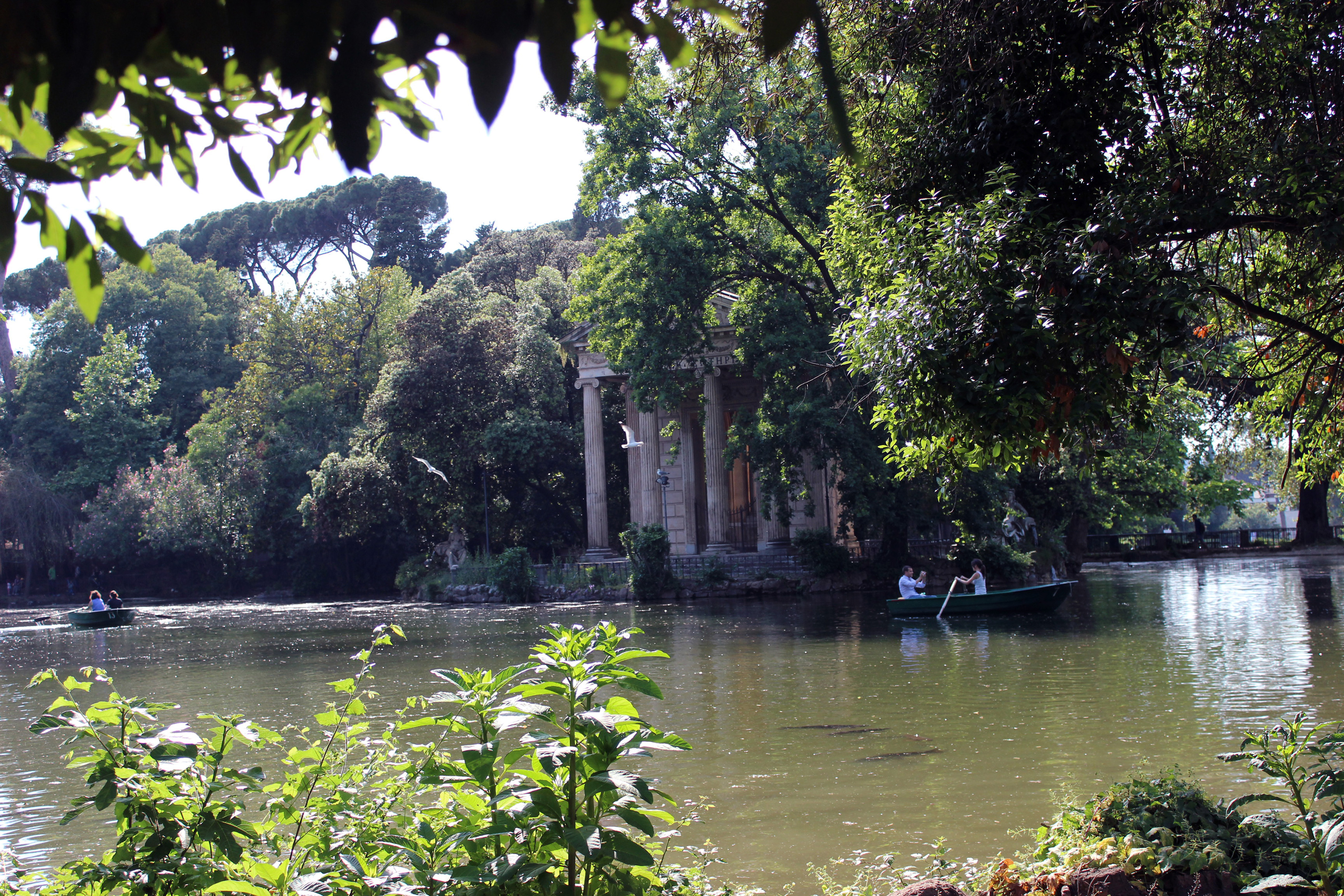
Piers’ realisation that the honeybees of the wild and domesticated hives are disappearing as colony after colony is ravaged by varroa makes his quest to find honey even sweeter. I finished reading the chapters in the Middle East as our first day in Rome came to an end, sitting in the beautiful gardens of Villa Borghese and enjoying very good Italian ice cream.

Villa Borghese is the second largest public park in Rome with beautiful landscaped gardens and an enchanting lake.

The Temple of Asclepius, the god of medicine, stands in the centre of the lake.

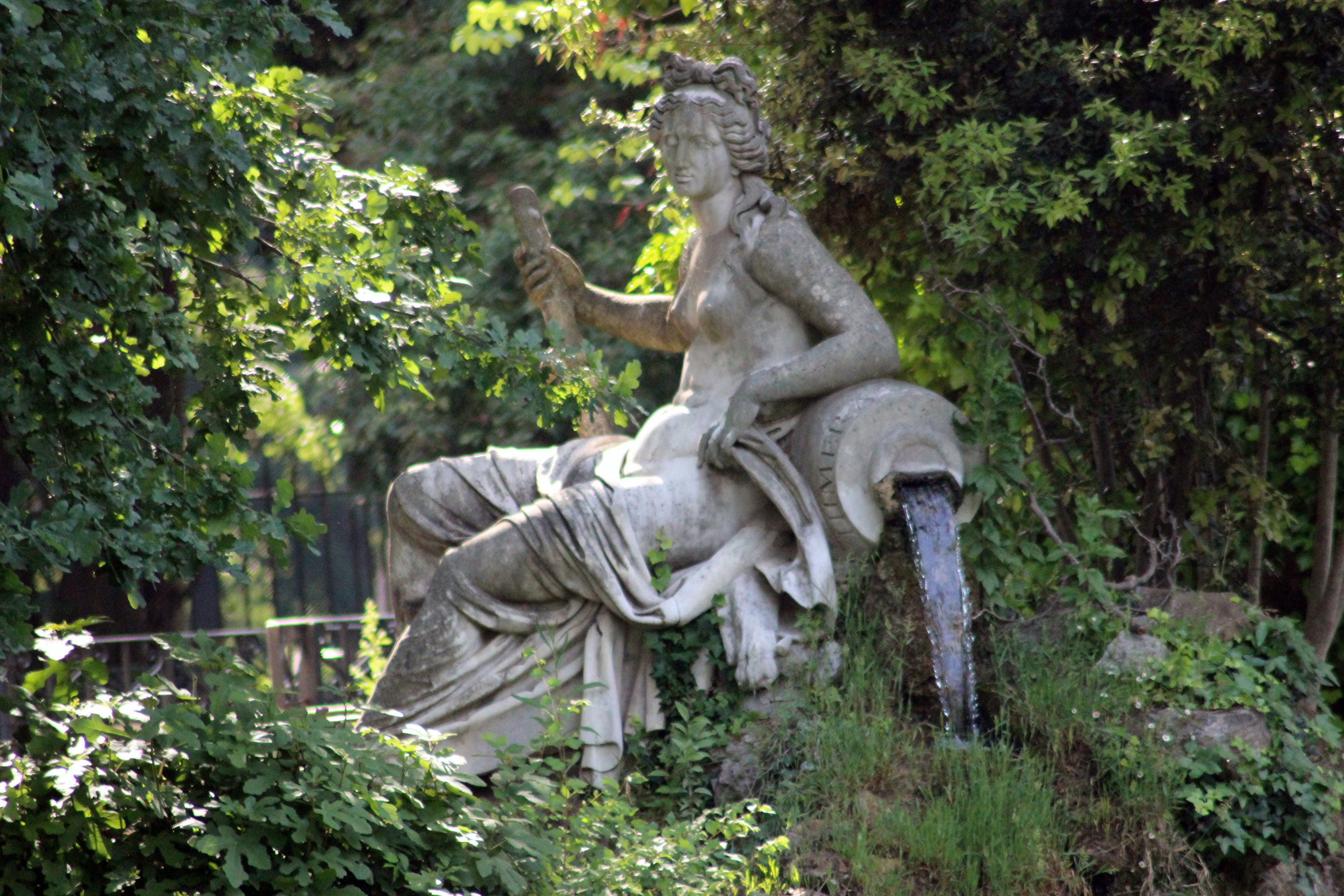
There are hidden fountains…

… and secret terrapin pools.

Vatican – the city of angels and demons

The next day we visited the Vatican – a city in a city – and I heard rumour that the pope keeps his own hives. While I didn’t see a bee, the Vatican experience can only be described as pure sensory overload. You need a guide, and a day, to see the Vatican.

Once inside, I used an entire 8GB memory card on my SLR and it was worth every shot. The highlight was Michaelangelo’s breathtaking Sistine Chapel, which is – indescribable. However, filming is forbidden inside the Sistine Chapel to protect the incandescent artwork, and because the Vatican owns the copyright. I wonder what Michaelangelo would have thought of that?

Inside the Vatican – a hall of gold and light.

Art so beautiful and breathtaking.

Gods and goddesses…

Angels…

… and demons.

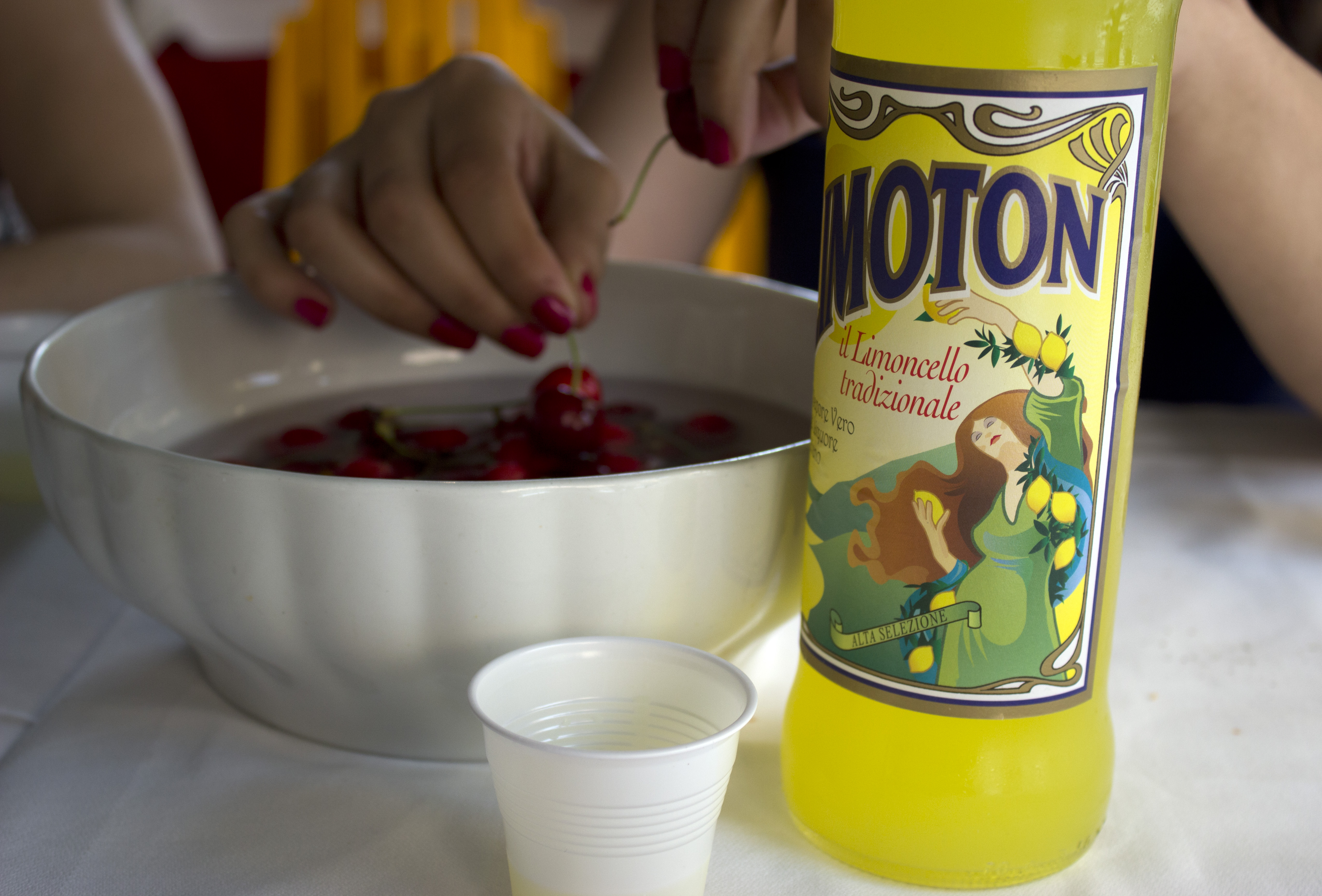
Afterwards, we sat quietly inside a family-run restaurant and digested all that we had seen and heard. As a storm threatened to break the sunshine, we were invited to stay past closing time to share a complementary bowl of cherries and limoncello.

I took a peek inside my book to see what Piers was doing in Nepal. What struck me as I read Honey and Dust was the easy connections that Piers made with everyone he met. Whether visiting noisy war-torn capitals or the rooftop of the world, people warm to the young writer and invite him into their homes to share a unique insight into their hidden lives.

Out of the storm – we are welcomed into a family restaurant.

Limoncello and cherries! A risky combination.

That evening we climbed the turrets of Castel Sant’Angelo, went for tapas and enjoyed drinks in a restaurant opposite the Pantheon. I went to bed exhausted, and not sure if I was excited to wake for Rome or Piers’ trek with Nepalese honey hunters through dense forests.

The Pantheon by moonlight.

Italian wine best enjoyed on a warm evening in Rome.

Falling in love with Rome 

On Sunday morning we stumbled across mass at the Pantheon on our way to the Fountain de Trevi. The Pantheon is one of the best preserved buildings of Ancient Rome. The rotunda uses an intricate honeycombed structure of hidden chambers to strengthen its walls.

I stood at the entrance of the Pantheon watching as thousands of rose petals were poured through the oculi of the dome and tumbled down the shafts of sunlight.

The Pantheon was built to honour all the gods of Ancient Rome.

Rose petals falling from the oculi during mass.

The breathtaking Fountain de Trevi.

After tossing a coin in the waters of the Fountain de Trevi to make a wish, we separated to take our own mini adventures before meeting for lunch at the Campo de’ Fiori, or the Square of Flowers.

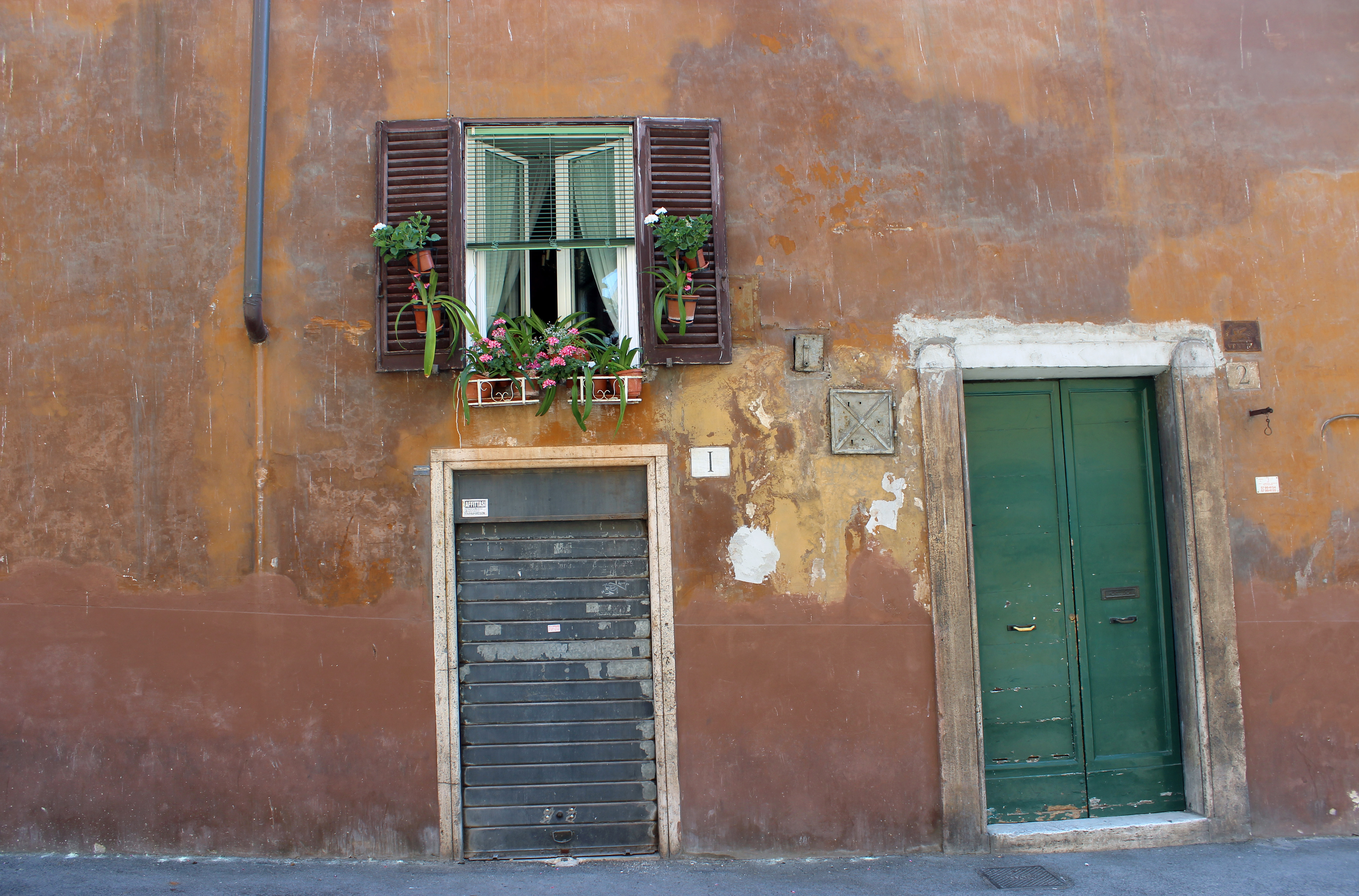
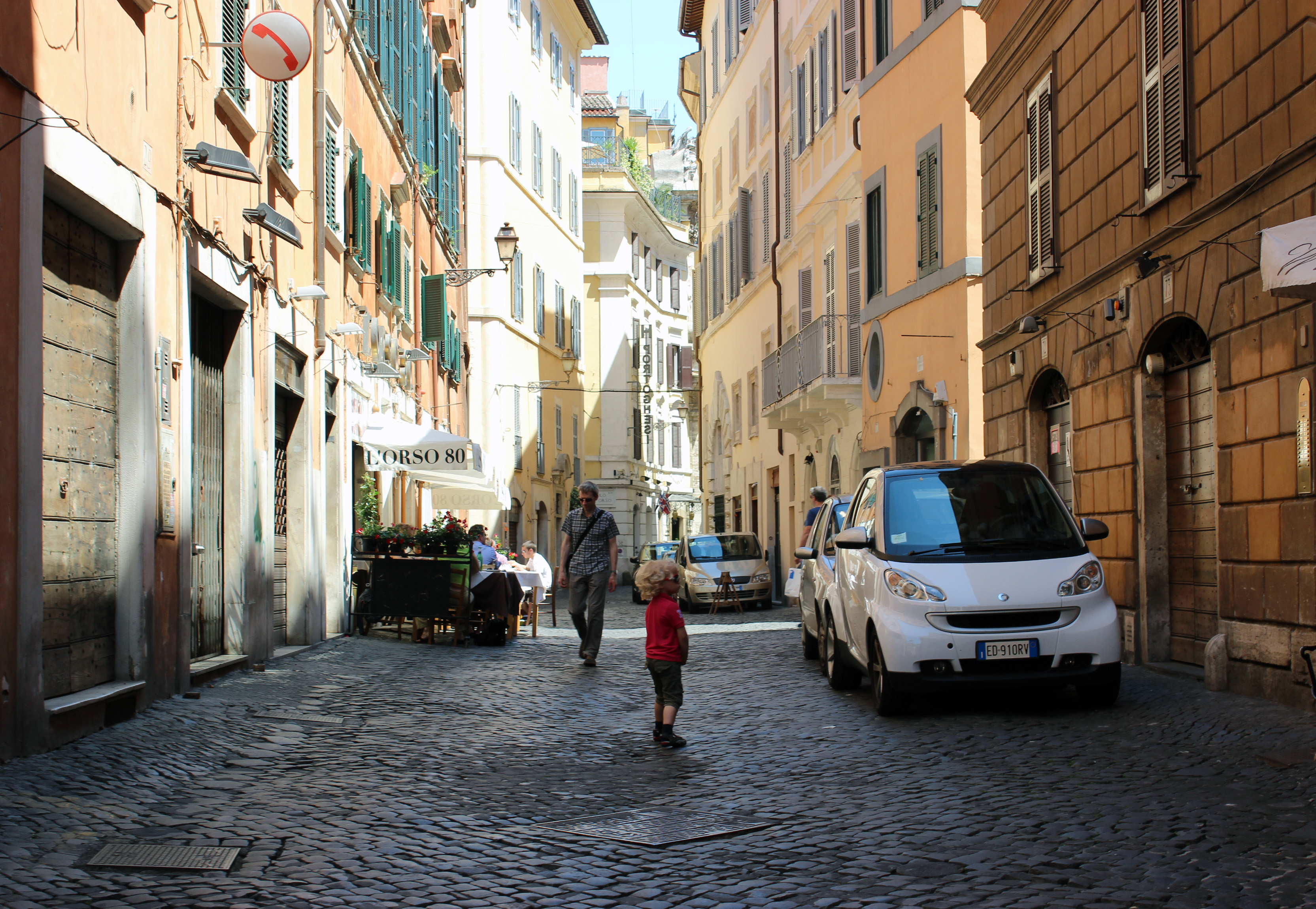
Picturesque streets.

Pastoral scenes.

Wall flowers.

City views.

People-watching.

I arrived before my friends and sat in the shade enjoying Sicilian lemonade with a spot of people-watching and reading.

Intrepid travellers

Piers was doing some people-watching of his own, sitting with laughing Nepalese children as intrepid honey hunters scaled a mountainside. The passage was the most absorbing in the book. It was incredible to imagine that this is how beekeepers in faraway parts of the world collect honey. Piers’ own life and brush with death is brought into perspective:

‘At times I could barely watch. The margin for error was simply too small. Every man here had his life in the balance, and yet the seeming levity with which they worked made it seem as if they didn’t care. It brought my own small encounter with mortality into the sharpest focus. Did these men fear death so little because of its constant proximity in their lives? And why do we, in the developed world, fear death so much? It also highlighted, as clearly as anything could, just how far man will go for the sensation of sweetness on his tongue. Quite simply, they were prepared to risk their lives for it.’

Once collected, wild Nepalese honey presents a further risk from the deadly rhododendron flowers that the bees forage in spring. Piers waits for the honey hunters to taste-test their hard-won nectar before sipping the ‘wondrous toxic honey’ with traces of poisonous pollen. He soon feels the effects:

‘It resembled drunkenness at first, but then became visual, like a magic mushroom trip I remembered from university. Painted dots were dripping across my irises like technicolor rain. My body felt light and tingly, filled with warm rushes and heat-bursts. It was wild and strangely wonderful.’

The relentless afternoon heat in Rome made my friends and me feel a little dazed, so we took Sunday afternoon at a slower pace and wandered past the Spanish Steps. As a Londoner I appreciated a city that was bustling but also relaxed. Italians seem to take life at their own pace and there is always time for coffee and cake.

Egyptian obelisk at Campo de’ Fiori (the British didn’t take this one).

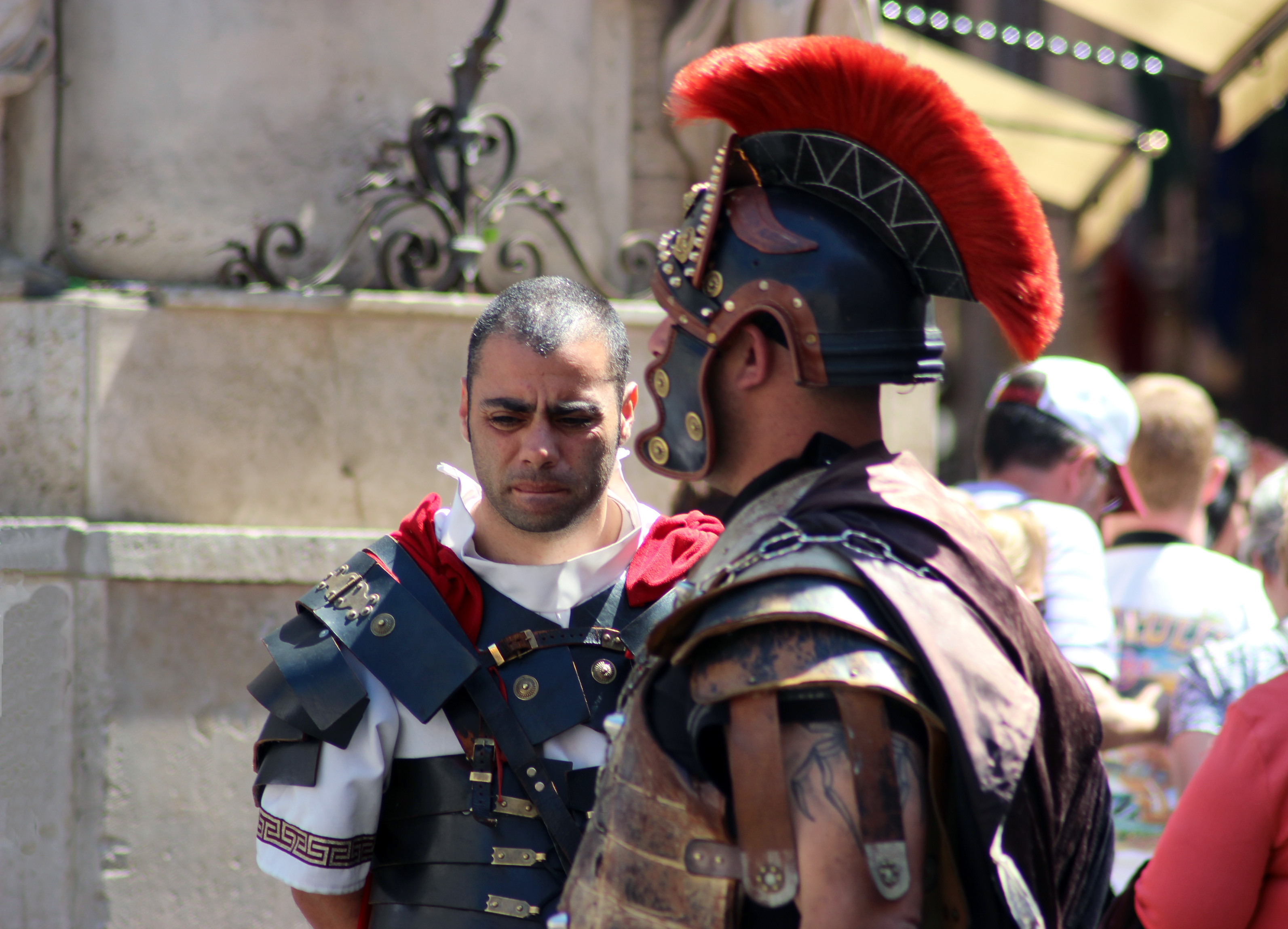
Roman soldiers.

The Spanish Steps.

My Bulgarian friend Dani, mistaken for the mysterious ‘Russian lady’, charms the local police for a photo. If you arrest us, can we stay?

Return to the dust world

I finished reading Honey and Dust before our flight back to London, following Piers’ spiritual journey through Sri Lanka and India. In-flight entertainment was offered by re-reading the passages that describe the secret life inside the hive:

‘It all starts with nectar,* a sweet, sticky substance produced by flowers, and loved, above all, by bees. Probing inside the flower, the bee sucks up this sugary substance and stores it in a ‘honey sac’ – essentially a second stomach. Flitting from flower to flower until the honey sac is full, the bee then returns to the hive…  One jar of honey is also the result of about 80,000 trips between flower and hive, the result of about 55,000 miles of flight, and the nectar from around 2 million flowers.’

Back home in London, I missed Rome but I was left with wonderful memories and Honey and Dust would forever be indelibly entwined with my trip.

The Vatican in light and shadow.

As a beekeeper, I found Nepal to be the real beating heart of the book, which brought to life the ancient practices of our craft carefully preserved by forest tribes who are themselves fading from the roar of encroaching civilisation.

Honey and Dust is an enchanting read that I highly recommend to beekeepers and to anyone who is interested bees and honey, but with a word of warning that once tasted you will become addicted to the sweet world of the bee.

A final word on Rome – you will love it.

Related links

Honey and Dust: Travels in search of sweetness
Piers Moore Ede
Published by Bloomsbury, London: 2006
ISBN 0-7475-7967-9

A very important message from the bee inspectors for June

The National Bee Unit (NBU) issued a starvation risk this week and urged UK beekeepers to check their colonies for food supplies:

‘With the continued spell of poor weather in many areas of the UK, reports are coming in from Regional and Seasonal Bee Inspectors of starving bee colonies, where the beekeeper is not aware that the bees are severely short of food, or the colony(s) have already starved to death.’

While in May it seemed unusual that we were still feeding our bees, the NBU’s latest news alert – a starvation risk in June – reinforced what an unsettled year this has been for many UK beekeepers and their bees.

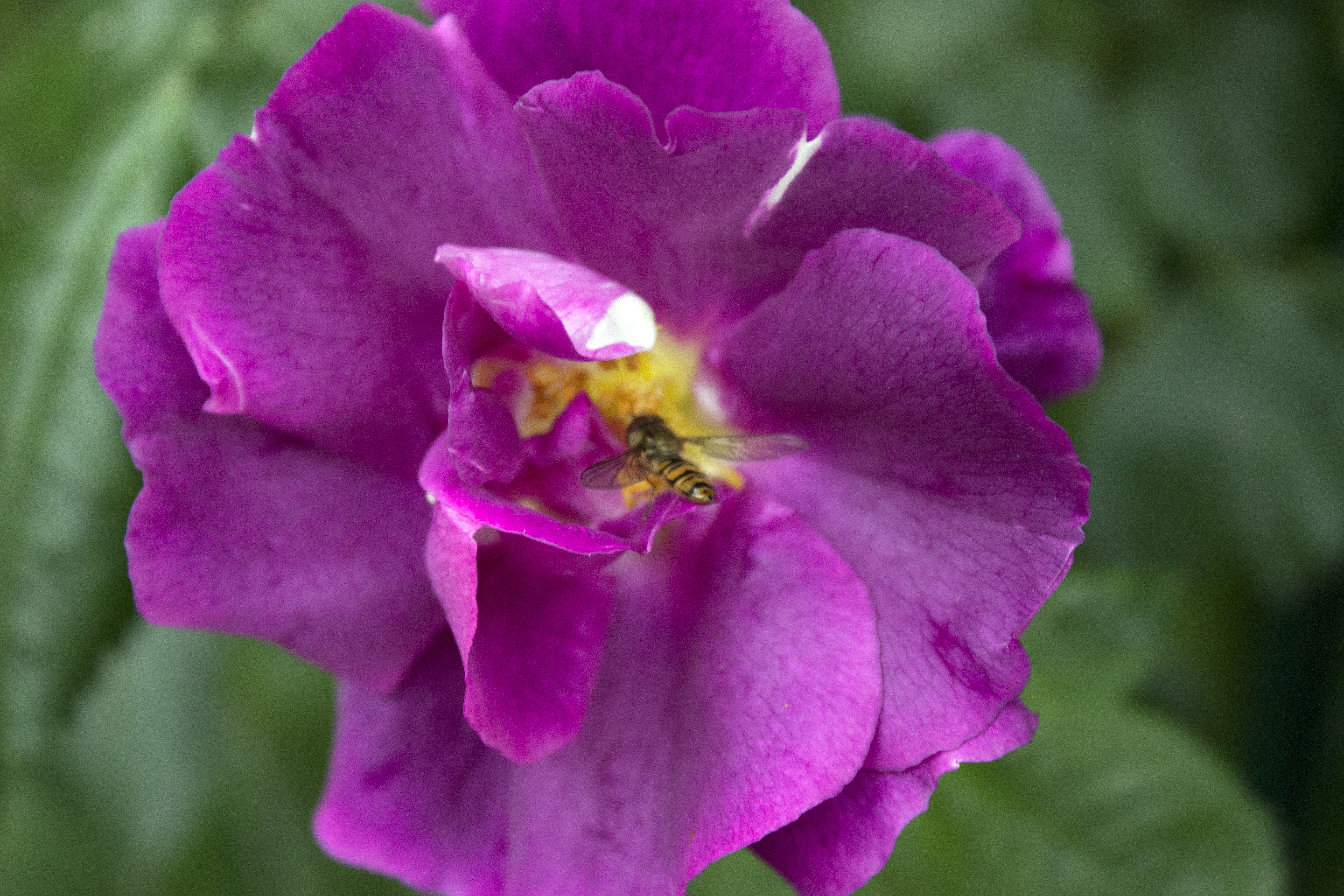
There is forage for pollinators like this hoverfly I spotted in my workplace’s medicinal garden, but the rain has made it difficult to collect nectar and pollen.

Bee colonies at particular risk of starving include those with the supers (honey crop) removed, hives which have been split or artificially swarmed, nucleus colonies, colonies collected from swarms, and even larger hives which haven’t swarmed but which haven’t gathered sufficient food due to rain. So basically most hives are at risk because of the poor weather in the UK!

‘Please, sir? Can we have some more?’ Nucleus hives which are smaller and more vulnerable may be at risk of starvation.

Emily and me have fed our bees all season as a combination of rain and drone laying queens has prevented our hives from growing to full strength. Yet I was concerned by the NBU’s alert and emailed Andy Pedley to send the news to Ealing beekeepers. On Saturday morning I mixed enough sugar syrup for our two hives and the other colonies at the apiary.

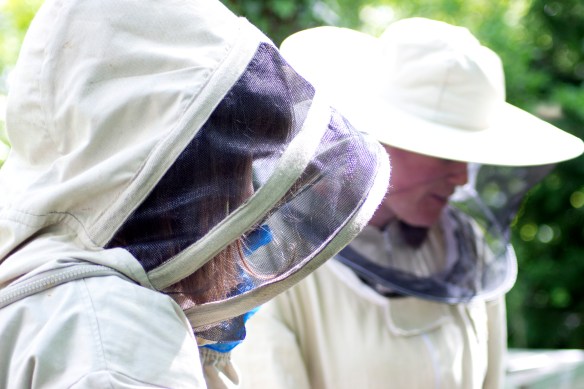
Hefting a heavy bag of beekeeping supplies on tube and foot, I arrived at the apiary in time to tag along with Andy’s beginner beekeepers session. Emily, Albert and me have all taken the introduction to beekeeping course, but we watched and listened to Andy’s practical tutorial with interest. In beekeeping it never hurts to be reminded of the basics and there is always something new to learn when observing an experienced beekeeper inspect a hive.

Spotted – a group of beginner beekeepers at the apiary.

Andy picks out a frame from a nuc to show the group. There are black bees and light gold bees which may indicate that the queen has mated and is laying different coloured bees, or that two colonies were combined to make a nuc.

Andy and the beginners had fed the colonies they visited, so Emily and me opted for ginger beer and cake before inspecting our bees. Emily had brought a bottle of ginger beer and there was plenty of cake to choose – almond and fruit to chocolate and pecan. It was like Jubilee all over again!

Beekeepers well fed, we visited our recently combined hive and the new nucleus colony with Albert and Pete, a beekeeper-in-training.

A gift-wrapped box of bees from Osterley Park was found sitting next to our spare hive last week!

Last Saturday we had received a gift-wrapped box of bees from Osterley Park, which the apiary has given us to keep as a training hive for beginners. The Osterley bees had filled their five-frame nuc, so we moved them across to a hive and I spotted the new queen, another bright orange beauty, who we named Ginger. We had closed up the small colony with dummy boards and insulation in the roof to keep them warm, and, of course, left a full feeder of syrup above the crownboard.

This Saturday was our first real inspection of the Osterley bees, but they were not doing as well as hoped. The extra frame of foundation was barely drawn out with comb and there was not much sign of worker brood.

Our new Osterley bees are gentle and calm – Emily and me have always been lucky to have good natured bees.

Albert noticed that the queen was moving too fast and erratically across the frame, and Emily observed drone cells in the centre of the comb – two signs that all might not be well with the queen. Without knowing the full history of these bees, it was too early to decide what could be happening so we closed the hive with insulation and freshly made sugar syrup in the roof.

Fortunately, our combined hive is doing well and Neroli has settled into her queenly duties. On the Jubilee weekend we had combined our two hives because one hive had failed to re-queen and was too weak to continue. But last week revealed that the colonies had not combined successfully and the bees in the top box were bad tempered. It was one of those moments in beekeeping when three beekeepers stand in front of a box of bees scratching their heads and wondering what to do next. Believe me, it happens quite often!

Grumpy bees – last week the drones in the top box of our combined hive were not too happy!

Albert had been there that Saturday and the three of us managed to work out the problem. The queen excluder above the bottom box had also excluded the drones (who are larger than workers) in the top box from moving down. The poor frustrated drones had been trapped in the top box for a week and were letting us know that they were not happy by buzzing loudly.

It was easily remedied by removing the queen excluder and remaining newspaper allowing the two colonies to meet up. We had separated the two brood boxes with a super to encourage the bees to move honey from the top box into the bottom box.

The bees have started taking the honey from the comb in the top box to move into the bottom box. Notice the large holes in the wax comb at the bottom of the frame – our bees also tend to rob wax from frames to use in other parts of the hive.

Happily, this week the bees had followed the books and were getting along just fine. The frames of honey in the top box directly above the brood nest had been emptied, good girls! Albert suggested giving our bees a helping hand by using a hive tool to score across the remaining combs of honey, and then place these above the brood nest again. The workers seemed to appreciate our efforts and immediately got to work. Hopefully, next week the top brood box can be removed completely and both colonies will be in one box.

Emily uses a hive tool to score across the comb and make it easier for the bees to rob out the honey.

We carried out a quick inspection of the bottom box because there was no need to disturb the recently mated queen and her bees. There were signs of healthy worker brood nicely patterned across the comb, growing stores of pollen and nectar, and even a propolised ‘dance’ floor at the entrance of the hive. Neroli appears to be an excellent queen like her mother Lavender.

It was another good Saturday’s beekeeping. Here is a short clip of our activities.

Related links

National Bee Unit guidelines on feeding bees: the NBU has provided advice for beekeepers who are concerned or unsure about food supplies in their hives:

  • Heft a hive by lifting the hive from below the floor to check its weight. If the hive is light, it should be fed.
  • Feed with sugar and water mixed at 2:1 ratio or using a ready mixed syrup from a beekeeping supplier.
  • Use fondant in an emergency if nothing else is available, although liquid feed is more appropriate for this time in the season.
  • Large starving colonies will take 1 gallon (5 litres) of syrup and smaller colonies can take ½ gallon (2.5 litres), but the hives should be checked after feeding within a few days.

Further guidance on feeding bees is provided in the National Bee Unit Best Practice Guideline No. 7.

Celebrity beekeepers told to buzz off

This interesting article in the London Evening Standard explores an area that has worried the city’s expert beekeepers for some time. Are there too many hives in London and not enough forage for bees? Read about it here.

The wonderfully talented Amber Tenzin-Dolma

Working from her Hobbit House studio in Bath Spa, Somerset, Amber Tenzin-Dolma creates vibrant and imaginative artwork inspired by nature and science. This talented young artist blends watercolours and oils, tempera and gold leaf, mixed media and graphic design to form ethereal illustrations and intricate geometric fractals.

I have been friends with Amber’s mother, Lisa Tenzin-Dolma, since my days as commissioning editor on the partwork magazine, Enhancing Your Mind Body Spirit. Lisa is a writer, artist, musician, canine psychologist – and Amber has inherited her mother’s creative energy, artistic skills and passion for the natural world.

On a visit to Bath this year, I was warmly welcomed into the charming Hobbit House set among the pretty countryside of Somerset. Amber’s beautiful paintings reflect her surroundings from Bath’s classical Roman and Georgian heritage to the wide fields and wild woodlands.

A sphinx of classical mythology sits beneath blue skies and sunlit clouds.

A woodpecker painted on the door leads the way into Amber’s art studio.

Early on Sunday morning I sat in Lisa’s sweet-smelling herb garden as a hot air balloon passed overhead and watched a fat bumblebee exploring the lavender and thyme. I remember thinking that the bumble’s bright colours, fuzzy fur and symmetrically patterned wings would make a good study for Amber’s art…

A bumblebee of Bath plants the seed of an idea…

Some time passed since I returned to London after a fun weekend spent catching up with my friend and walking the dogs in the woods, but the thought was never lost. I eventually contacted Amber to ask if she was interested in a brief for my blog: a watercolour inspired by the magical alchemy between flowers, bees and honey, and taking flowers used to obtain essential oils such as myrtle, rose, lavender, thyme, rosemary and violets.

Amber was thrilled at the idea and almost immediately sent back some initial sketches, which were exactly what I had in mind.

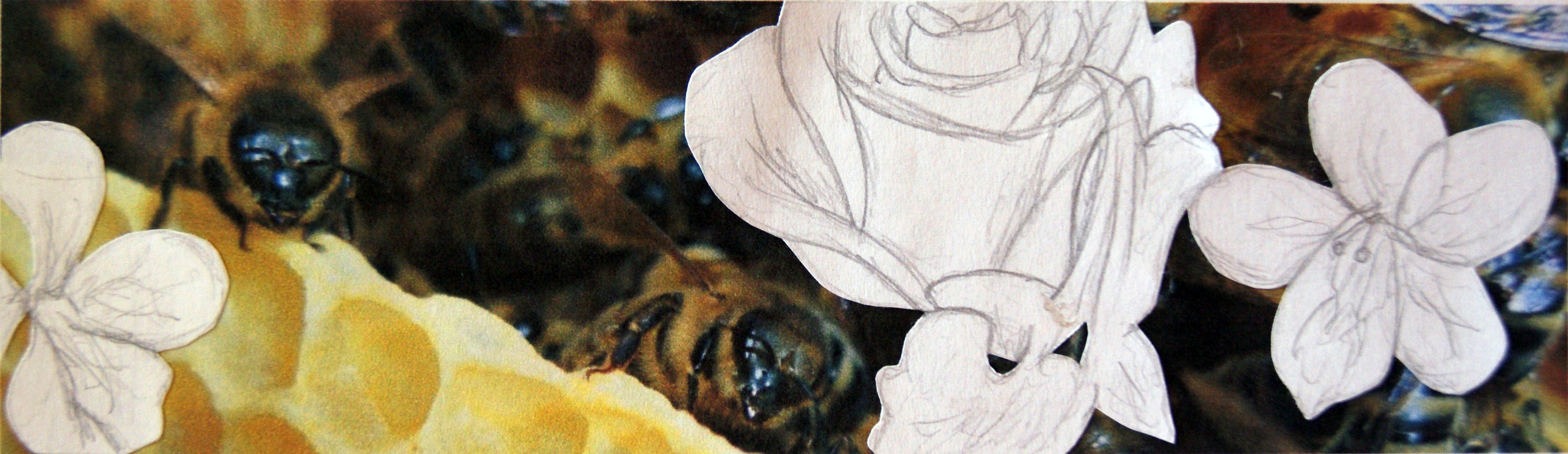
A sketch of the banner artwork. Amber used rosemary, violets and a rose overlaid on a photo of our mischievous bees when Emily and me had caught them making brace honeycomb last year.

For the background art, Amber used myrtle, rose, lavender, thyme and violets with three hungry bees and, of course, honeycomb. The flowers were chosen from my favourite essential oils with creative license to make myrtle my favourite colour – pink!

When I returned from my holiday in Italy, a lovely surprise was waiting in my inbox – the final paintings for my blog with added sparkle. Bees have never looked so pretty.

After experimenting with crops and tiling, Amber’s beautiful artwork went live on my blog yesterday and I couldn’t be happier. As an aromatherapist and beekeeper, the art represents, for me, the special relationship that flowers have with bees – and the close connection between essential oils and bees!

Amber also designs and makes jewellery using semi-precious stones and silver. She really is a talented lady. A few years ago, I commissioned this turquoise, lapis lazuli and amber necklace as a christening present for my niece, Lauren, which many years from now she will receive to wear on her 21st birthday.

An Egyptian-style necklace created by Amber for my niece, Lauren, using the semi-precious stones of her birth sign – turquoise, lapis lazuli and amber!

Looking at the cute honeycomb background for my blog, I wonder how lovely our hives would look with an Amber Tenzin-Dolma design. Maybe next year…

Related links
Amber’s sketchbook and paintings are available on her website, and her jewellery is sold on Etsy at Aether Design.

I shouldn’t forget to mention that Lisa and Amber share their home with a deerhound-greyhound lurcher called Skye, and a 15-year-old Oldies Club collie-husky foster dog, Shep ‘The Shepster’. Lisa’s new book, The heartbeat at your feet, will be published later this year.

Skye and his paws.

Shep ‘The Shepster’

The red-headed queen of the Diamond Jubilee

‘For the first time in the history of the world, a young girl climbed into a tree one day a Princess and after having what she described as her most thrilling experience she climbed down from the tree next day a Queen.’ The moment a princess became a queen, by Rosie Waites, BBC News Magazine 

The Queen’s Diamond Jubilee brought street parties with red, white and blue bunting this weekend to mark 60 years of HRH. As the queen is an honorary fellow of the Royal College of Physicians where I work, we celebrated Jubilee Day last week and held a charity cake sale with all the proceeds going towards the Prince’s Trust. There was traditional English food on offer in the buttery including roast beef and Yorkshire pudding.

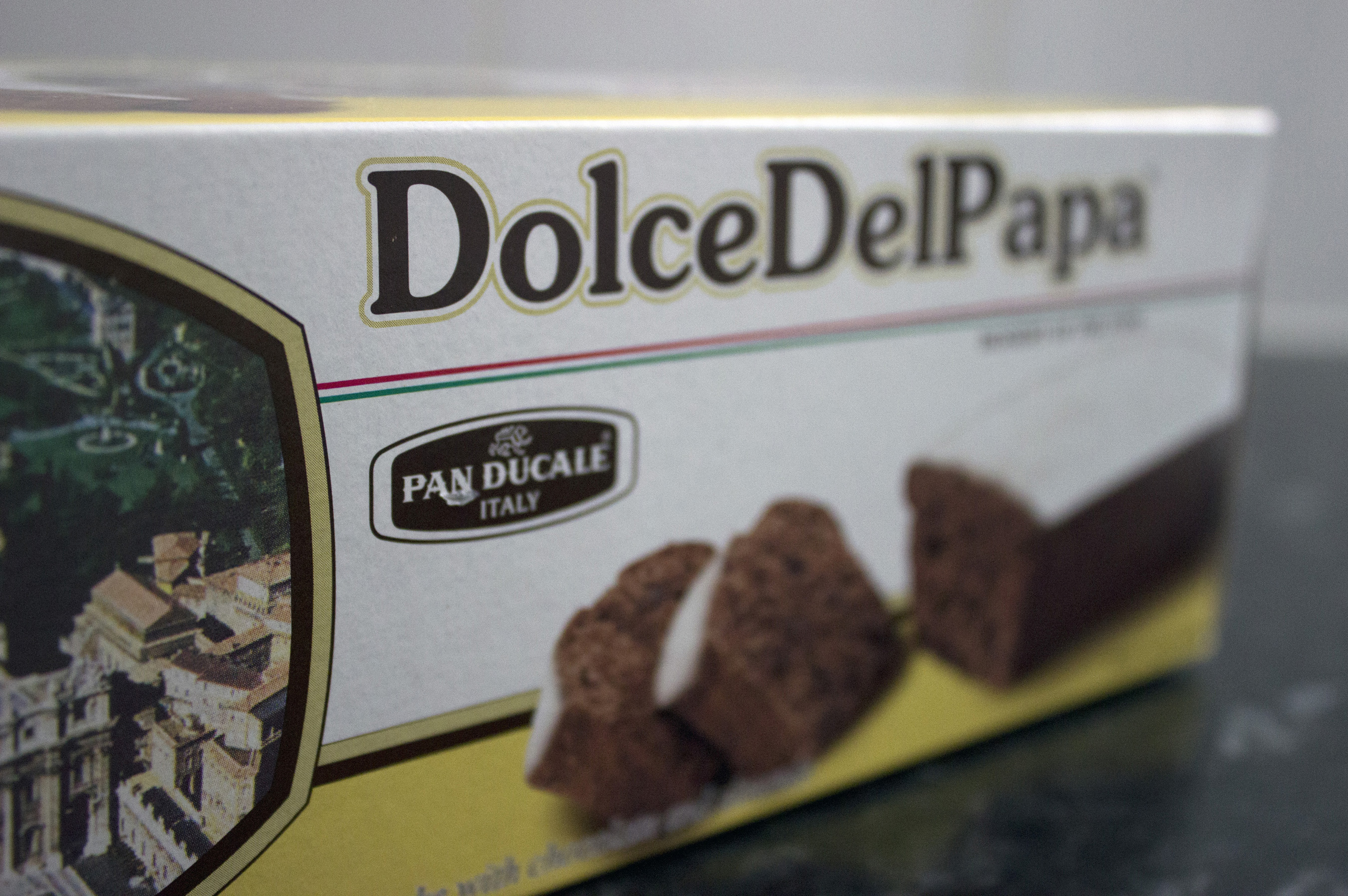
At the apiary on Saturday there was also lots of cake, which is not that unusual. I had brought a cake from my holiday in Rome called ‘Dolce del Papa’, or ‘Dessert of the Pope’, which I was bemused to see John Chapple, the queen’s beekeeper, eyeing a bit suspiciously before taking a slice.

Dessert of the pope – it’s heavenly delightful!

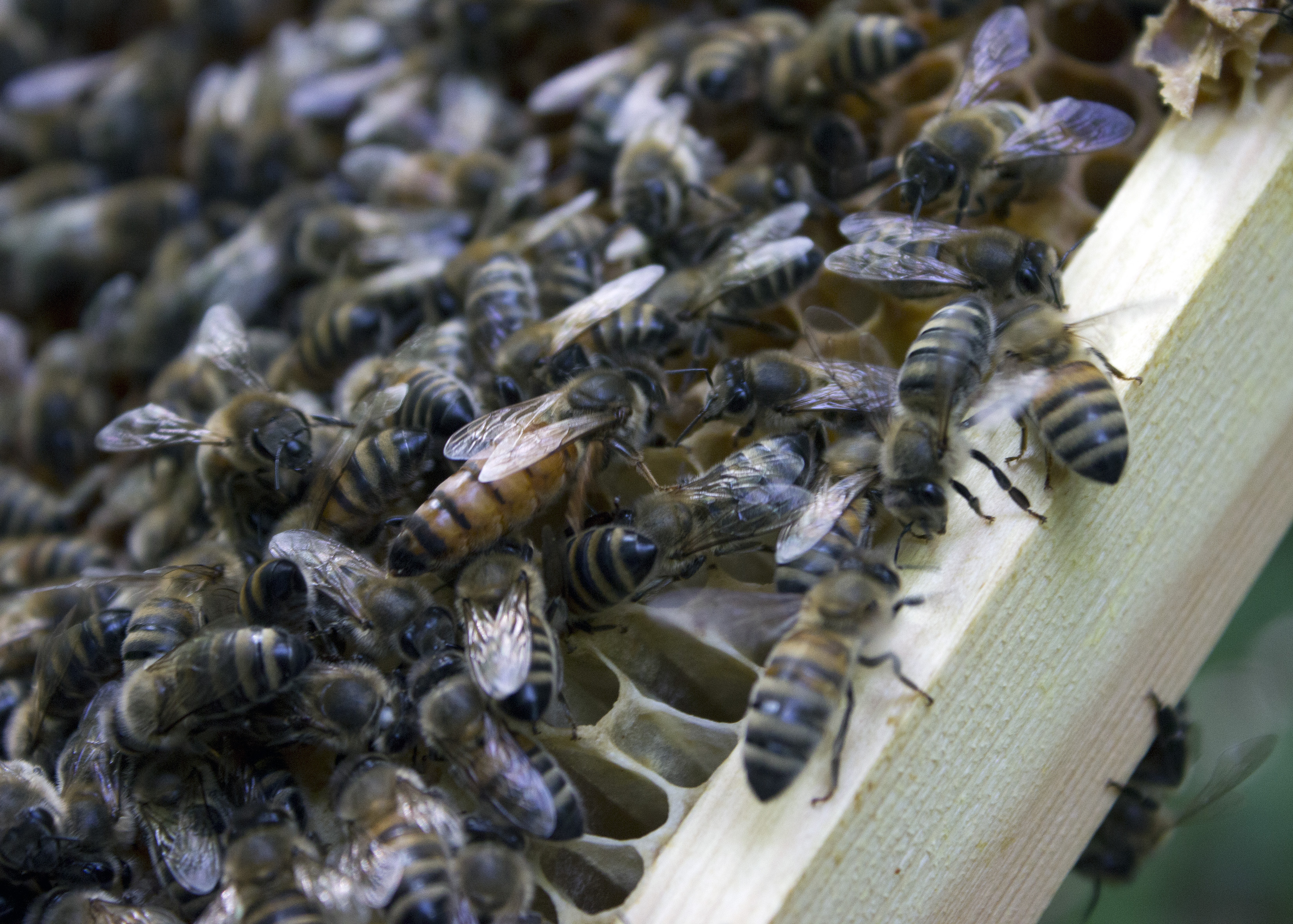
Emily and me had our own queen to celebrate – a beautiful bright orange virgin which had been spotted by Emily in our swarmed hive while I was in Italy. To our delight, the queen’s enlarged abdomen indicated that she had mated and she was happily running round the comb being attended by her revenue of ladies-in-waiting.

Queen Neroli, our bright orange Diamond Jubilee queen!

Emily thinks her mother, Lavender, mated with New Zealand drones, which would explain why our new queen is very orange. We have decided to call her Neroli, which is the oil obtained from the blossom of the bitter orange tree. The essential oil (Citrus aurantium var. amara) takes its name from the 17th-century Italian princess of Nerola, Anna Maria de La Tremoille, who famously wore the oil to scent her gloves. A royal name fitting for a queen bee who took her crown on the Diamond Jubilee.

Salvatore Battaglia says the aroma of neroli is light, refreshing and floral, citing Valerie Worwood’s The fragrant mind which describes the essential oil to be ‘ageless, forever young in a spring-like way’. Emily and me hope Queen Neroli will live long and bring good fortune to her hive.

A queen cell from our swarmed hive placed in Myrrh’s dwindling colony has not produced an heir.

Sadly, Myrrh’s old hive remained queenless. The queen cell that I had placed in the colony from our swarmed hive two weeks ago was still capped. Queen bees usually emerge eight days after the queen cell is sealed, so it seemed unlikely that the larva had survived this long. John suggested uncapping the cell to be certain and showed us how to do this gently with a hive tool. If the queen was alive then this would allow her to emerge – but the uncapped cell revealed a shrivelled, blackened, dead queen bee inside the cell. John thought she may have died from black queen cell virus.

A blackened and shrivelled dead queen which may have died from black queen cell virus, associated with the hive disease nosema.

This hive has been unlucky with queens – a drone-laying queen after winter, an unmated queen in spring due to bad weather, and two failed attempts to re-queen using frames of larvae and finally a queen cell from Lavender’s hive. This latest bit of bad luck – a dead queen in her cell – decided the colony’s fate. Emily and me had given these bees enough chances, it was time to combine our two hives.

As the new queen of our swarmed hive, Neroli, had mated it was safe to combine the hives, whereas before it may have risked stressing the virgin queen or have caused confusion when she returned from her mating flight. Combining two hives is really easy – here’s how it’s done in two simple steps…

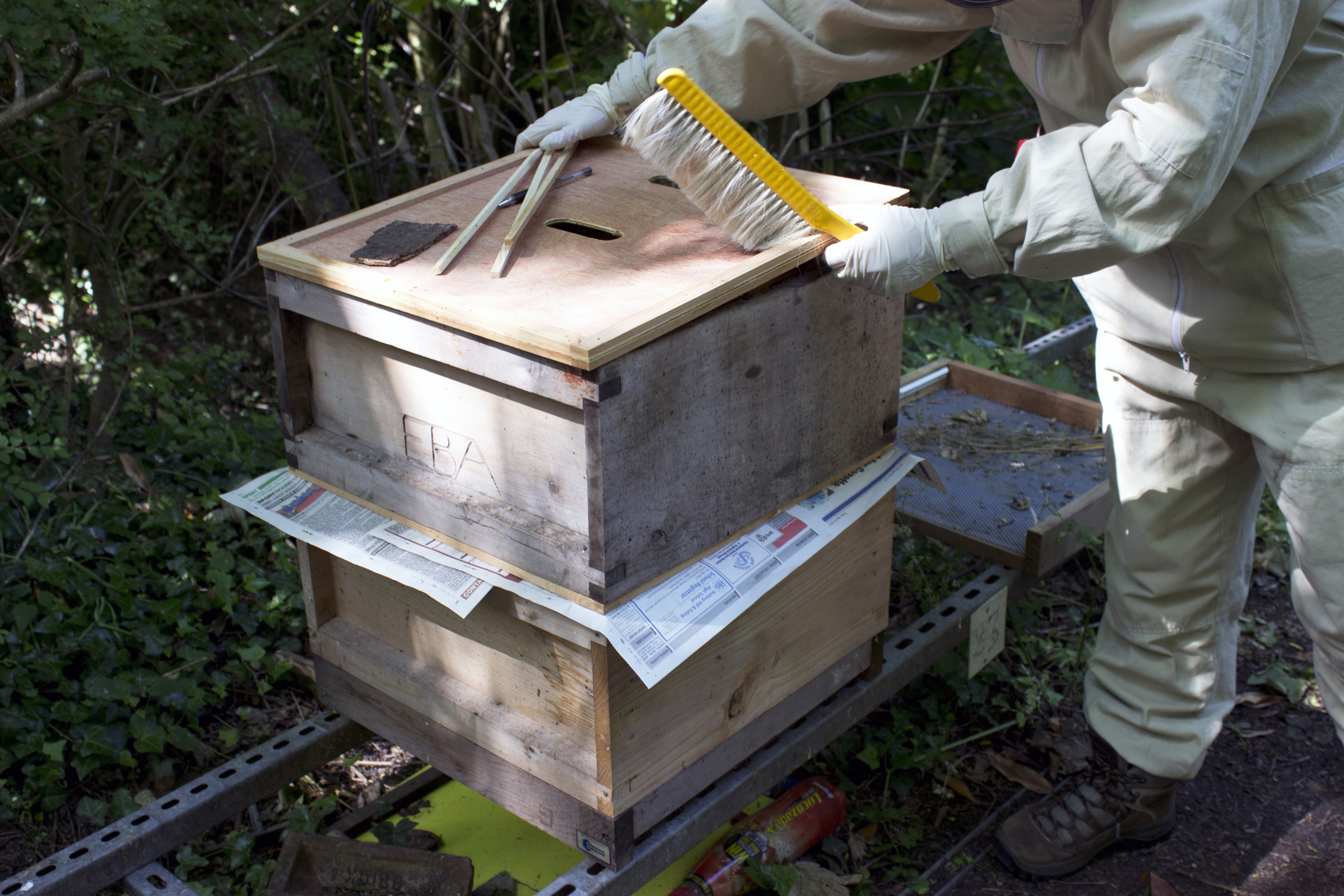
A sheet of newspaper is placed on top of the brood box which has the queen in the nest, and a hive tool is used to make a few small holes through the queen excluder as Emily demonstrates here.

The brood box of bees without a queen is placed on top. During the week, the bees will chew away the newspaper, which will give them time to become accustomed to each other’s smell and prevent fighting – they will be the best of friends. At least, that’s the plan.

Hopefully, next week we will return to our newly combined hive and our girls should all be getting along! John explained that hive combining should be done in the evening or early morning when the foragers are inside the hive. This is because moving a hive – even by an inch – can cause foragers to lose their way home. However, as it was already late in the afternoon he thought it should be fine.

Emily and me waited as long as possible for Myrrh’s foragers to return and circle the area where their old hive had been. When they settled on the mesh floor we carried and brushed the bees into the combined hive, but we could not get them all. Eventually the circle of returning foragers disappeared and we hoped that they had bribed their way into other hives with their loads of nectar and pollen.

Our newly combined hives – and what is this mysterious empty hive next door?

It seemed that we were down one hive, but John and Pat were busy scheming. In April Emily and me had helped John set up nucleus hives at Osterley Park and the nucs were now ready to bring to Perivale apiary. ‘Would you like another colony?’ Pat asked, to which we both replied ‘Yes!’. So before we left for the day, we used our spare woodwork to set up a new hive next door to Neroli’s. We reflected that both our hives were now in the sunniest spot of the apiary, which should help them to flourish before summer ends.

Happy Jubilee Bees!

Neroli, lavender and rose facial oil
In honour of our new queen, Neroli, and her royal mother and grandmother, Lavender and Rose, here is a hauntingly beautiful essential oil blend that can be used for a rejuvenating facial massage or for an anti-aging and nourishing night oil.

  • 9 drops neroli
  • 6 drops lavender
  • 3 drops rose
  • 30ml jojoba oil
As with all aromatherapy blends, remember to patch test before general use and don’t use during pregnancy without advice from your midwife or doctor.

Related links
The official website of the Queen’s Diamond Jubilee, where you can also send a message to the queen.

The Bad Beekeepers Club

© Drew Scott

Emily and me have joined the Bad Beekeepers Club – our bees have swarmed.

The weekend before my holiday to Rome, I visited our hives to see the bees enjoying the warmer weather. Emily was on holiday in Albania and I was to check Lavender’s hive for queen cells and to make a decision about Myrrh’s failing colony.

We rarely smoke our bees but there was a lot of beekeeping to do after weeks of rain. So I lit my new smoker for the first time this year and strolled through the dappled sunlight of the apiary towards Lavender’s hive. It was around 1.30pm in the afternoon and I expected to see bees happily flying in and out of the entrance with heavy baskets of bright yellow and orange pollen. Instead, I was surprised to see a very large, very loud buzzing cloud of bees circling the hive.

I wondered if our hive was being attacked by a mob of robber bees, but there were no skirmishes with guards at the entrance. What could have disturbed our ladies? I opened the hive and realised almost immediately what had happened. Inside the frames held half as many bees as last week – Queen Lavender and her court had swarmed.

Beekeepers smoke a colony before an inspection to ‘calm’ the bees. The bees think there is a fire and they gorge on honey which calms them and makes their abdomens too full to sting. However, Emily and me rarely use a smoker because our bees are normally very calm. © Drew Scott

Swarming is a natural phenomenon of honeybees and it is how the species reproduces itself. Alison Benjamin and Brian McCallum explain the process of swarming very well in A World Without Bees: ‘When a colony decides to swarm to reproduce, usually in early summer, it starts by raising a number of queens, one of which will take over the hive while the existing queen flies off to find a new home. The workers do this by building a number of larger queen cells and either forcing the queen to lay an egg in each one or transporting in newly laid fertile eggs. Again, feeding the eggs lots of royal jelly turns them into queens. Before the virgins emerge from their cells, the old queen will leave the nest with all of her young foragers in tow, leaving behind the older foragers and the house bees – those members of the colony that are not yet old enough to forage… The travellers gorge on a huge breakfast, equivalent to three days’ worth of food, to see them through their quest for a new home.’

Lavender’s bees – as seen the previous week – have flown off with their queen to find a new home, the splitters. © Drew Scott

During spring and summer – the swarming season – weekly inspections for queen cells are essential for swarm management, and within beekeeping circles it is said that those who manage their bees keep their bees (and their honey). In populated areas, swarming is also a nuisance when swarms land in gardens, in streets, or on houses and other beekeepers are called to collect them.

Head hung in shame that this had happened on my watch, I tried to look through the hive to find out what Lavender had left behind. However, our normally mild-mannered bees were dive-bombing my veil and attacking my gloves making a hive inspection impossible. I remembered my introduction to beekeeping course: if the hive is very bad tempered, close it and walk away. So that’s what I did.

Myrrh’s hive was not much happier and this unfortunate little unmated queen had started to lay drone. So I retreated to the apiary long table. While I am not sure if a Bad Beekeeper deserves tea and biscuits, I had them anyway and a chat to Rosemary, a newbie beek, about the strange behaviour of our hives.

Our bees are usually only mildly curious when we open the hive and a few fly out to say ‘hello’ like this bee in the picture. © Drew Scott

The tea did the trick and I decided to revisit the bees with reinforcements. Thomas, a more experienced beek, and Rosemary kindly offered to help and the three of us approached Myrrh’s hive first.

There was no improvement in Myrrh’s colony and Thomas agreed that something needed to be done soon. However, the decision would be influenced by the situation in Lavender’s old hive, so we found and caged Myrrh before visiting Lavender’s colony.

The cloud of swirling bees had completely vanished and the colony was now calm – had I caught the tail-end of the swarm earlier? As the hive had already been opened once, we tried to be quick. Thomas, Rosemary and me looked through the frames to be sure Lavender was gone and saw she had left behind several frames of biscuit-coloured worker brood. ‘She must have been a good queen,’ commented Thomas. I sighed. Bad Beekeeper.

Lavender made very nice bees. I hope she and her ladies found a good home. © Drew Scott

Lavender’s legacy was sealed within five queen cells on the middle frames, and one of these queens-in-waiting might ensure the future of Myrrh’s hive. Thomas suggested that we choose a frame with one strong-looking queen cell to put in Myrrh’s hive, then pull the two weakest-looking queen cells to prevent further swarming of Lavender’s hive.

Leaving two of Lavender’s royal daughters to decide a new ruler for her bees, Thomas carefully carried over the frame with a queen cell for Myrrh’s colony. Frames with queen cells must be handled with care, Thomas explained, because shaking can separate the queen from her royal jelly and cause the larva to die inside the cell.

A frame of bees is shaken for inspection – it doesn’t hurt the bees but it may damage any queen cells that are present. © Drew Scott

Sadly, Myrrh was dethroned because it was unlikely that the bees would accept a new queen cell while she remained in the hive. Her bees had been given a second chance to change their fortune – if they accept the new queen and if she has good weather for her mating flight. With any luck, Thomas suggested, the workers would soon be climbing over the new queen cell and coveting it like ‘that bit of chocolate you girls often hide for yourselves’.

The chances of getting honey this year are slim, because varroa treatments start in early August and then preparations for over-wintering, but I will be very happy to help our bees recover from an unlucky spring and become strong, flourishing hives for next year.

Worker bees will cluster around queen cells tightly like a ball. This is often how the new queens-in-waiting are spotted on a frame. © Drew Scott

The following week I enjoyed a holiday to Rome and when I returned Emily had emailed with mixed news:

‘I had a look today – Myrrh’s hive wasn’t looking good and were quite moody, but the exciting news in Lavender’s old hive is that I saw a new virgin queen in there! She does not look at all like her mother, which is a bit of a shock – she’s orange! Hoping she can mate successfully.

Looking on the bright side, we were told at the varroa day that colonies which have swarmed get their varroa levels down thanks to the break in brood, so that’s good. I hope Lavender and her ladies found a good home!’

Emily and me have been thinking of a new name for our orange queen: Ginger if she is feisty like her mother, Lavender, or Neroli if she is gentle like her grandmother, Rose. With the Diamond Jubilee this weekend, Neroli would be a name fit for a princess!

A worker bee waiting for orders from her new queen. © Drew Scott

Related links
More information about swarms is available on the websites of the British Beekeepers Association, the London Beekeepers Association and Ealing and District Beekeepers Association.

The title for this post was inspired by Bill Turnbull’s The Bad Beekeepers Club, which is a highly enjoyable read for new and old beekeepers alike.