The day Lolly met the bees

IMG_9727

The sun was bright at the apiary when they arrived. Most of the beekeepers had floated home as sleepily as drones. I ran to meet them as small feet in sparkly pink boots pattered down the overgrown path.

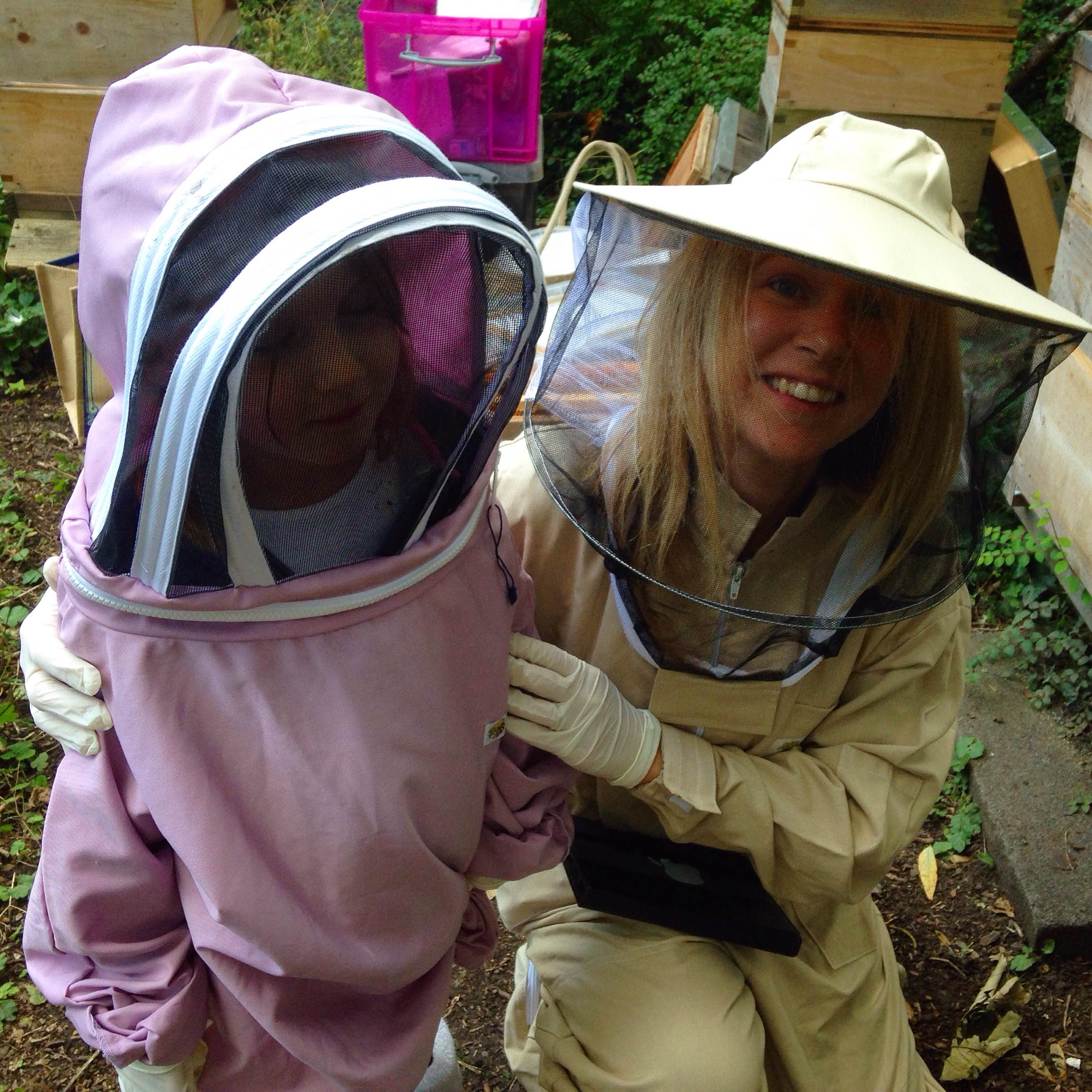
The visitors were my sister Amie and her five-year-old daughter Lauren (Lolly). They had come to meet the bees. “Come and meet my hive partner, Emily,” I said, as Lolly looked around curiously. She is very shy in new company so introductions were brief.

IMG_9710

Lolly wore fur-trimmed, pink-glitter Frozen boots for her ‘bee wellies’ and was pleased that I had picked out a matching pink bee suit. These are probably the sparkliest bee-boots that I’ve ever seen.

Emily, Tom and Jochen went on ahead to check Ken’s hive, while my sister and niece put on their bee suits and gloves. That done, we were ready to venture into bee land.

IMG_9711

My sister Amie is suspicious of stripy, stingy flying things, so it was brave of her to visit. She admitted “I was thinking in the car on the way: ‘Oh dear, oh dear – bees!'”

Lolly stood in the apiary clearing quietly taking in all the hives. “This is where the bees live,” I said. “Let’s go see my bees.” We walked to Queen Melissa’s hive and stood watching lots of honeybees flying to-and-fro.

“What’s that?!” asked Amie, as something buzzed past her veil.
“A bee,” I said.
Lolly stared at the hive.

I lit the smoker and put it on the roof. “The smoke makes the bees calm in case they’re naughty,” I explained to reassure them both. “But these bees are very good.”

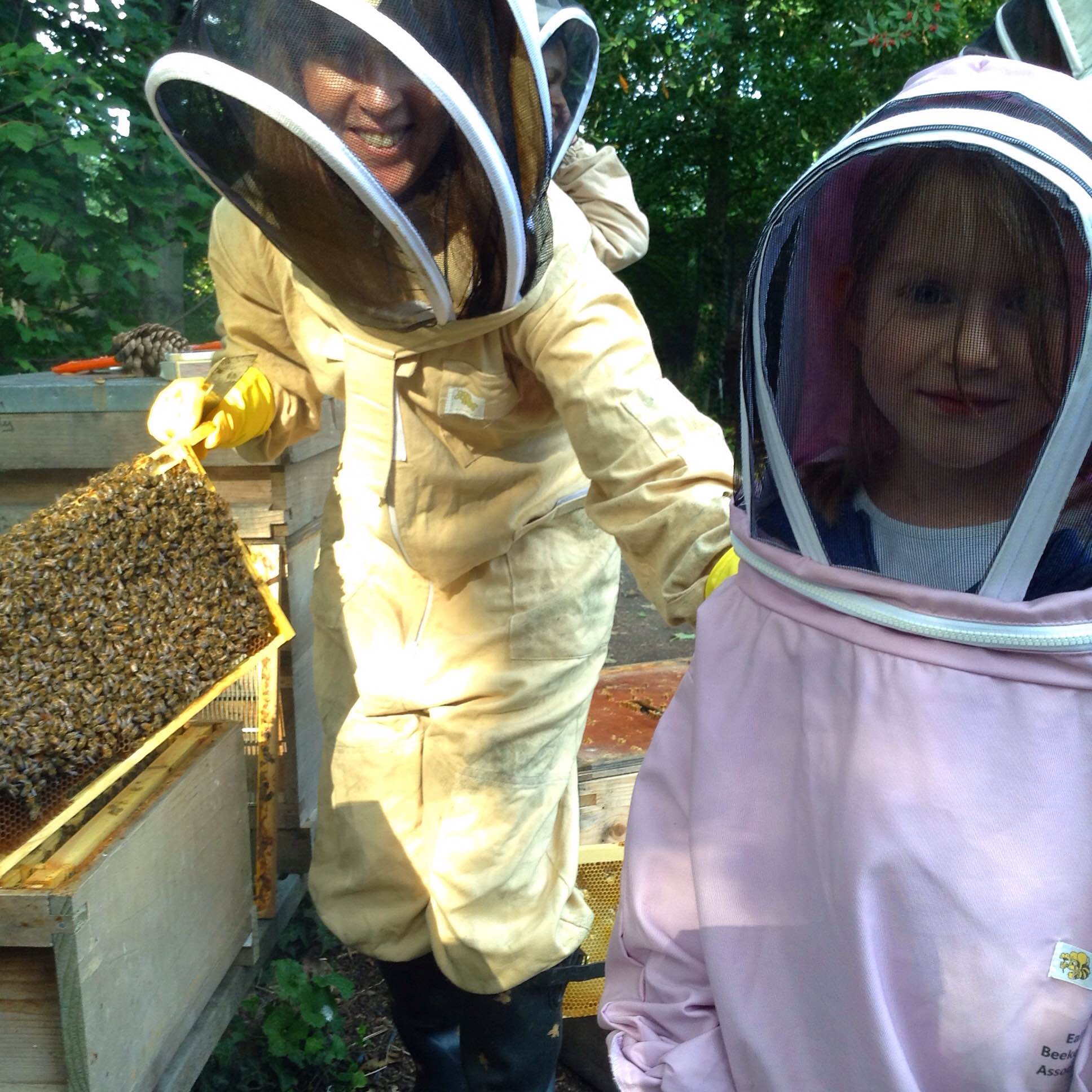
Their eyes widened as I pulled out a frame of bees from the super box. The bees were busy working on the honeycomb. I pointed out the cells of glistening nectar collected from flowers and the white-capped patches of honey.

IMG_9723

IMG_9713

Thanks Emily, for this surprise picture of us all on my phone!

I showed Amie and Lolly the crownboard to introduce the workers crawling across. “These are girl bees, because they have smaller bottoms than the boys,” I said, “The boy bees are mostly thrown outdoors by their sisters at this time of year.” Lolly nodded at the joke, because sometimes she has to throw her little brother Zac out of her bedroom.

IMG_9712

Next we looked inside the nest. I lifted the super to one side and prised apart the queen excluder using my hive tool. “The bees make everything really sticky with propolis, which is a tree sap,” I told Lolly, “The propolis helps to keep the hive clean and warm.”

The queen excluder now removed, I explained that we were looking at the bees’ nest inside the brood box. “This is where Queen Melissa lives with her bees.”
IMG_9725

Lolly stepped a little closer as Amie brushed a bee off her back. I pulled out a brood frame of glittering nectar. “What are these bees?” I asked. “Girl bees,” answered Lolly. The bees were as good as gold. Their gentle humming meant they were happy.

Emily gave the brood nest a quick puff of smoke as I pulled out a frame from the middle of the hive. Things got more interesting.
IMG_9715

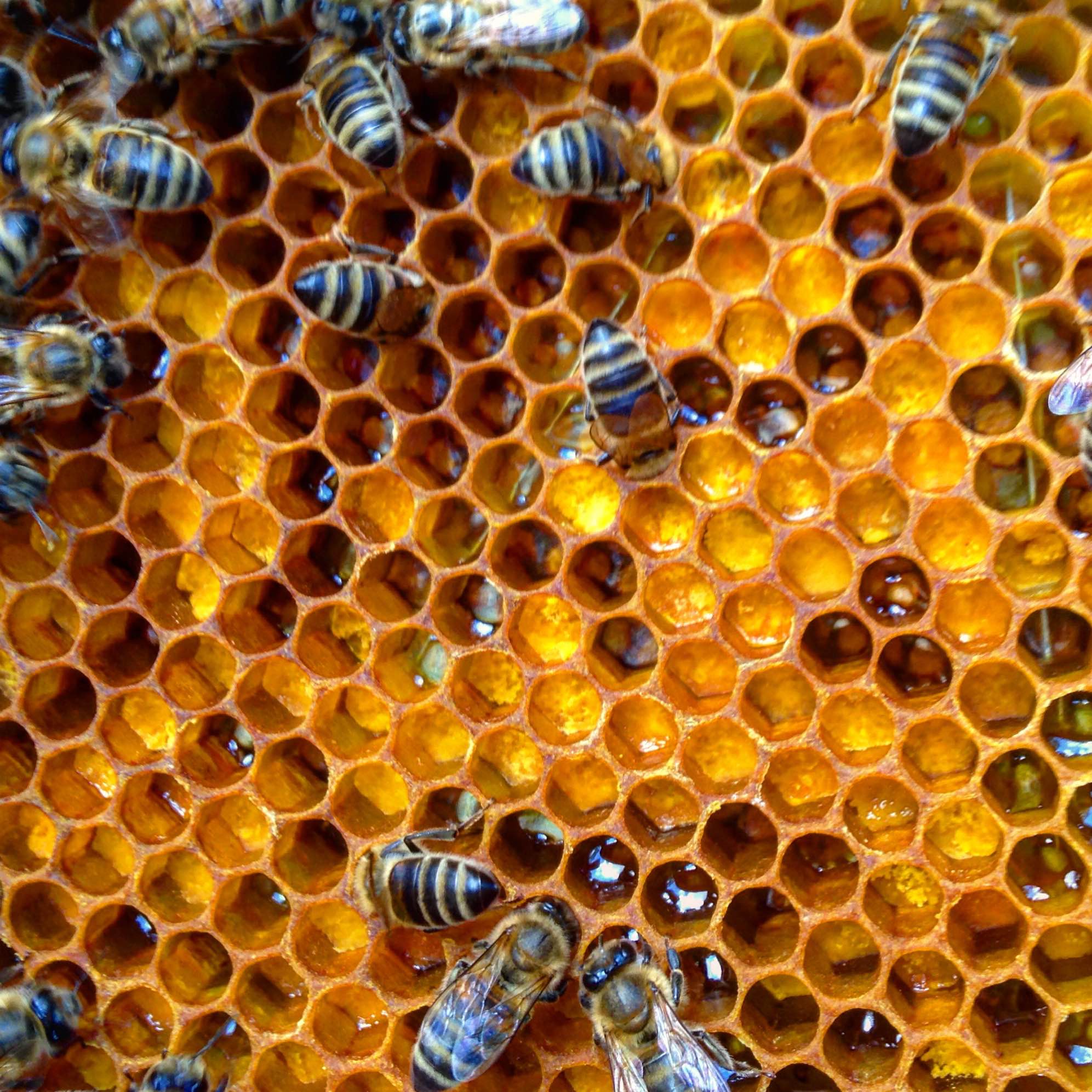
Lolly stepped closer as I told her what was happening on the honeycomb. “Here the worker bees are keeping the baby bees warm in their cells until they are ready to hatch. It’s probably warmer inside the hive than your home.” I brushed a few workers aside to reveal the biscuit-coloured brood cells. Then a few bees walked past with bright-coloured blobs on their legs. “The bees are carrying pollen home from flowers like you see in your garden.” I pointed at the cells with gold-and-orange pollen inside. “The bees will head butt the pollen into the cells and use it to make bee bread to eat.”

I put the frame back inside the hive and asked Lolly what she thought of the bees. “Good!” she said with a big smile. She was even happy to hold a frame of bees by herself.

IMG_9724

The humming was getting slightly louder as I told Amie and Lolly to listen to the difference. “The bees are ready for their bedtime.” Emily and I closed the hive. “Do you want to give the bees their dinner?” Lolly nodded. She helped me pour the autumn syrup into the feeder. I gave her a ball of beeswax scraped off the crownboard to take to school for show-and-tell.

IMG_9726

Emily and I had checked the hives of queens Pepper and Peppermint earlier in the afternoon. Here’s pink-spotted Pepper walking across the frame. There seems to be a lot more pink at the apiary since Emily and I started keeping bees.

IMG_9716

The bees seemed content with their visitors, my sister Amie was glad of her veil, and Lolly was amused by the whole adventure. The neighbouring bagpipe player had also come out to play for the bees, which she thought was funny. It was time to go home for dinner and tell baby brother Zac all about the bees and the bagpipes.
IMG_9714

If you enjoyed reading about Lolly’s visit, you might like The day my mum met the bees.

A beekeeper’s notes for September

spider dangling

The spiders spin their crafty webs between the autumn sedum in September. Thousands of tiny pink star-like flowers open to welcome honeybees in their dozens to drink from a forest of nectar.

The bees trip over themselves to visit every single flower. They fly carelessly close to silken strands where garden spiders dangle beneath the leaves waiting to pounce. The bees’ tantalising electrical charge in the air attracts the webbing even closer to their wings.

IMG_9528

I think the variety of sedum in our garden is autumn joy? The large clump of ungainly leaves growing out from the bottom of the decking had looked suspiciously like a weed to untrained gardeners’ eyes. “I’ll dig it out for you,” my dad said, eager to clear away overgrown foliage from our garden. “No” I replied, “We’re waiting to see what everything turns into this year.”

The green clusters have slowly exploded into bright pink blooms over the past couple of weeks. “Is there a nest of bees in the garden?” John and dad both had asked me. “No, just the autumn sedum,” I replied.

IMG_9530

I was tempted to brush away the spiders’ webs to protect the foraging bees. But who am I to interfere and deprive a spider of her dinner? The sedum looks well established and it’s likely this dance between spiders and bees has been going on for decades in our garden. So far I’ve counted only one mummified bee in a web, the spiders are hardly winning.

The nectar flow is usually considered to be over by many beekeepers come late summer to early autumn. However, as I watch the bees in the garden few appear to be pollen collectors. Their baskets are empty as they search for every place on the flower beds to drink. This gives me hope that autumn forage will bring both more nectar and pollen to the hives, if the bees can withstand the chilly drop in temperatures.

IMG_8914

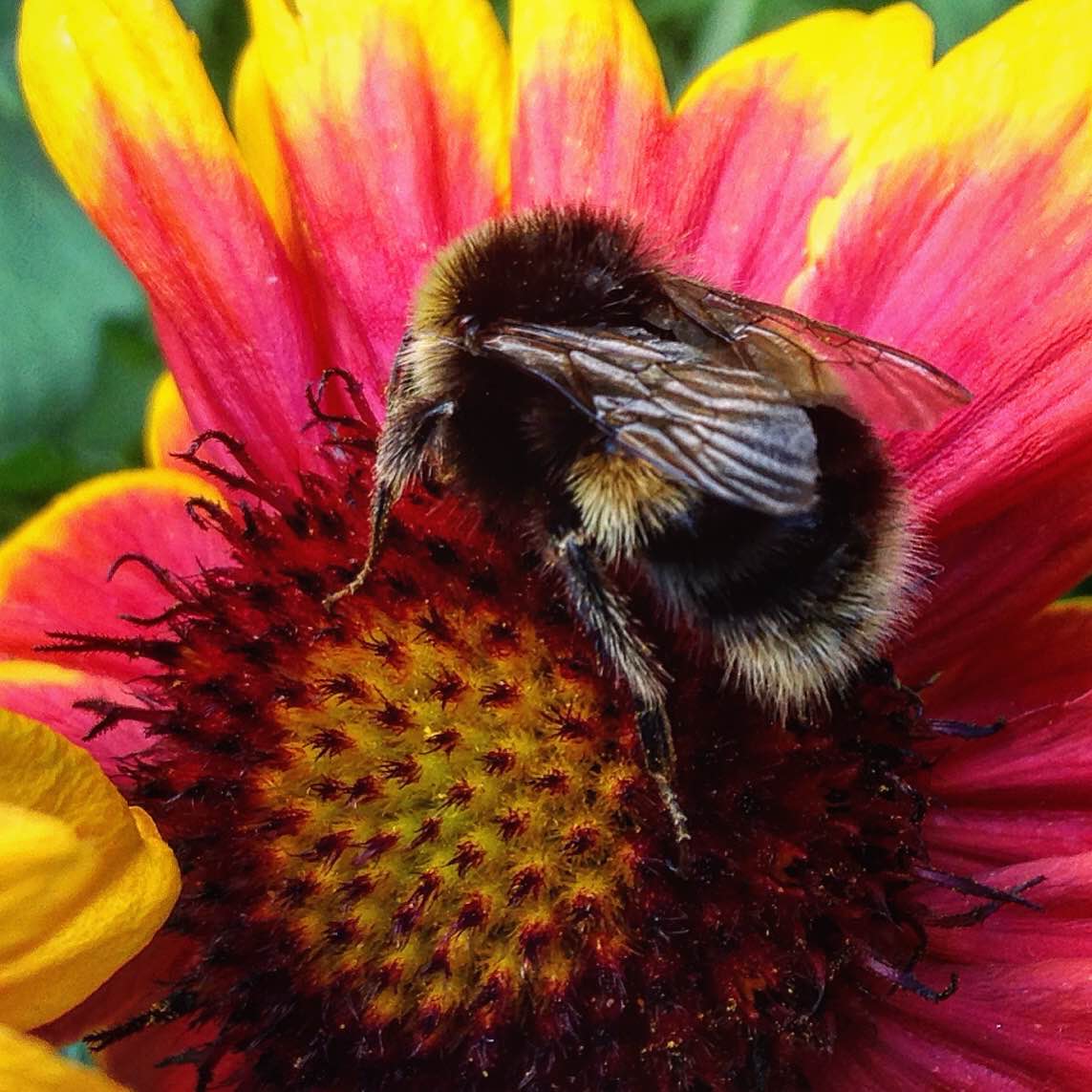
This hardy warm-blooded bumblebee in a garden centre seemed less bothered by the cool day than the cold-blooded honeybees.

At the apiary table beekeepers were taking a pause for tea, and honey fudge bought by Emily from her holiday. “This looks far too posh to eat,” complained John Chapple. “I think you should wrap it in Christmas paper,” agreed Stan. Emily cut the fudge into cubes for the beekeepers to (reluctantly) eat.

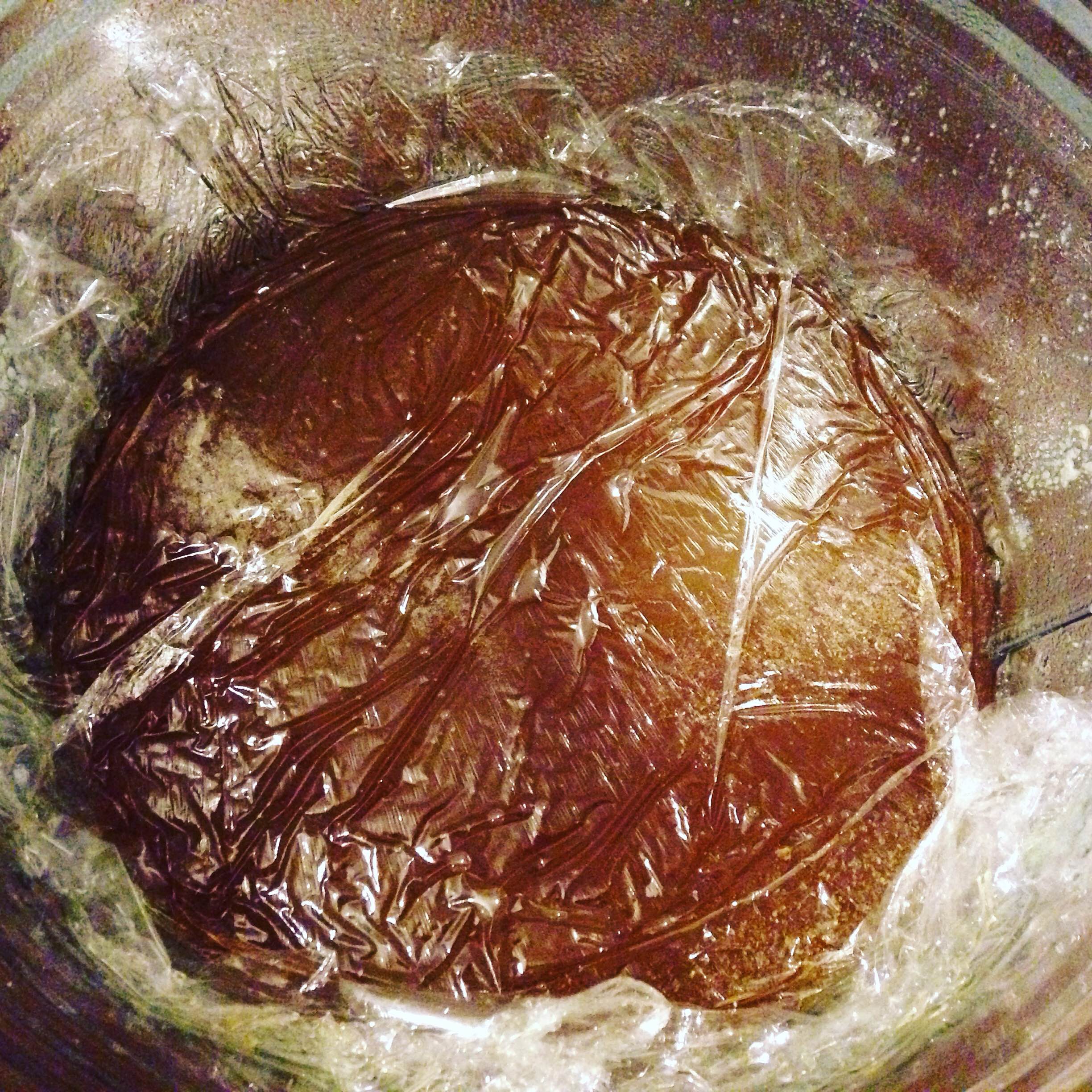
Talk was on about this year’s National Honey Show with Jonesy being persuaded to take part. I shared a tip passed-on by Dev from last year’s honey judges. To get out more air bubbles, spread cling film on the surface of the honey and leave (perhaps 20 minutes) then peel off…

IMG_9586

… air bubbles cling to the film and lift off. I’m not sure of the physics behind it, but it works. Clearer honey!

IMG_9587

Our three hives have ended the summer queen right. With the honey crop off and the Apiguard treatment finished, we’re checking the bees are bedding down properly for winter. To prove the point, Melissa’s colony had stuck down the hive roof hard with lots of propolis.

Peppermint’s hive was low on nectar stores (we hadn’t harvested from this artificially swarmed colony) although packed-full of bright orange pollen. There were also piles of beautiful orange pollen dropped at the bottom of the hive. Be more careful with your shopping, ladies! Going through the frames it was clear this hive would need autumn feeding to meet their quota of 20–30 lb of honey to survive winter. The bees were well behaved despite the low amounts of stores and brood in the nest, which would usually make a colony quite grumpy.

IMG_9584

In Melissa’s and Pepper’s hives the August wash-out had made the bees tuck into their put-away stores and left the returned wet supers unfilled. A reminder of how quickly things can change in bee land. Emily and I may decide this month whether or not these supers now need to be taken off for safer storage against wax moth. There’s no hurry, we’ll wait and see if the forecast Indian summer makes any difference.

We didn’t spot the queens this weekend, but the bees were behaving as good as gold so their majesties must be at home. I wondered if it might also be the effect of Jochen standing nearby. This German beekeeper seems to have a calming influence on our bees.

IMG_9585

Emily holds up a brood frame from Melissa’s colony. The hive had completed a Bailey comb change in the spring, yet how quickly the golden honeycomb turns brown after one summer of brood. It makes me think of how many bees have emerged from each cell leaving behind a cocoon.

The summer holidays felt like a distant memory as we talked about getting ready for winter. Autumn is always a reminder of how fast time flies.

IMG_9366

Two bees chat about their summer holidays while sticking propolis to the hive roof.