The case of foul brood and the diabolical baby

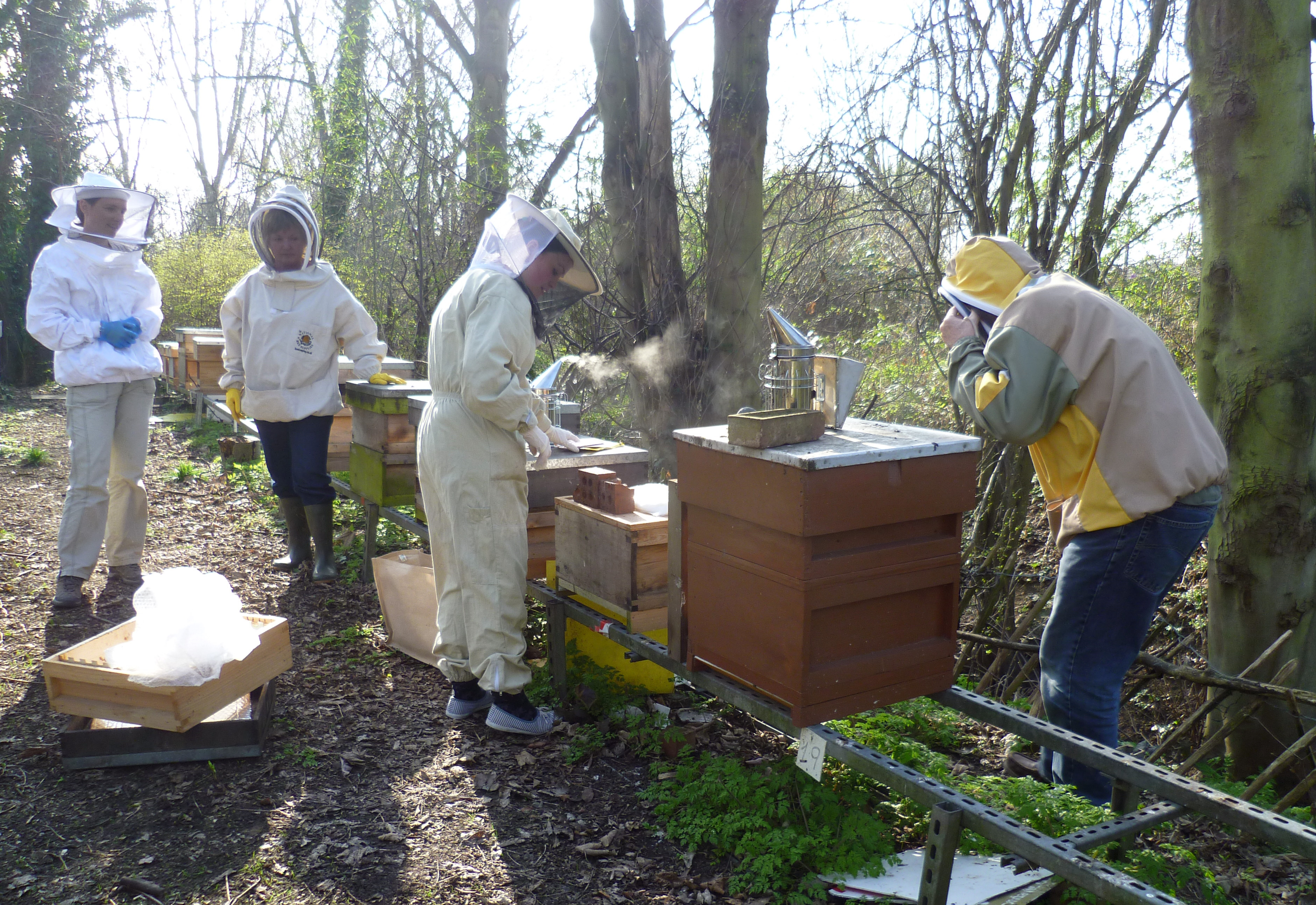
Emily and me did less tea drinking and more proper beekeeping last weekend, captured beautifully on camera by Emily's 'entourage' Drew Scott!

Things can happen fast in bee-land. Barely a month has passed since the Bailey comb change, but there has been a drone-laying queen, a suspected case of foul brood and the unexpected appearance of a virgin queen. That’s just one hive. I sat on this post for a while thinking back on the lessons learned in the past few weeks.

Rain had prevented our hive inspections for two weekends following the Bailey comb change, but when the sun came out after Easter bank holiday Emily went to check on our bees. What she found inside Queen Rosemary’s hive would worry most beekeepers, so she raised the alarm by emailing the secretary of our association, Andy Pedley.

‘I am worried our hive has some kind of brood disease,’ wrote Emily. ‘There is virtually no healthy worker brood, lots of drone brood, and some dried up larvae, some that look a bit scaly, and some that look a bit bloated.’

Emily thought our bees were grumpy and a bit aggressive, which can be a sign of a failing queen or being queenless. She spotted cells filled with pollen with a film of honey on the top, which can also indicate being queenless.

Andy is a very experienced beekeeper, a sentinel apiarist for the Middlesex area, and apprentice to the queen’s beekeeper, John Chapple. So he really is the bees knees! Andy offered to meet at the apiary on Saturday to test our hive for bacterial disease.

What followed was a week of worry as I wondered how our bees could have declined so quickly. At the last inspection every cell in every brood frame had been scrutinised while we tried to find the queen and eggs, and there was no sign of disease. But now we had a suspected brood disease like European foul brood (EFB), which is not good but can be treated, or American foul brood (AFB), which is untreatable – destroy the hive, burn the remains and salt the earth!

I downloaded these educational images of EFB and AFB from the National Bee Unit.

Healthy bee larvae are curled in half-moon shapes inside cells and are pearly white with yellow tummies from the pollen that they eat. © Crown copyright 2010

Unhealthy brood with EFB look misshapen, dark and slimy. © Crown copyright 2010
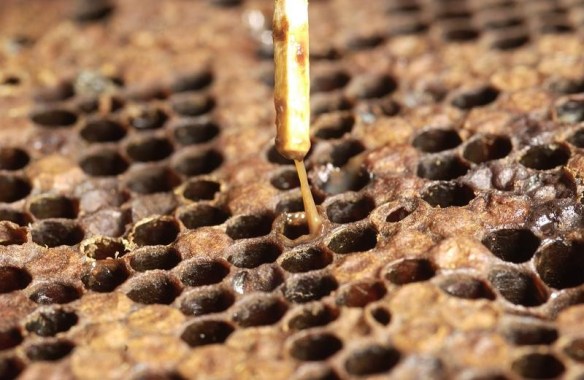
The classic 'snot test' for AFB, a matchstick is dipped into a cell – if a stringy mess of slime is pulled out there may be bacterial disease. © Crown copyright 2010

On Saturday we arrived at the apiary to find Andy was already there. When I told how beekeepers from New York had kindly tried to help identify the brood disease on Emily’s blog, Andy shook his head in amazement and marvelled at the inter-web, then he said cheerfully, ‘Right, let’s go have a look’.

Andy used tweezers to pull out and examine a few larvae, then disposed of them in the smoker for hygiene. The first few were healthy white grubs with yellow tummies from the pollen they had eaten. So far so good. He then found a couple of larvae that were discoloured and slimy, and used the EFB and AFB kits to test for disease. The kits are similar to pregnancy tests: a sample is dropped onto an indicator, then you wait three minutes and…

One larvae is popped into a vial of spirit and shaken. It is important to use only one larvae for the test or this can affect the results, Andy explained, because EFB is always present in bee colonies at low levels.

Andy used a pipette to drop a sample on the indicator. Then we waited three minutes. Breathe.

One line under 'C' for 'control' is a negative result, two lines under 'C' and 'T' for 'test' is positive. Both our tests for EFB and AFB only had one line under 'C', phew! You can't see it clearly on this photo so I have drawn a pink line.

All clear! Both tests for bacterial disease were negative, phew! But it was not over…

This was not a case of EFB or AFB but a lack of TLC. The larvae had become cold and hungry because Rosemary was a drone-layer, explained Andy, so there were not enough workers inside the hive to nurse the baby bees. Unless the queen was replaced the whole colony would die out.

This is the moment I had been dreading as a beekeeper – disposing the queen for the good of the hive. In the past, our bees have been very good at superceding their own queens, and Emily and me have preferred to let them do this. However, they may have been unable to supercede Rosemary without enough viable fertile larvae. I felt I should step up to the plate and get the job done, but Andy kindly and quickly did the deed. It seemed fitting because he has a history with our flighty queen.

Andy mashed the honeycomb around the young larvae to encourage the bees to find it and build a queen cell.

Blissfully unaware of the untimely death of her sister, we took a frame from Queen Lavender’s hive that had young worker larvae and placed this inside Rosemary’s hive hoping that our bees would now raise a new queen. Andy mashed the honeycomb around the larvae to encourage the bees to find them and build queen cells.
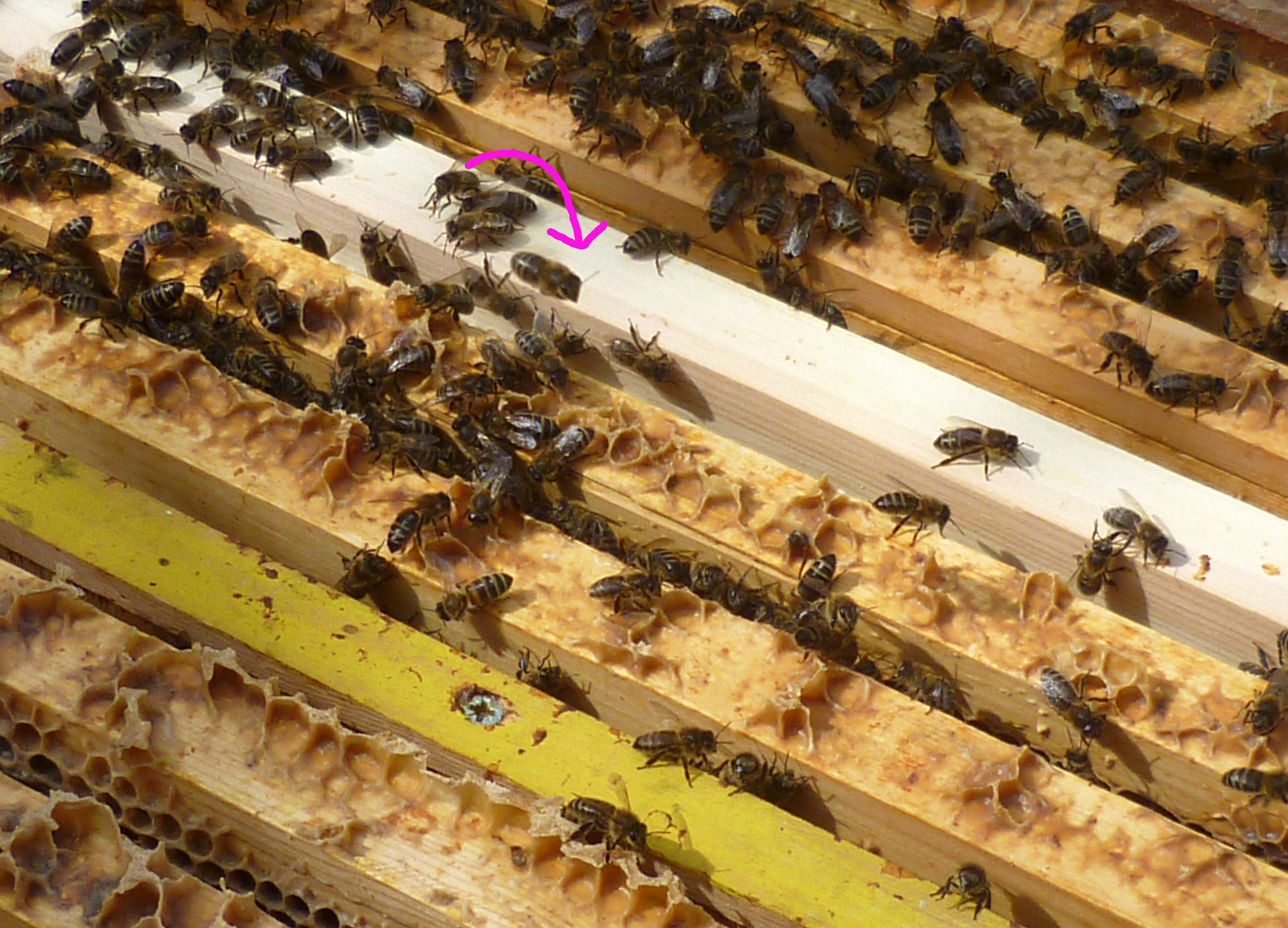
A frame of young larvae placed in Rosemary's hive so her daughters can raise a new queen to ensure the colony survives. They will have to work fast as there are not many workers left, I caught one on camera immediately flying over the frame to where we had put the new larvae.

Lavender’s hive was thriving with healthy-looking bees, lots of workers and brood. I found Lavender happily climbing on a frame so we caged her to complete the Bailey comb change. With Lavender now in the top brood box and queen excluder beneath, all the bees can move up into their new home.

Emily releases Queen Lavender from her cage and into the top brood box. (She is the largest bee in the colony, I have put a pink circle around her.)

Emily’s boyfriend, Drew, took these lovely shots of us doing some proper beekeeping.

Looking for the queen. © Drew Scott
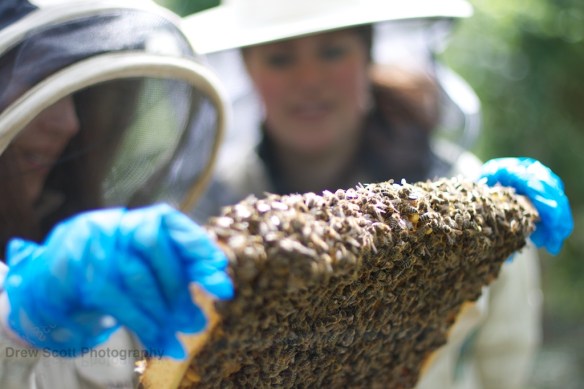
Still looking. It's difficult to spot one bee among hundreds of fast-moving insects on a frame! © Drew Scott

It was a busy day at the apiary, Andy and Pat were also shook swarming a couple of hives.

Andy shook swarming the hive belonging to David. This is a prolific colony of very fierce bees. Ghetto bees.

Drew took a shot of me shooting Pat! I gave David's bees oxalic acid treatment in December which they didn't enjoy, so I kept my distance in case they remembered. © Drew Scott

The business of beekeeping done for the day, there was still the afternoon meeting at the scout hut for the second Saturday of the month. Elsa had brought a chocolate celebration cake and I got the tea on.

On Monday the bee inspector visited the apiary and there was a surprise email from Andy titled ‘Rosemary’s baby’:

‘When Caroline checked the hive, we found an emerged queen cell in the bottom corner of one frame. Caroline then spotted a queen – very dark coloured. The frame that we put in had not got queen cells pulled out and indeed the section that was prepared for queen cells was being repaired!’

I thought we were one step ahead of our bees. Silly beekeeper. The workers were already preparing a new queen. © Drew Scott

So it seems our bees were one step ahead of us as usual, and were already raising a new queen to replace Rosemary. While we are hoping that Rosemary’s baby is not diabolical, it has inspired a name for our new queen thanks to Deborah Delong of Romancing the Bee who gave me this verse about myrrh:

‘Its bitter perfume
Breathes of life of gathering gloom.’

Queen Myrrh has emerged in a storm of rain and wind this week – not good for a virgin queen who must fly out and mate. Fingers crossed that our diabolical queen will have fair weather soon!

Lavender for bee-pleasers and scented sugars

A friend recently promised to plant ‘bee-pleasers like lavender and cotoneaster’ to give her garden a pleasant summer hum. This made me think of summer afternoons spent in the garden enjoying the drifts of scent and the sounds of nature, while drinking a tall glass of lemonade. The past few weeks with my family and work have been really busy and there hasn’t been time to enjoy simple pleasures or even blog! So I gave myself Sunday afternoon to slow down and try a recipe for homemade pink lavender lemonade and lavender-scented sugar.

Lavender is one of my favourite herbs and essential oils. It is so valuable for humans and for bees. Ted Hooper describes lavender as flowers for food in his Guide to Bees and Honey: ‘Grown for its well known scent in most gardens, these plants provide excellent forage for the bee. There are considerable acreages grown in Europe and migration of bee colonies to lavender fields is an annual event. The honey is medium to dark amber in colour and strongly flavoured.’

Pink lavender lemonade

This recipe for lavender lemonade couldn’t be simpler to make and more delicious to drink.

Lavender has a very distinctive flavour in recipes so adjust to suit your taste. I have added rose petals for fragrance and hibiscus for its rich pink colour.

You will need:

  • 4 cups of boiling water
  • 4 cups of cold water
  • 2 cups of sugar
  • 2 cups of freshly squeezed lemon juice
  • 2 cups of dried lavender flowers
  • 1/4 cup of dried rose petals and hibiscus flowers
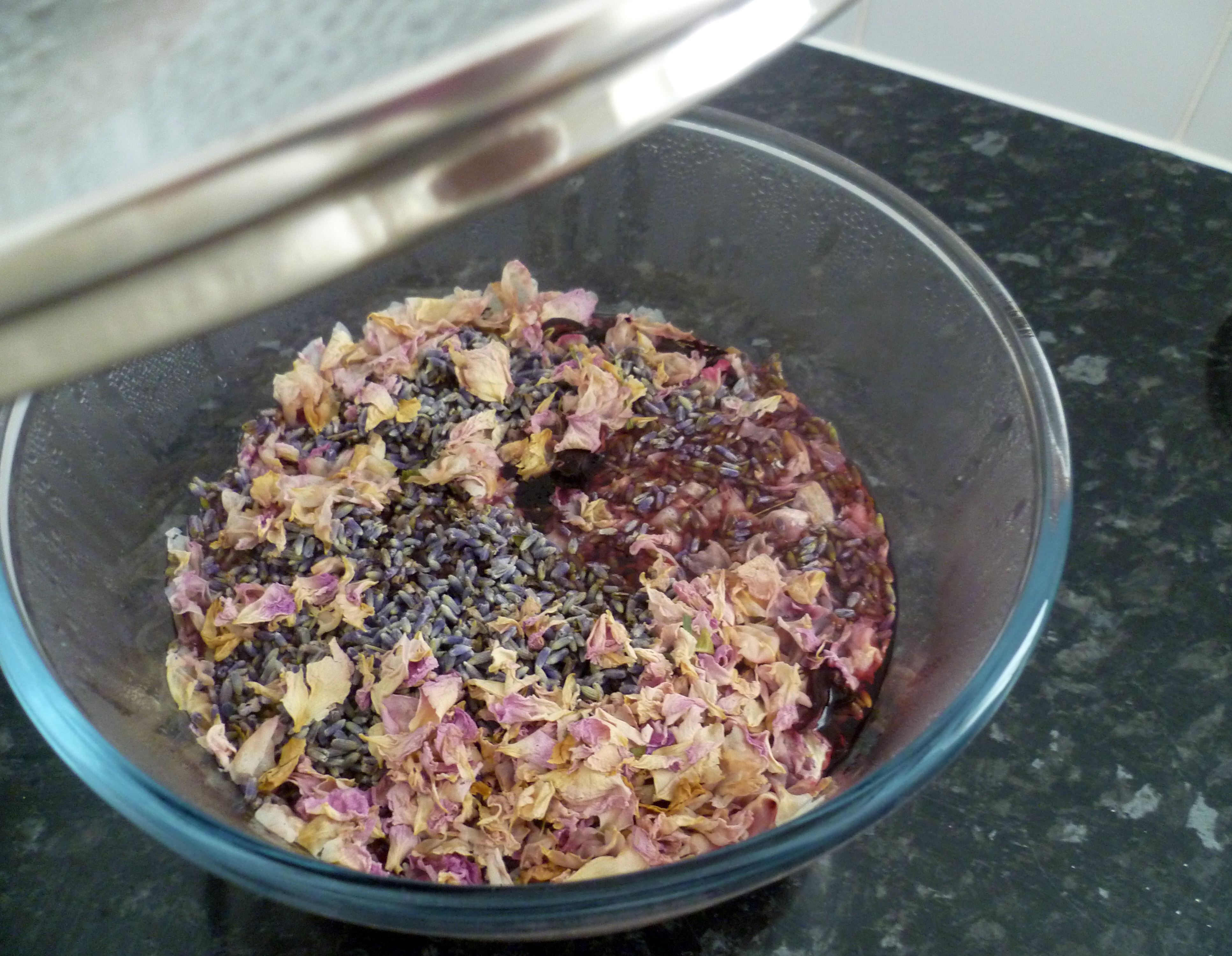
  1. Pour the boiling water over the lavender, rose petals and hibiscus flowers, then cover and leave for 10 minutes. The rose and hibiscus make the lemonade pink.
  2. Squeeze the lemons into a bowl while waiting for the flowers to infuse the water with scent and flavour.
  3. Sieve the flower water into a saucepan and add the sugar and lemon juice, stir thoroughly until all the sugar had dissolved. Then add the cold water and stir.
  4. Pour into a jug ready to serve and refrigerate for 30 minutes or longer to cool.

Here is a step by step in pictures…

Pour the boiling water over the lavender, rose petals and hibiscus flowers, then cover and leave for 10 minutes.

Cut and squeeze the lemon juice into a bowl.

Sieve the flower water into a saucepan.

Add the sugar and lemon juice, stir thoroughly until all the sugar has dissolved.

Then add cold water and stir.

Pour into a jug ready to serve. Just add strawberries.

Lavender sugar

Lavender sugar makes everything taste beautiful and it is so easy to make. Simply mix together 2 cups of castor sugar and 1 cup of dried lavender flowers. Store inside an airtight jar ready to use. In time, the sugar soaks up the scent and taste of lavender, and is lovely to use in baking recipes or sprinkled over fruit and desserts.

We enjoyed the lavender lemonade and sugar with strawberries. It felt a little like a celebration given the recent good news about mine and Emily’s bees. There has been some troubles in bee-land lately, although all’s well that ends well which I’ll save for my next post.

Lavender sugar takes seconds to make and can be saved for more lovely recipes.

I am looking forward to using the lavender sugar to bake scented cupcakes and biscuits!

Bailey comb change for spring bees

The sun arrived in London last weekend reaching highs of around 20°C and not a cloud in sight. It was perfect timing for my friend Marina to visit from Malmö, Sweden, and for Emily and me to shook swarm our bees.

On Saturday Marina, who is allergic to bee stings, went for coffee with Italian friends at Notting Hill, while I hopped on a bus to Stockdove Way in Perivale with instructions from my Swedish friend not to come home ‘all bitten’.

Blue skies at the apiary were a contrast to last week’s rain, when Emily and me had spent the afternoon blow torching hive boxes and getting frames ready for this year’s bees. Each spring we give our bees a clean brood box and fresh frames for the year ahead. It is like spring cleaning the house when the warm weather comes to clear out clutter and freshen the home.

Me blow-torching hive equipment to kill off all nasties. I didn't burn down the apiary but there were a few 'interventions'.

Bees naturally live with lots of different bacteria, viruses and fungi (just like people), but when the numbers of parasites rise above manageable levels this can cause problems. Changing the brood comb regularly helps prevent the build up of disease such as European foul brood (EFB), American foul brood (AFB) and nosema.

There are two methods of replacing the brood comb:

  • Shook swarm: bees are literally shaken into a new hive with fresh foundation and the old brood comb and unhatched bees are burned. The shook swarm gets rid of everything (including the varroa feasting on unhatched winter bees) and starts the year with almost no disease in the colony.
  • Bailey comb change: a gentler version of the shook swarm, bees are gradually moved into a new hive by encouraging the queen and her colony to climb up into a clean brood box frame by frame.

A picture of health – our bees were looking healthy and not much sign of varroa. It seemed a bit extreme to subject them to a shook swarm this year.

While chatting over tea and munching on Sarah’s lovely homemade ginger biscuits, Emily and me had a change of plans and chose to do the Bailey comb change instead of the shook swarm. With not much varroa in either hive, it seemed unnecessary to destroy all the unhatched brood.

That decided, we lit our smokers and went to open our hives for the first time this year. First, Queen Rosemary’s hive, our biggest colony going into winter, whose bees had been seen flying home with lots of bright yellow pollen in the past few weeks. Little faces peered up as we lifted the crownboard and a few bees buzzed curiously around our veils, but as usual this lot were pretty chilled and didn’t need much smoking. We found and caged our queen to keep her safe as we worked.

Queen Rosemary safely caught in Emily's queen cage. We put this frame aside to avoid damaging the queen during the comb change. Emily also re-marked Rosemary with a white dot, which makes her easier to find.

Emily and me were unfamiliar with the Bailey comb change method, so John kindly talked us through. John Chapple, beekeeper to the queen’s bees at Buckingham Palace, is a very experienced beek – he has a beard – and is a really good mentor to new beeks.

We put a clean brood box with new frames and foundation above the old brood box. Dummy boards were placed beside the brood nest in both the bottom and top brood boxes to encourage the bees to move up into the new box.

The method works because bees are naturally inclined to climb upwards and to fill empty spaces with honeycomb. It’s what they do, and it is understanding this principle that also helps beekeepers to manipulate bees to make surplus honey.

Me pointing to a dummy board (a plain wooden board) next to the last frame of brood in the bottom box to 'close' the nest and encourage bees to climb up. The same arrangement of frames is made in the top box.

Rosemary's hive now has two brood boxes for the Bailey comb change to be carried out over the next few weeks, and a third shallow super box on top to put a feeder with syrup under the roof.

John told us what the bees would do next: ‘They will climb up and find the new frames, and start to draw out wax comb. In a week or two, you should find the queen and put her in the top box with a queen excluder between the two boxes. The bees in the bottom box, including newly hatched bees, will move into the top box to join the queen.’

Hopefully, if all goes to plan, the bottom box will be removed and the old frames burned (the safest way to dispose of hive equipment). We’ll put the top box with the queen and nest on a new floor with a clean queen excluder, crownboard and roof above. A new hive for a season of flowing nectar ahead!

Happy to see our bees but the inspection of Rosemary's hive showed that all was not well...

I was so happy to see our bees again, but all was not well in Queen Rosemary’s hive. Our inspection showed signs that the queen may be failing: there were very few eggs and Emily noticed drone brood (male bees) in the middle of frames where there should be worker brood (female bees). Emily and me will have to check the situation over the next few weeks and decide what to do.

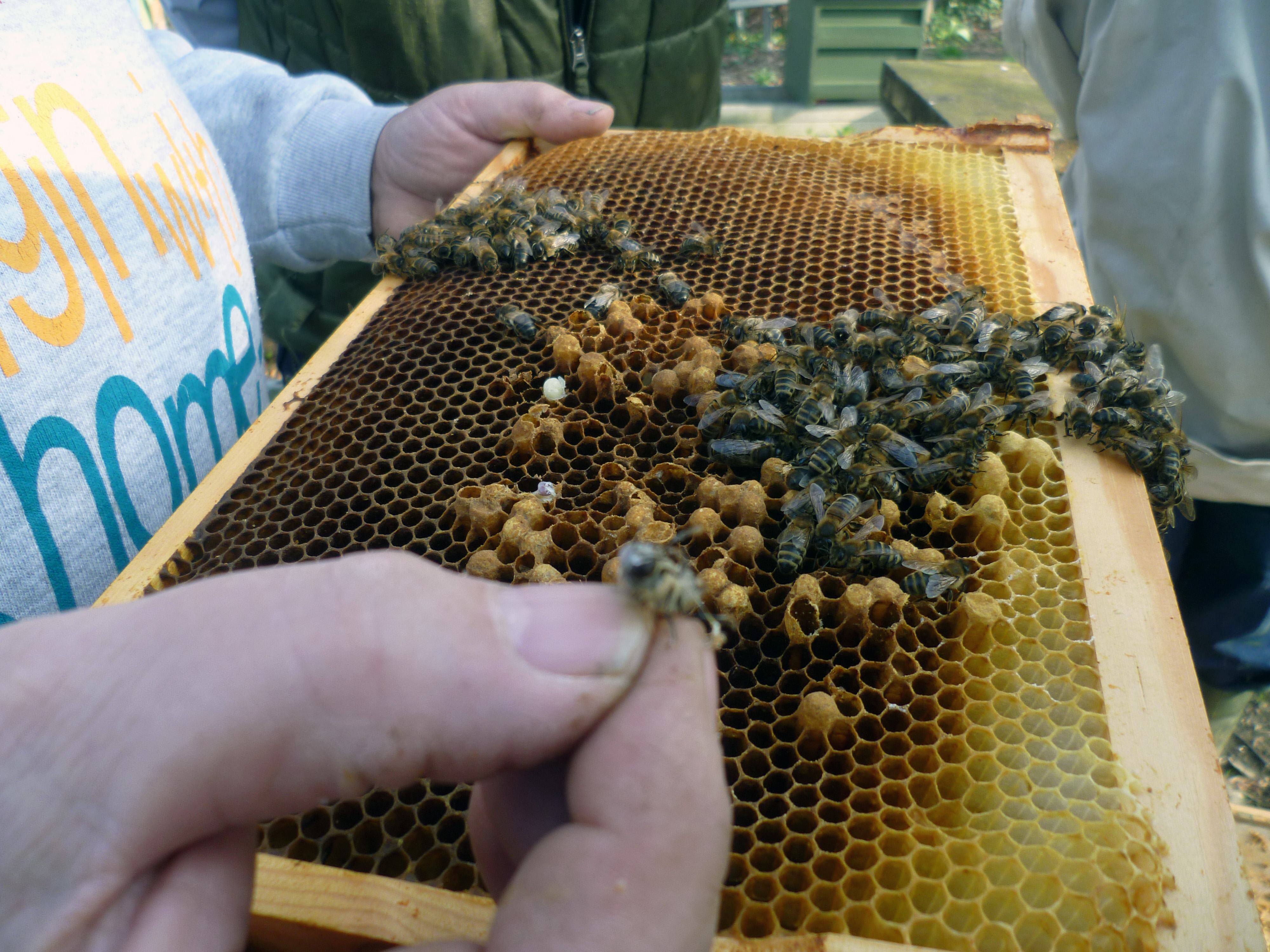
John, who was inspecting another hive at the apiary, brought over a frame of bees to show us. ‘What can you see?’ he asked. The frame was filled with drone brood, but John wanted us to look at the bees. The bees were small like workers, but their large beady eyes revealed that they were drones whose growth was stunted probably from being hatched in worker cells. Drones can’t look after themselves or future brood, so a hive with a drone-laying queen will collapse. ‘It’s all doomed,’ said John.

John shows us a frame of bees from a 'doomed hive'. The queen is only laying drone brood – you can see the raised domed-shaped cappings of drone brood in the middle of the frame.

Happily, Queen Lavender’s hive told another story. Our baby hive is flourishing – the queen is laying a healthy pattern of worker brood and the bees are building up honey stores. We carried out a Bailey comb change on this hive too, and fed both colonies with sugar syrup to help them along.

Winter bees feasting on sugar fondant under the roof in Lavender's hive. We took away the fondant and replaced it with sugar syrup for spring.

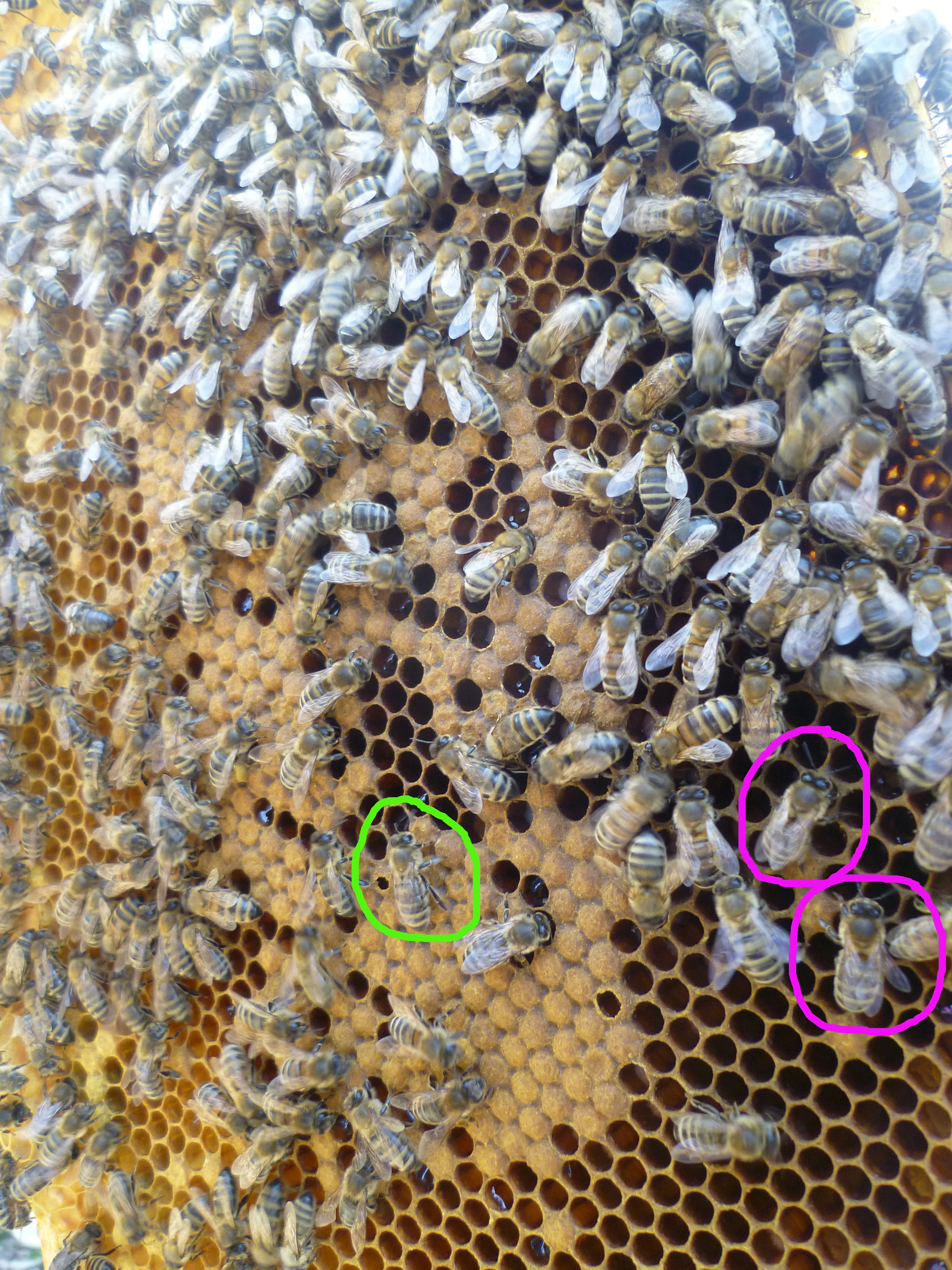
Lavender's hive is flourishing with lots of flat capped worker brood on the comb waiting to hatch. The pink rings show normal-sized drone bees (they have big beady eyes and fat bottoms) and the green ring shows a smaller worker bee going about her business.

Lavender, who is Rosemary’s sister, had a ride on my thumb after a new beekeeper, Rosemary, spotted the queen basking in the sun on the crownboard sitting next to the hive!

Emily kindly sent me this photo of Queen Lavender hitching a ride on my thumb back to the hive. Two workers are attending to her. Image © Emily Heath

I feel very honoured to have had a queen bee on my thumb, because they are notoriously shy.

On Saturday night the clocks went forward and British Summertime started. Sunday was another gloriously sunny day, so while our bees were out foraging Marina and me explored the local nature reserve just around the corner from my flat.

Then we climbed the hills at Northala Fields before stopping for ice cream. A wonderful weekend in spring, as Marina would say ‘It doesn’t get much better than that!’

A beautiful path of daffodils.

A tasty daff for bees to munch!

From the top of the first hill at Northala Fields – a local council project to construct four hills next to the A40 and surrounding nature reserve. This old bit of wasteland is now filled with families playing and people walking every weekend.

Useful links

The National Bee Unit has useful advice about replacing comb here, scroll down to ‘Fact sheets’. Many beekeepers also like the David Cushman method of Bailey comb change, which you can read here.

Emily’s posts on our Bailey comb change go into further detail about the method:

Exams over – and the Bailey comb change begins…
Lavender on the loose 

Beautiful skin rituals – teatime toners

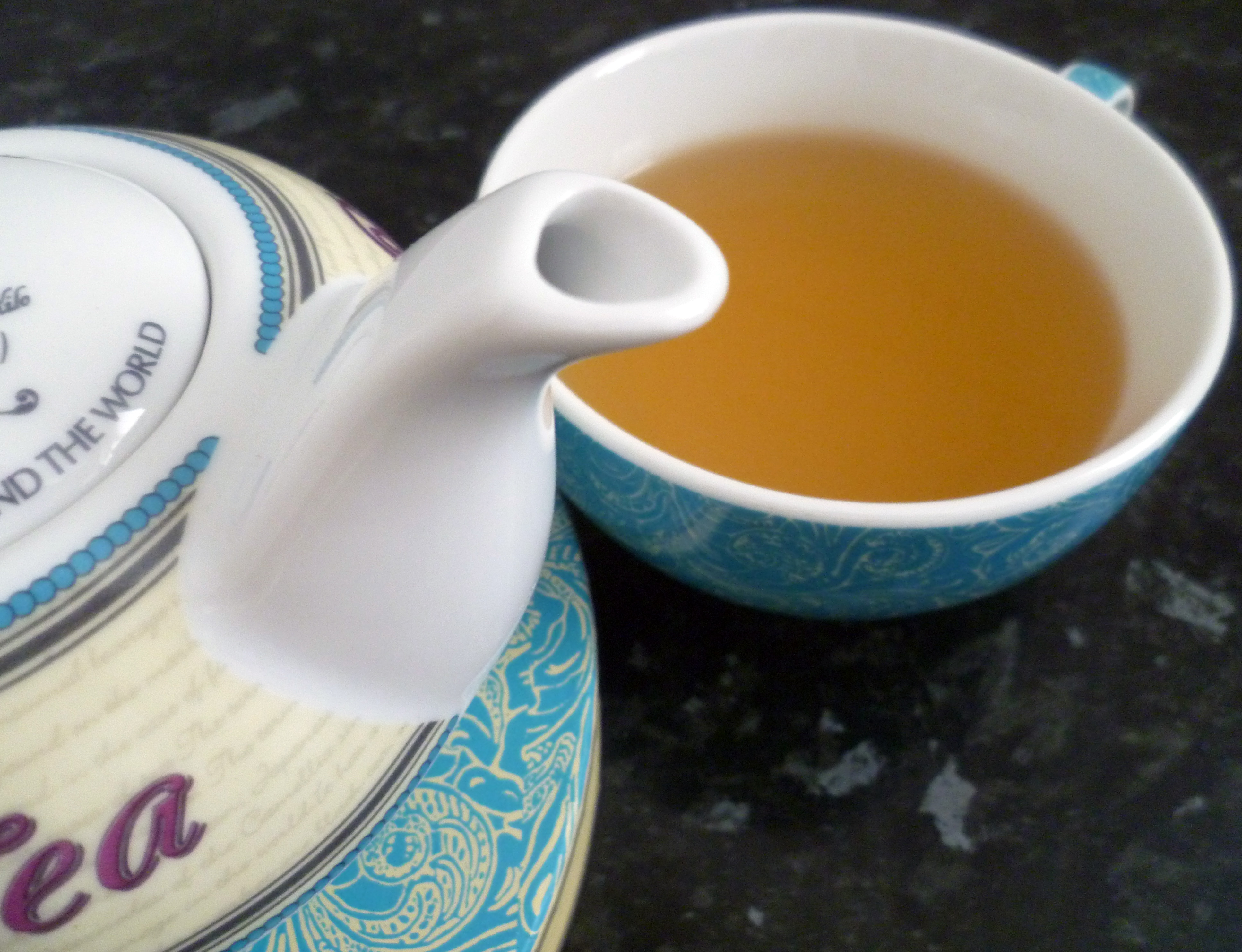
I love the scent of sweet apple-like chamomile tea in the morning, so soothing and delicious with a spoonful of honey. The uplifting aroma of Moroccan mint tea in the afternoon clears my mind, and the enchanting fragrance of jasmine tea helps me to unwind in the evening.

My daily tea rituals are good for my skin, because tea is not only healthy to drink but it makes a lovely skin toner too. Good skin care should be simple and natural, and what is more basic than making a cup of tea? After brewing a herbal tea, I pour a little into a small cup or bowl to use as a toner for my face – so easy!

Rain on Saturday meant that Emily and me put off the shook swarm – bees don’t like to be shaken but they dislike wet weather even more – to spend the afternoon spring cleaning last year’s brood boxes with a blow torch. By the evening, I felt in need of doing something more feminine, so I made some recipes for herbal teas to enjoy with mum on Sunday. I used my favourite herbs – chamomile, lavender, peppermint and rose.

Chamomile and honey tea toner

I love the sweet smell of chamomile. It is one of my favourite herbs, so good for drinking and lovely for my skin.

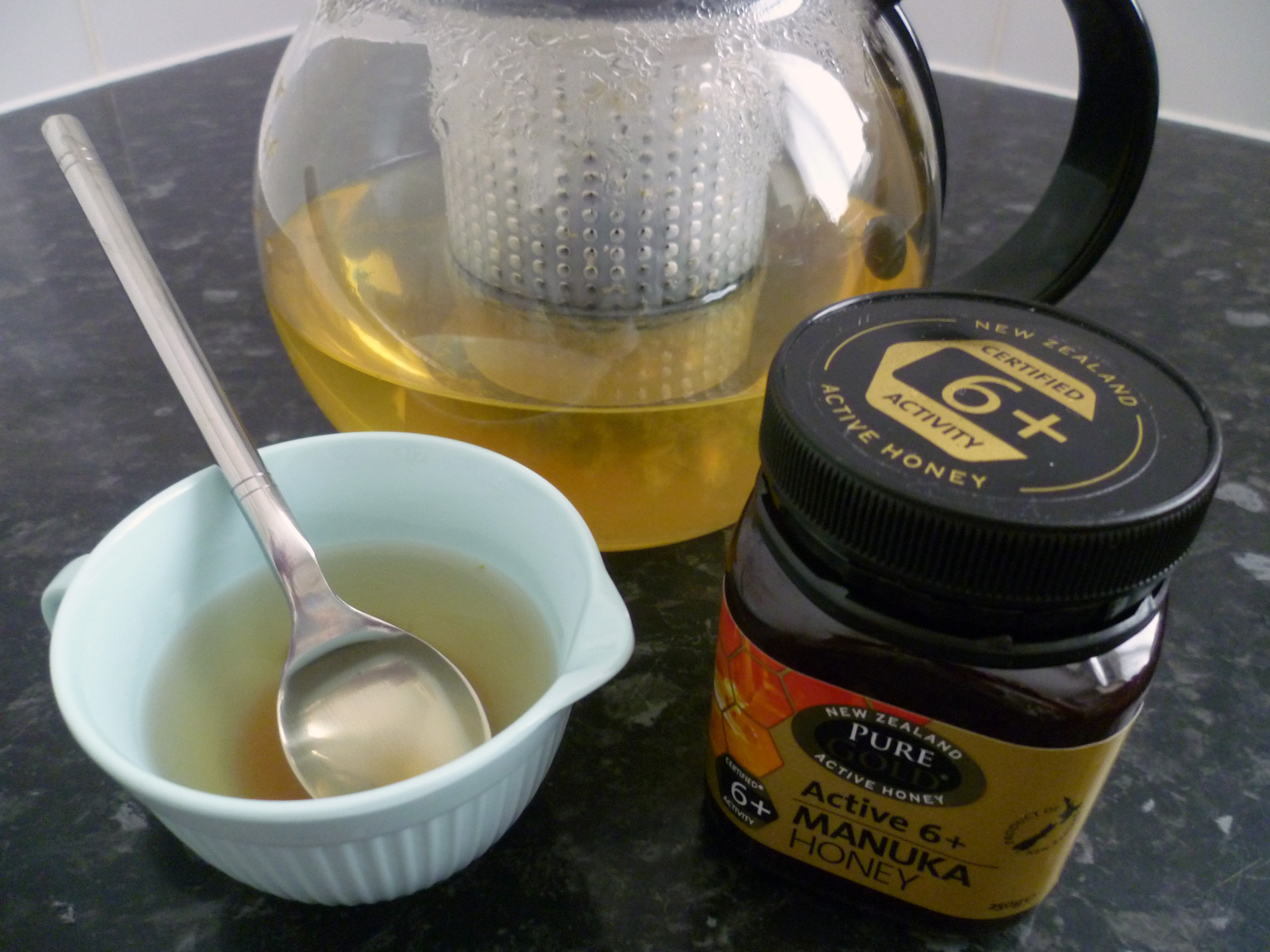
Chamomile has anti-inflammatory properties and is soothing to skin, being particularly useful for irritated skin, rashes, allergic reactions, spots, acne and eczema. By reducing swelling and inflammation, chamomile calms the skin and supports healing. This herb is generally good for promoting healthy skin for all skin types, and can be used as a daily toner even for sensitive skin. Honey is soothing and moisturising, and this time I used manuka honey which is particularly antibacterial.

I like to use a Bodum tea infuser to make pots of herbal tea at home. It is so handy, I can infuse regular or herbal tea bags or loose leaf tea and herbs in any combination. The infuser gradually steeps the herbs and keeps them covered. This is important to make sure that the beneficial chemical constituents in the herbs are not lost through evaporation, and as the steam cools it condenses back into the infusion. That’s the science bit.

This Bodum tea infuser pot is brilliant, I am always using it to make my own fresh herbal teas.

You will need:

  • dried chamomile flowers
  • manuka honey
  • tea pot with infuser

How to make:

  1. Add 3 tsp of dried chamomile to a tea pot with infuser; pour over hot water and cover to steep and cool for 10 minutes.
  2. Pour a little chamomile tea into a measuring cup or bowl, and add 1/2 tsp of manuka honey; stir until the honey has dissolved.
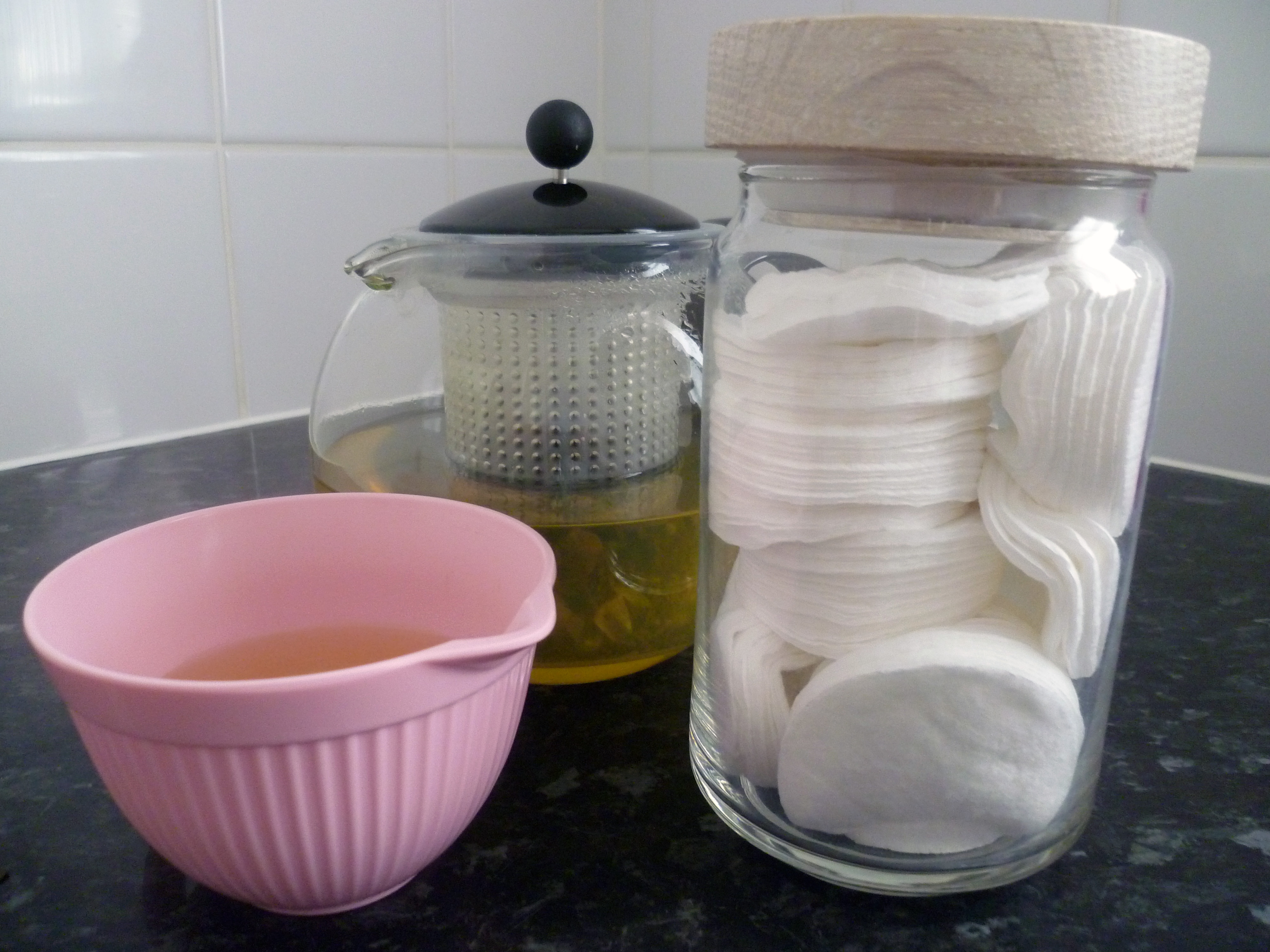
  3. Soak a couple of cotton wool pads in the chamomile and honey tea, then remove and squeeze excess liquid before sweeping across your face.

A little chamomile tea with 1/2 tsp of manuka honey in a small measuring cup to soothe my skin.


Herbal tea toners are meant to be used the day that they are made, because any homemade beauty product that uses water as an ingredient has a short shelf life – and these are mostly water! You could let the tea cool and jar it in the fridge for one or two days, but as I drink a lot of herb tea I prefer to use a fresh batch of toner each day.

Green tea and peppermint toner

I like to add a few herbs to my plain green tea to make it tastier, it goes well with peppermint.

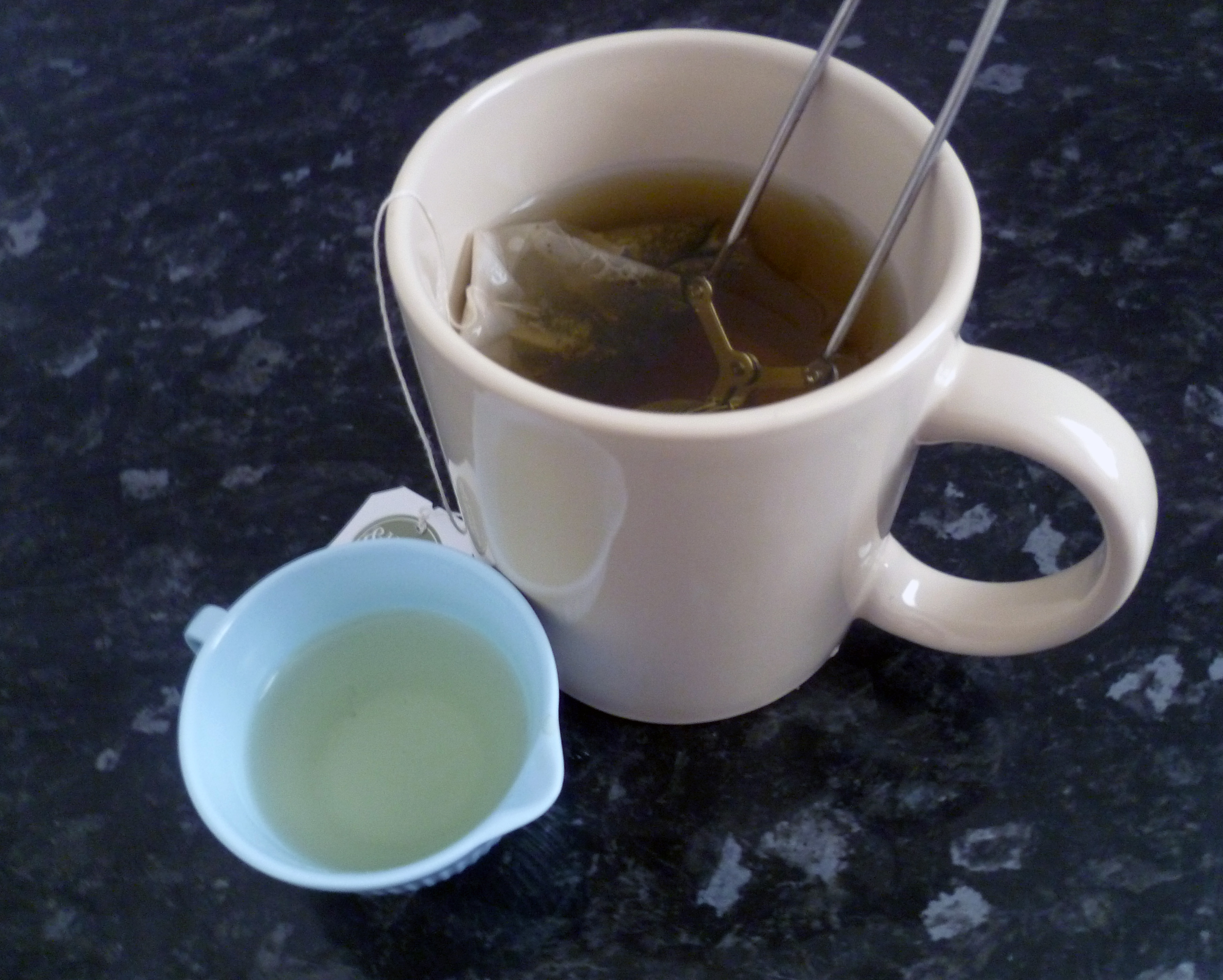
I use green tea bags when I am in a hurry, although I prefer loose leaf green tea because only a sprinkle is needed and it seems to have a more delicate taste. To make green tea from bags more tasty, I’ll add a little peppermint or lavender to my mug using a mesh tea infuser.

Green tea is very beneficial for skin. It is high in antioxidants and often drunk as an anti-aging remedy. Topically, it is astringent and toning, helping to improve skin texture, while also being anti-inflammatory and helpful for irritated or blemished skins. Peppermint is a herb that is both cooling and calming to skin. This toner was very refreshing on my skin.

You will need:

  • green tea bags
  • dried peppermint
  • mesh tea infuser

How to make:

  1. Simply steep the green tea bag in a mug with a scoop of dried peppermint leaves inside a mesh tea infuser.
  2. After about three minutes remove the green tea bag (green tea is not so tasty when it is brewed too long) but let the dried peppermint continue to brew for another seven minutes or so.
  3. Remember to cover the infusion with a saucer or tea cloth, so the chemical properties don’t evaporate.
  4. Pour a little into a small cup and allow to cool. Soak with a cotton wool pad and wipe over your face.

My mesh infuser is great for adding loose herbs to a mug for a quick herbal tea.


Green and mint tea is so refreshing and really wakes me up. I also make rosemary tea like this, because it is a great substitute for coffee and stimulates the mind.


Jasmine, rose and lavender toner

Rose smells heavenly and makes a lovely cup of tea with lavender and jasmine-infused green tea leaves.

This luxurious herbal tea was the one I chose to make for my mum on Sunday. It has the delicate taste of jasmine and smells gorgeous because of the rose and lavender. I prefer to drink it with a spoonful of honey in my cup.

As a toner, this tea has many lovely properties for your skin including all the benefits of green tea. Jasmine is soothing, softening and hydrating; lavender is antiseptic, astringent, anti-inflammatory and also balancing to skin; rose is cleansing, refreshing and hydrating. My skin felt and smelt lovely after I used this!

You will need: 

  • loose leaf green tea with jasmine
  • dried lavender
  • dried rose petals

How to make:

  1. Add 1 tsp of jasmine green tea to a tea infuser pot with 1/2 tsp of dried lavender and 1 tsp of dried rose petals. Pour over just boiled water.
  2. Steep the infusion for 10 minutes and allow to cool for a further few minutes.
  3. Pour the infusion into a small cup and enjoy the scent of jasmine, lavender and rose as you use it on your skin.

My jasmine, rose and lavender tea ready to drink and to pour a little for a pretty skin toner.

Beautiful tea and cake for Mother’s Day

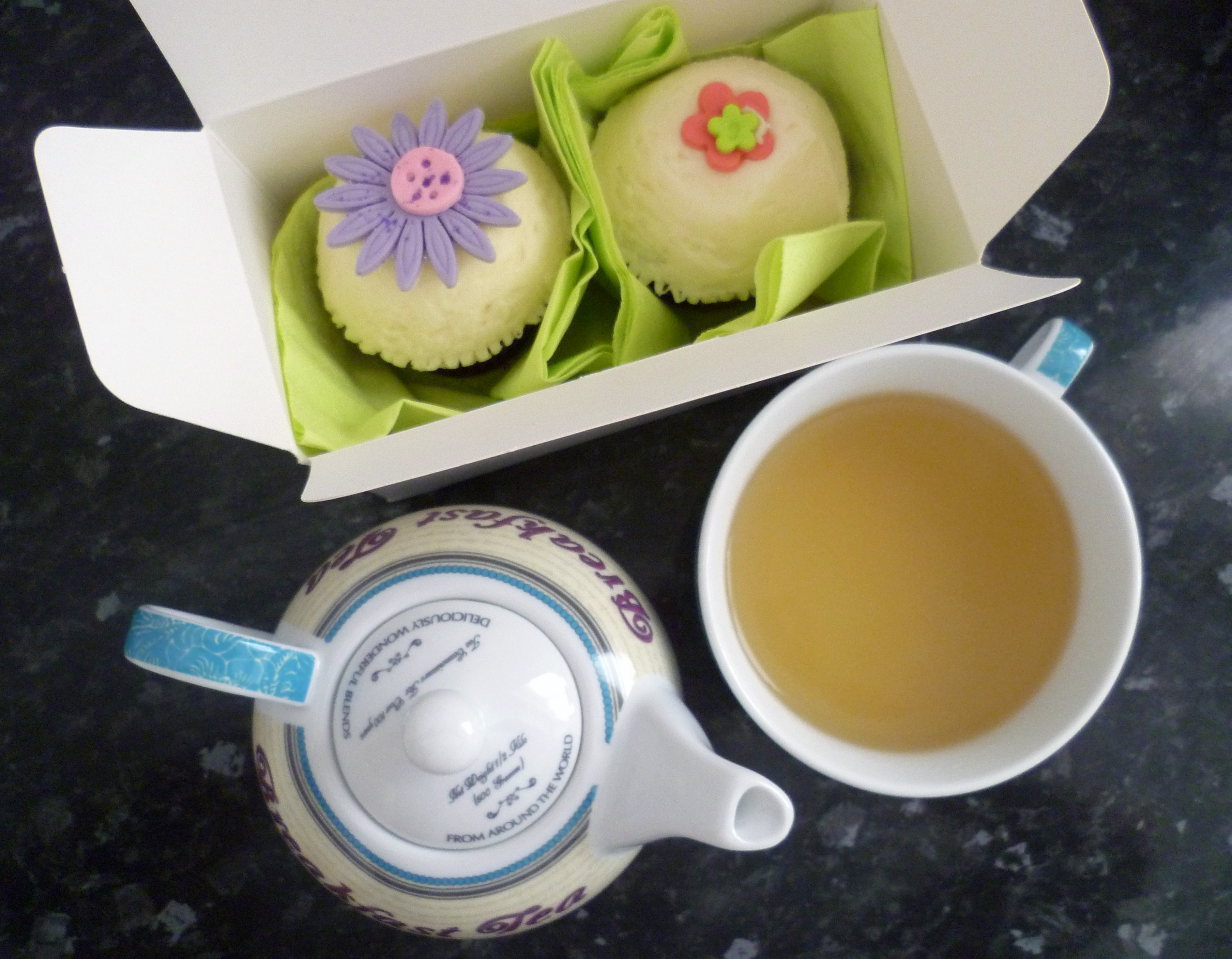
On Sunday there is usually cake for teatime and as today was also Mother’s Day the cakes were especially beautiful!

Smell of roses and cupcakes – heavenly!

With a card perfect for a beekeeping daughter to give to her mother…

Happy Mother's Day, mum! Enjoy your scents of roses!

The perfume is ‘Pure Essence Eau de Parfum No.2 Rose’ from Neal’s Yard. My mum loves it – and I do too!

I’m looking forward to drinking my green tea and peppermint infusion again tomorrow morning – exactly what’s needed for a Monday! With a bit of luck, this week’s forecasted fair weather should bring our shook swarm!

I would like to say a big thanks to Donna of Momma E blog for nominating my blog for a Sunshine Award. It is so lovely to be appreciated and I’ll be sure to pass along my own nominations soon. 

The secrets of beauty masks at Homemade London

I am always looking for ways to combine aromatherapy and beekeeping, so a Beauty Mask Workshop at Homemade London was a perfect evening for an aromatherapy beekeeper! I like to make honey masks with essential oils, but wanted to learn more about using natural mineral clays with my recipes.

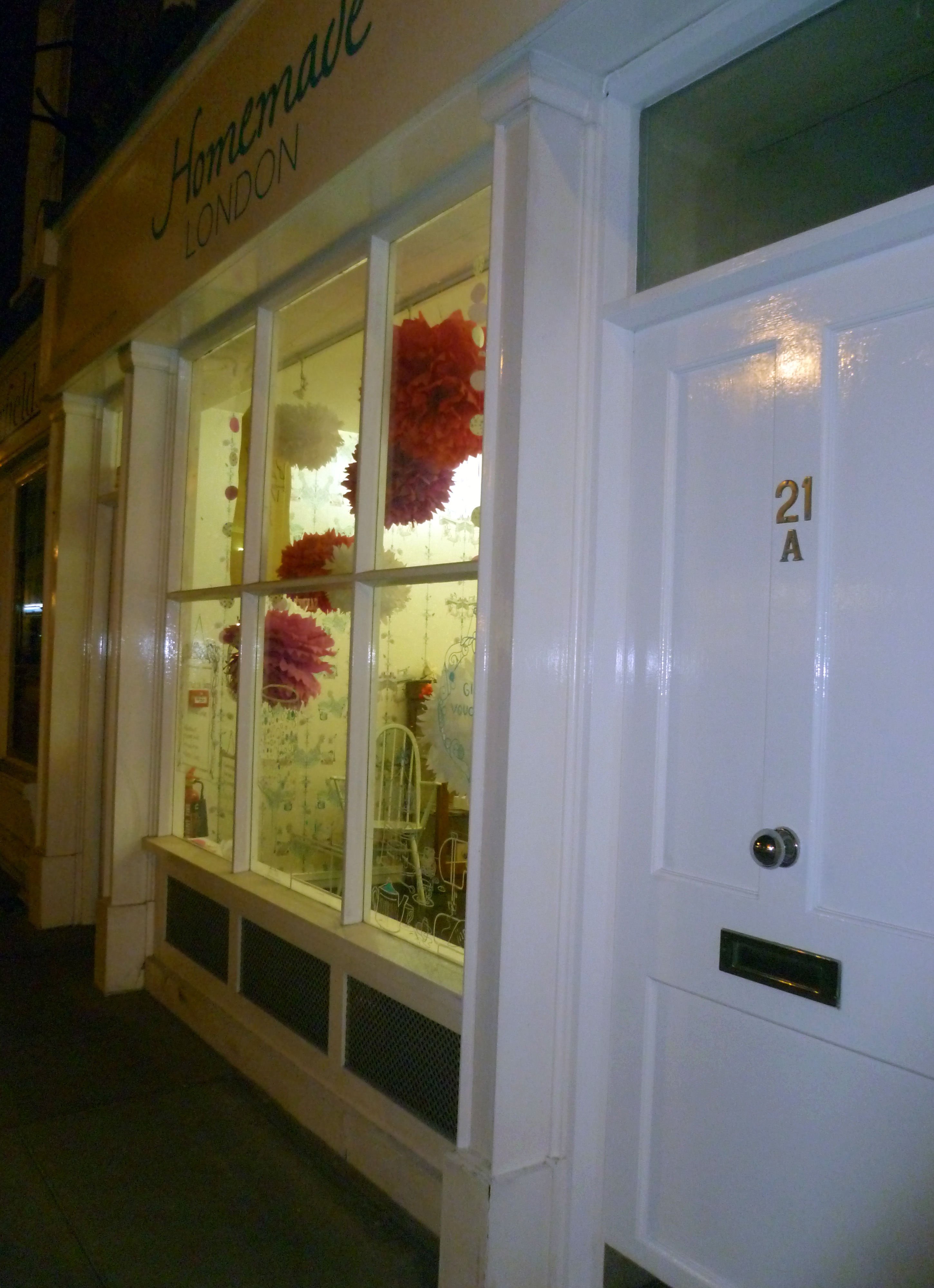
Homemade London is a beautiful salon at the heart of the West End that specialises in luxurious and indulgent experiences such as parties and workshops. A visit promises you will work with the highest quality materials, fabrics and ingredients to create objects of desire, beautifully packaged to take home. The classes are also social, so you are treated to a glass of wine and nibbles or afternoon tea while you work.

All the best beauty secrets are locked away in nature and the Beauty Mask Workshop revealed a few gems. The evening was hosted by the owner of Homemade London, Nicola Barron, who welcomed us with sparkly pink fizz and French Fancies while we enjoyed the salon’s pretty window dressing and creative haberdashery.

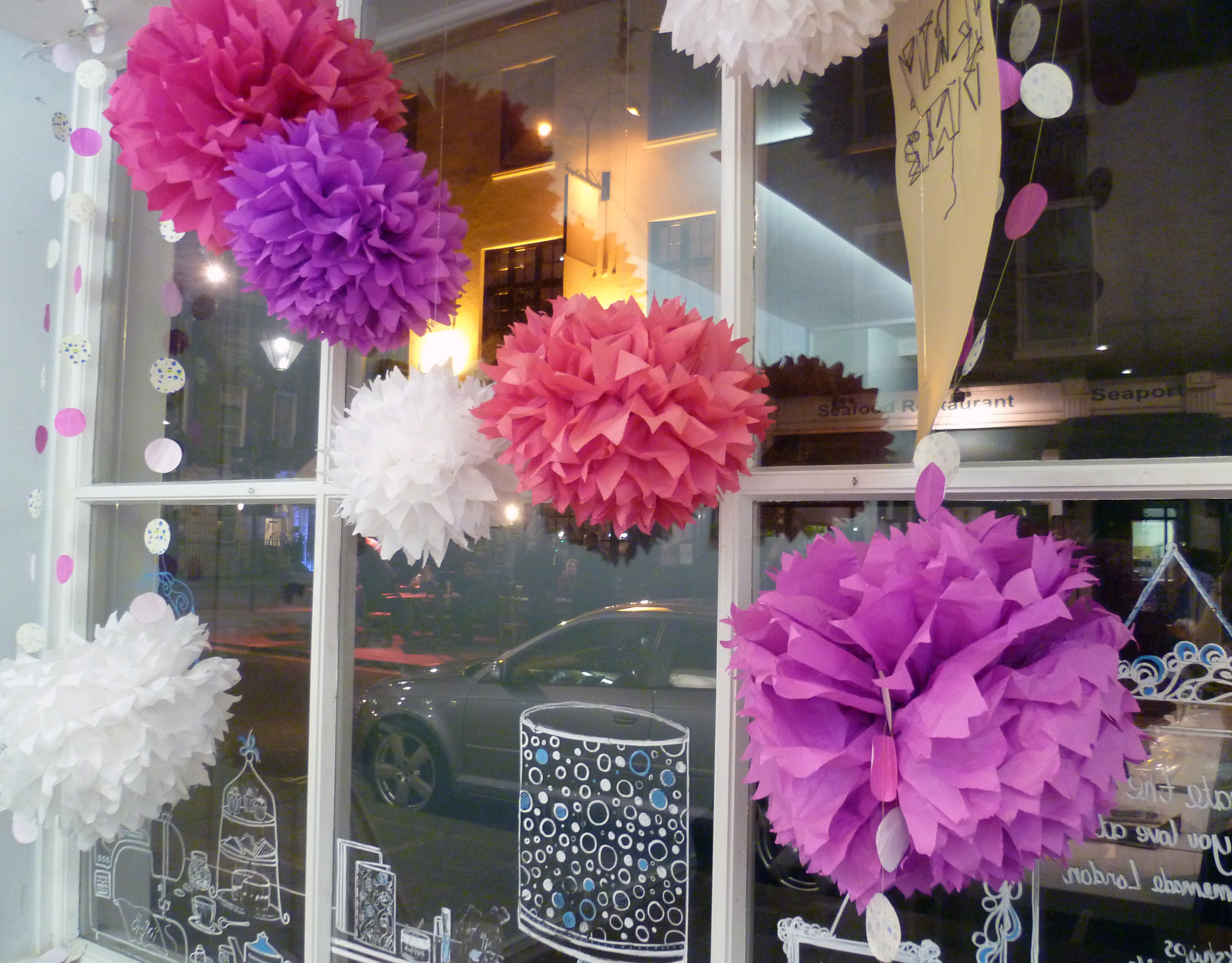
Handmade tissue paper pom-poms make fabulous window dressing.

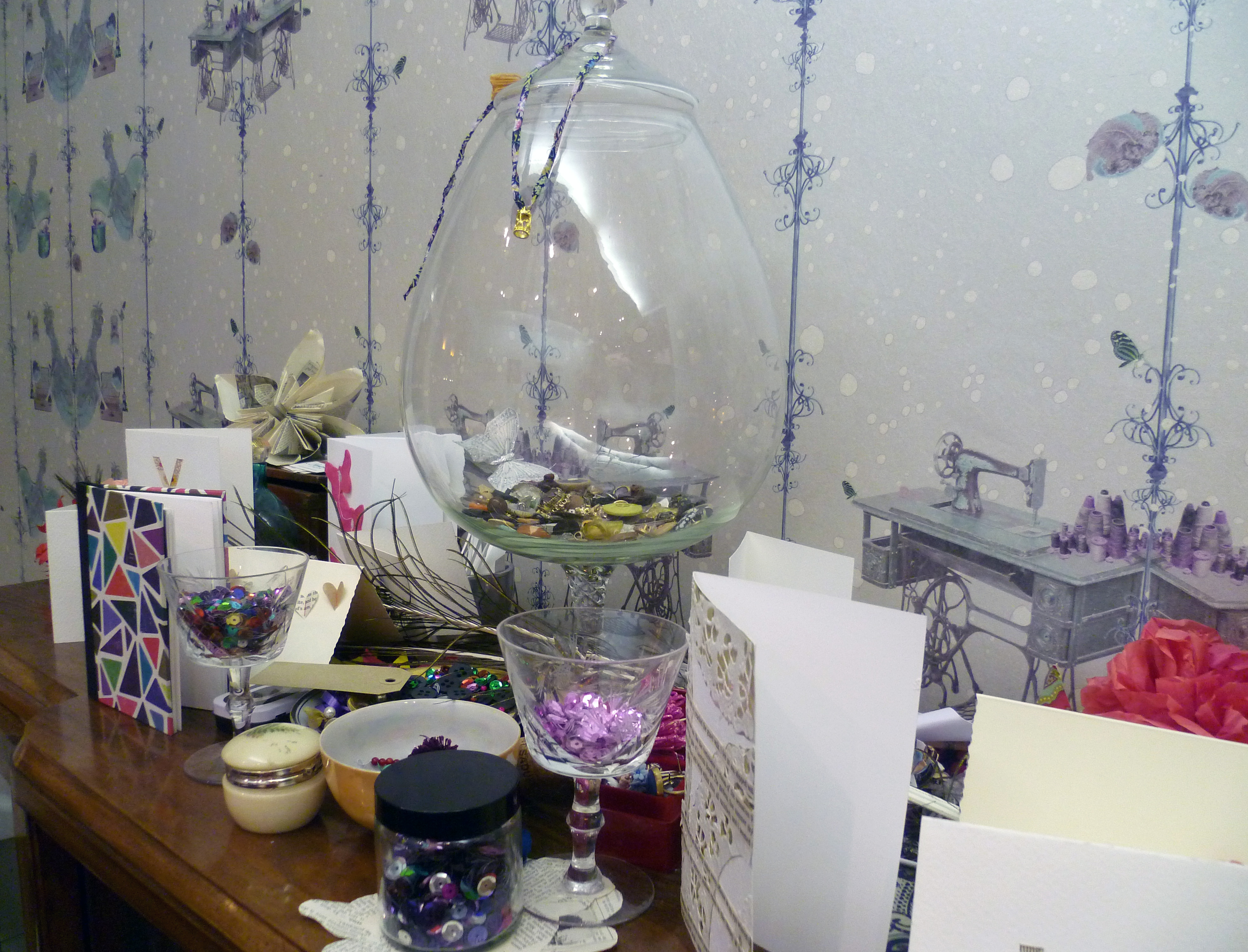
A cabinet of haberdashery curiosities for making sparkly arts and crafts.

Nicola started the workshop by introducing the properties of various mineral clays and why they are good for different skin types. The workshop used three clays that possess highly active mineral properties such as deep cleansing, purifying, exfoliating and refining:

  • Rhassoul, or Moroccan beauty clay: a unique clay, sourced from beneath the Atlas Mountains of Morocco, that deep cleanses, detoxifies and exfoliates while also improving skin texture. It is a powerful-acting clay suitable even for sensitive skins.
  • Red argiletz clay: a naturally red-pigmented clay that is beneficial for dry, sensitive and irritated skins.
  • Kaolin, or white china clay: softening and soothing, this clay is suitable for all skin types and it gently balances the stronger drawing properties of red and Rhassoul clays.

Clockwise from top left (black bowl): kaolin white china clay, Moroccan rhassoul clay, and red argiletz clay.

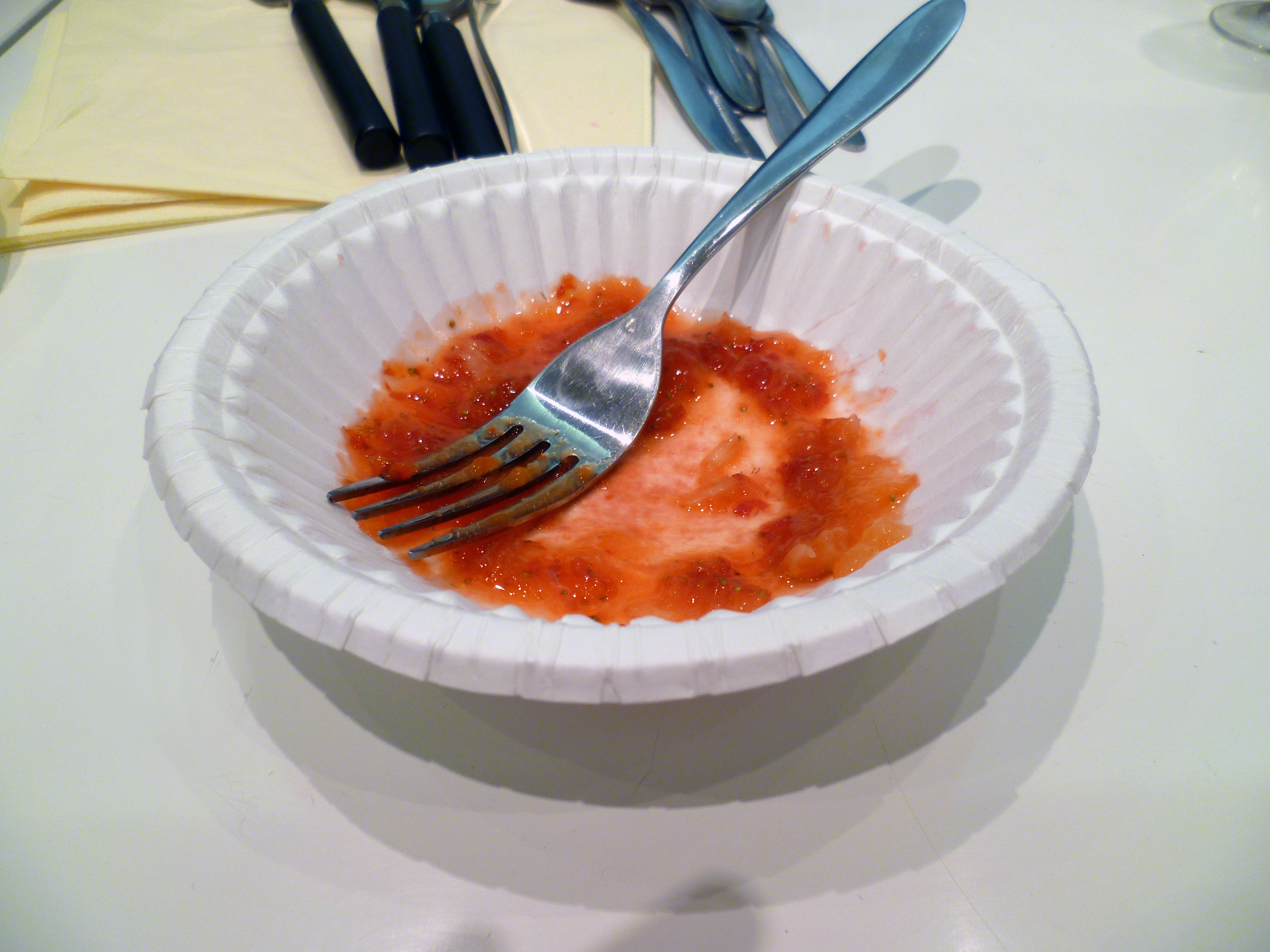
Our homemade beauty masks used other natural ingredients that you might find in your fridge or kitchen cupboard, such as strawberries, bananas and double cream that have active properties good for your skin. For example, both strawberries and cream are mildly exfoliating, while strawberries are toning and cream is nourishing. ‘It is important to use double cream,’ said Nicola. ‘Although you can use Greek yoghurt instead.’

As we mashed bowls of fresh strawberries and banana, Nicola explained how to make our beauty masks: ‘Choose two or three clays with properties that best suit your skin’s needs, then mix about half a teaspoon of each with a little water or small portion of fruit and cream.’ Naturally, we chose fruit and cream because it sounded much more decadent!

Adding berries to a homemade facial mask have a refining and tightening effect on your skin. I was in charge of mashing strawberries.

We each experimented with three different beauty masks, choosing combinations such as red and white clay with banana, and rhassoul, red and white clay with strawberry. My favourite combination was rhassoul and white clay with strawberry and cream, which felt so luxurious on my skin. Using this beauty mask at home could easily recreate the experience of a Moroccan hammam in my bathroom!

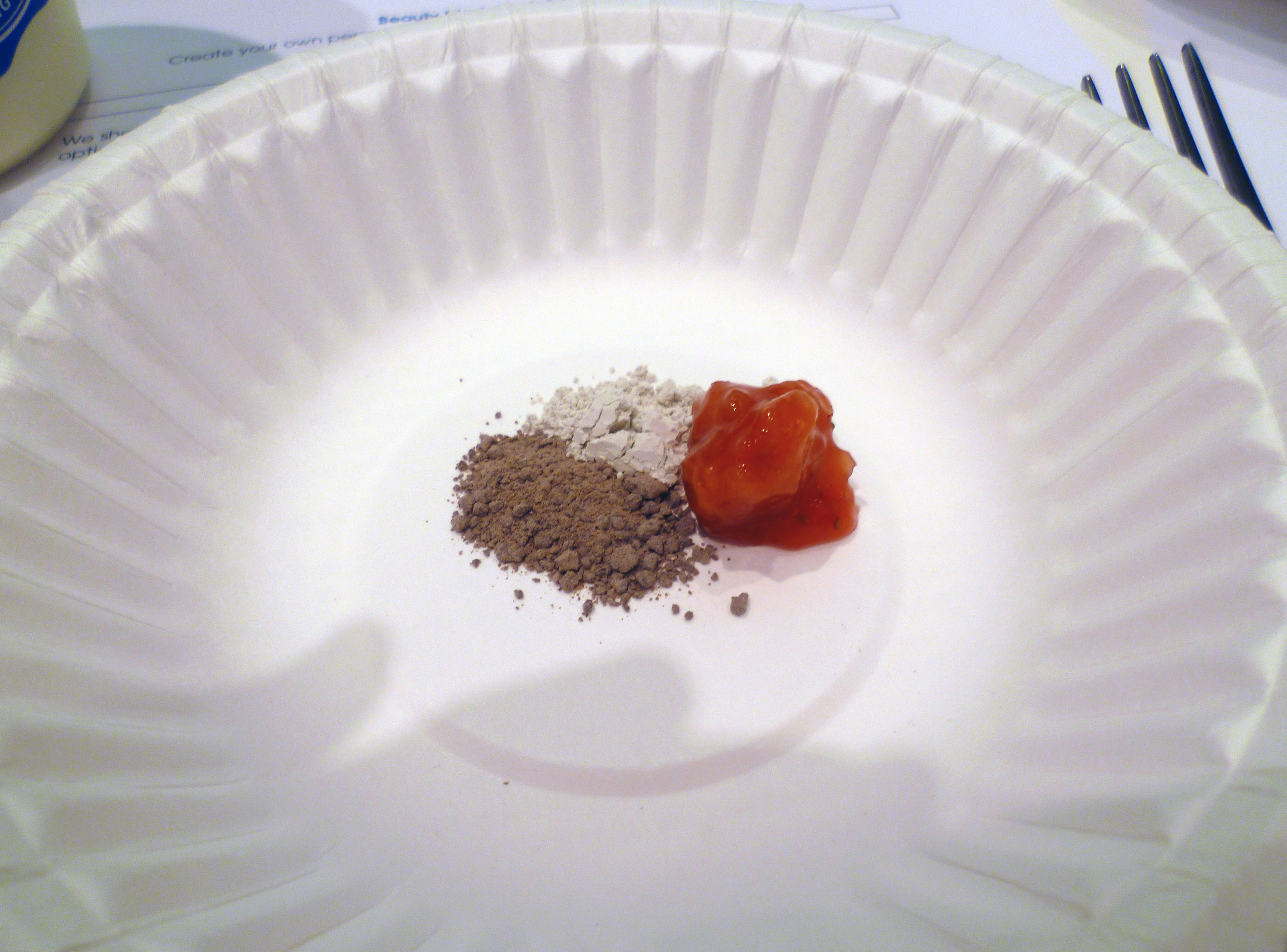
Ingredients for a personalised beauty mask using rhassoul and kaolin clays and mashed strawberry; just add a little cream.

Nicola recommended adding a little white clay to every combination, because it both lessens and balances the stronger drawing properties of the red and rhassoul clays. She also warned that the red clay might leave you looking a little orange! We patch tested all our beauty masks on the back of our hands for about five minutes, which is good practice before using any new beauty product, homemade or otherwise.

When at home, Nicola advised using a beauty mask once a week and wearing for just 10 minutes, because it is not good for your skin to let the clay dry out.

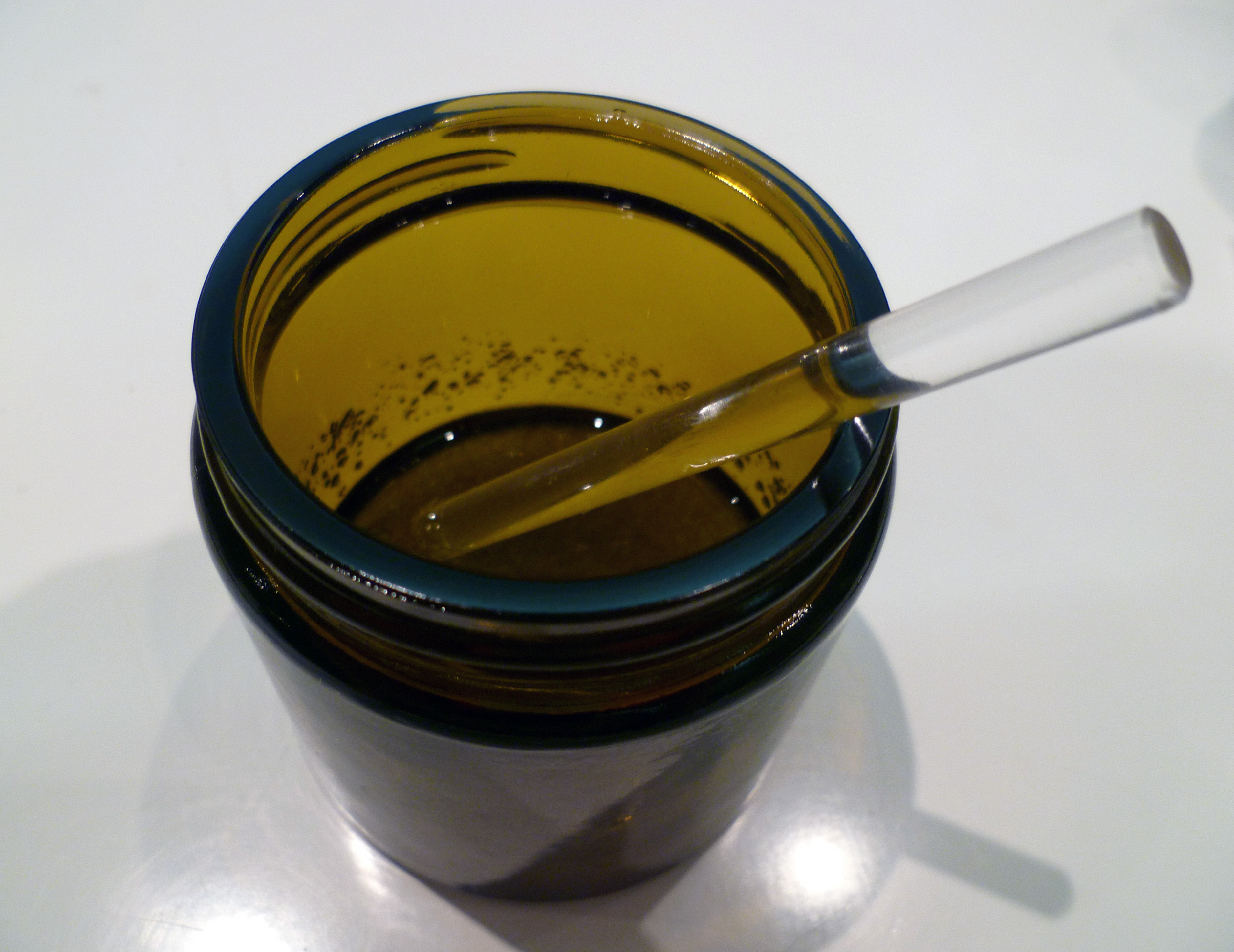
As a bonus, we created a homemade lime-and-sugar body scrub using a mixture of brown Demerara and white sugars and olive oil, fragranced with lime essential oil.

Lime-and-sugar body scrub makes you smell good enough to eat!

We got to take home a jar containing a mixture of mineral clays of our choice, which will keep for about 18 months (if stored correctly out of direct heat, light and moisture) and should make about 12–15 applications of beauty masks. The great thing was how versatile it was to make our own masks, ‘We like to empower people to go away with knowledge and a few good ingredients to create for themselves,’ said Nicola. It’s a good philosophy. Nicola buys her clays, including the amazing Moroccan rhassoul beauty clay, from Baldwins in London.

We were given handouts with helpful descriptions of the different properties of each clay and of other natural ingredients such as honey and avocado, so we could continue to experiment with different combinations at home.

Homemade London hold all sorts of arts and craft workshops like sewing and perfumery. I’ll be trying out a few more this summer – bee-patterned cushions, perhaps…

Homemade beauty to go! My personalised mineral clay base mix and a body sugar scrub.

It was a really fun evening and I got to meet two other lovely ladies interested in natural skin care. Check out Francesca’s blog and Kristina’s blog for more homemade ideas and beauty recipes. After we had finished making our masks, there was little to do but chat and eat cake.

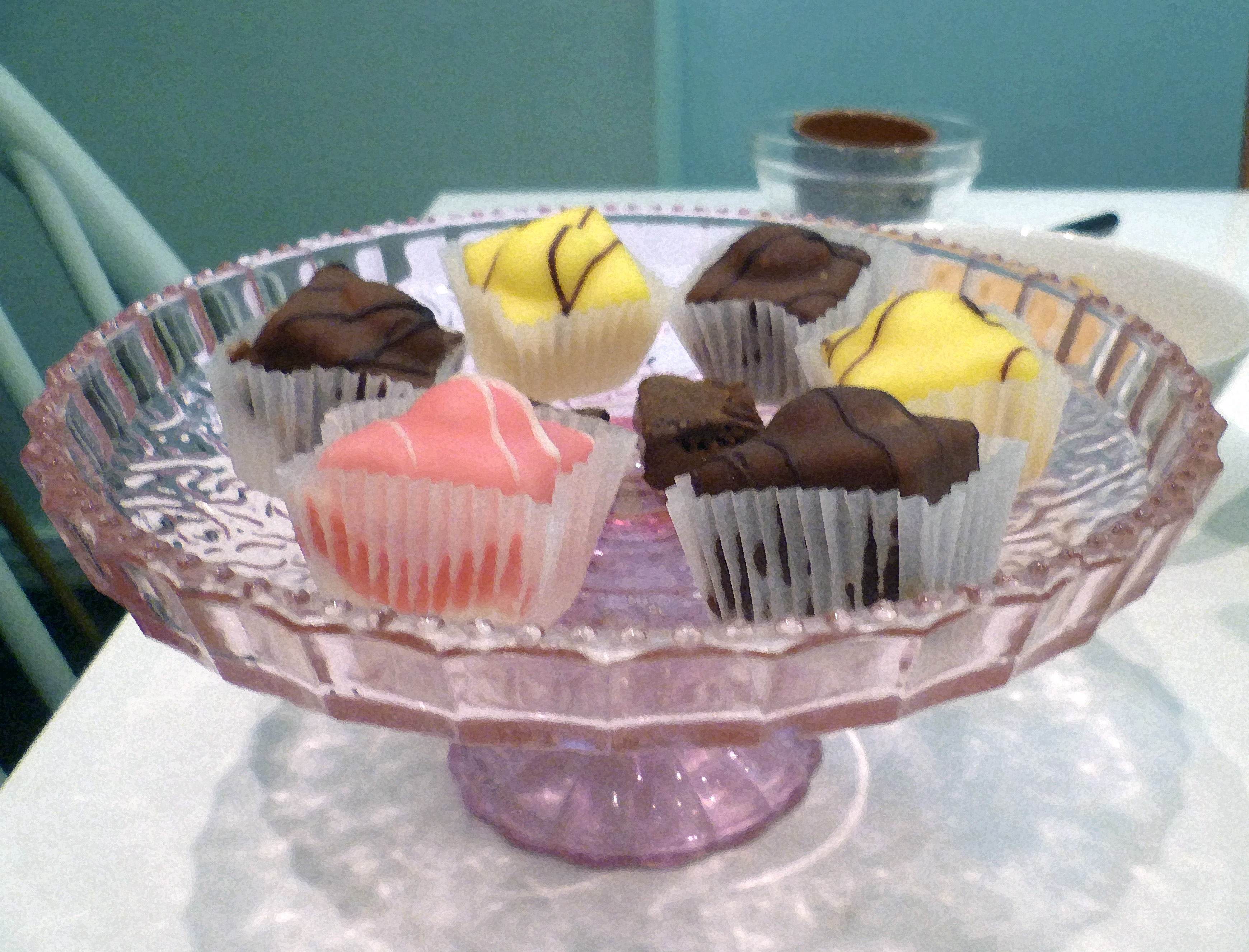
Fabulous French Fancies and a couple of chocolate brownies – also good for stuffing your face!

Honey, lavender and geranium clay beauty mask

How do beauty masks combine aromatherapy and beekeeping? Swop strawberry and cream for honey and add a drop or two of essential oils, and you have a beauty mask fit for an aromatherapy beekeeper. When I got home, I tried this combination:

  • 1/2 tsp rhassoul clay
  • 1/2 tsp white clay
  • 1 tsp honey
  • 1 drop lavender essential oil
  • 1 drop geranium essential oil

Honey has antiseptic properties and is nourishing and softening to skin. I was lucky to use the honey from my hive, which smelt lovely in this recipe. (Thanks to Queen Rosemary and her hardworking ladies!) Lavender and geranium essential oils blended in equal quantities have a wonderfully balancing action on skin sebum, making the mask suitable for all skin types.

After patch testing on the back of my hand, I made a second application for my face and patted onto cleansed, dry skin, leaving for 10 minutes. I rinsed off with warm water, and went to bed with my skin feeling amazingly soft, smooth and rejuvenated. I’ll be surprised if my bees recognise me when we open our hives for the shook swarm next week!

Disappearing bees – countdown to catastrophe or one to watch?

The familiar sight of the European honeybee (Apis Mellifera) pollinating flowers in spring and summer. Image © Shutterstock

‘You would have to be living on Mars for the past few years not to be aware of the bee problem,’ said Dr Stuart Roberts of Reading University’s Centre of Agri-Environmental Research, speaking at the Federation of Middlesex Beekeepers Association’s annual Beekeepers Day on Saturday 25 February.

Like many new beekeepers, I had heard about the ‘bee problem’ and started beekeeping to find out why this was happening and what I could do to help. So I was excited to find out that Dr Roberts would be giving a talk on ‘The decline of insect pollinators’ at our Beekeepers Day. His presentation looked at whether bees are disappearing, what are the drivers of their decline, why does it matter, and what can be done about it.

But first, what do we already think that we know about the bees disappearing?

Bee decline – a widely held belief?

‘If the bee disappeared off the surface of the globe then man would only have four years of life left. No more bees, no more pollination, no more plants, no more animals, no more man.’

This quote, attributed to Albert Einstein, may have catapulted the plight of the bee into the public imagination. However, there is no real evidence that Einstein said this – the earliest written record is from a group of French beekeepers in 1992 – and also the statement is not entirely true. While life on Earth would be considerably less pleasant without bees, it is unlikely that we would vanish with them.

Yet almost every week there seems to be another headline about bee disaster and imminent catastrophe – from varroa mites and chemical pesticides to giant Asian hornets and zombie parasites, the poor old bee isn’t having much luck. The media has helped to raise public awareness about the bee, but also may have promoted a few bee myths.

Dr Roberts’ talk sorted fact from fiction with evidence-based research from Reading University, and left me feeling encouraged that we can all do something to help both the honeybee and other bee species.

Are the bees disappearing? A lightning overview

Bumble bee feeding on burdock flowers. I love bumbles! Image © Shutterstock

To discover if the decline of bees is real or imagined, we need to ask the question: ‘Does it affect all bees everywhere?’ said Dr Roberts. While in the UK we have only one species of honeybee (Apis mellifera), which the media often refers to as ‘the bee’, we also have around 25 bumble bee species and around 240 other bee species such as solitary bees. Worldwide there are about 9 species of honeybees, 240 species of bumble bees and 19,300 other bee species of incredible variety. So counting numbers of bees to determine whether all bees are in decline is a huge task.

Diversity of bee species is not the only challenge to scientists. Data also presents a problem because it is inconsistently gathered across different countries, and often widely scattered in obscure journals. The migration of colonies across vast areas for the pollination industry, such as in the US, makes it more difficult to gather reliable information about bee colonies.

Therefore, Dr Roberts and his colleagues at Reading University’s Centre of Agri-Environmental Research have spent the past four years collecting data on the numbers of honeybees, and other bee species, in the UK and the Netherlands. Their findings revealed that there has been a 23% decline in bee colonies and a 36% decline in beekeepers in central Europe since 1985. The diversity of bee species is also now in decline, although, as Dr Roberts commented, it is worth noting that some species of bees are simply rare! Unsurprisingly, this research suggested parallels in the decline of insect pollinators and the plants that they pollinate in both the UK and the Netherlands.

So: ‘Are bees declining?’ Yes
But also: ‘Does it effect all bees?’ Yes.
And: ‘Does it occur everywhere?’ Yes.

This led to the next question.

What are the drivers of decline?

For each theory on why the bees are disappearing, there is an outlandish suggestion, said Dr Roberts. Some of these are merely fanciful from car exhausts and electro-magnetic fields, ‘For which there is not enough evidence’, to mobile phones, ‘Responsible for every evil on the planet’. Then there are theories that are just bonkers from Osama Bin Laden, ‘At least now testable’, to the Rapture, ‘Difficult to test’.

Unfortunately, the most likely driver of decline is an unlikely driver of news headlines around the world. The cause of the decline of pollinating insects is multifactorial, Dr Roberts explained: ‘Science would be easier, but a lot less interesting if everything could be hung upon a single cause’.

A variety of stressors are affecting bees:

  • Monoculture
  • Exposure to agricultural chemicals
  • Long-distance migration

So basically:

  • Boring diet
  • Exposure to pollution
  • Too much travel

All things that make humans feel stressed and unwell too!

Combine the bee’s stressed and weakened immune system with varroa, the small hive beetle and a pathogenic cocktail of other bacteria, viruses and parasites – and you can see why there might be a problem.

However, there is one headline on which most experts do agree.

Habitat loss is a major cause of bee decline

Perhaps the bees are all hiding in flowers. Image © Shutterstock

There is already a concern among some London beekeepers that there may not be enough plants to support the increasing numbers of urban hives. While you might imagine that this could be a potential problem for city bees, who face the same problems as people living in densely populated areas, unfortunately their country cousins aren’t doing much better. Reading University is continuing to look at the synergy between insect pollinator decline and the decline of their natural habitat, but other studies show that this is very likely to be a significant driver of decline.

Climate change is currently not too much of a threat, said Dr Roberts, although it has the potential to be a clear driver for the future.

Who cares if bees disappear?

Beekeepers and farmers do. Häagen-Dazs is also quite worried about the bees disappearing, apparently, because many ingredients of their flavoured ice cream are dependent on insect pollination. Wider society should also be worried: the value of insect pollinators to UK agriculture is £402m per annum; of which honeybees contribute £38m per annum. Everyone who enjoys eating apples should care, because they are solely pollinated by bees.

What’s the alternative to insect pollination? There isn’t an alternative. Dr Roberts sent a group of students from Reading University armed with paint brushes on a mission to find out how long it would take for people to pollinate plants. The results were painstaking and confirmed that the value of protecting insect pollination is high.

Human pollination vs insect pollinators. The bee is a much more effective pollinator than us! Image © Shutterstock

This is similar to a story that I have heard before. Last year, John Chapple of Ealing and District Beekeepers Association and beekeeper to the queen’s hives at Buckingham Palace, told us about his visit to Oman, as part of a group of beekeepers, to help reintroduce the honeybee to the country. One of Oman’s major exports is dependent on bee pollination – dates! The Omani government is now investing in a state-funded national beekeeping programme, after finding out to their cost that human labour to pollinate date palms is not a viable option.

What can we do to help the bees?

‘Is it a catastrophe? Not yet, but it could be,’ said Dr Roberts. Fortunately, we may have become aware of the bee problem in time to stop the honeybee, and other bees, disappearing from the world, and with them perhaps strawberries, watermelons, tangerines…

Dr Roberts said that governments could help bees by adopting agri-environmental policies, promoting conservation action and continuing to raise public awareness about the bee problem. He stressed the need for monitoring programmes, investment in sound science that is evidence-based, and consistent data that is made readily available.

While government strategies may have the greatest impact on the decline of insect pollinators, applying individual measures will maximise the effect. This means that we can all help the bees, as Dr Roberts suggests:

  • Bees need gardeners – plant bee-friendly plants in your garden and make sure that there are enough flowers for bees to forage from early spring to autumn.
  • Solitary bees need keeping too – put up a ‘bee hotel’ to make a home for other bee species in your garden.

Other ways to help bees include telling your family and friends how they can help too, taking part in a sponsor-a-hive scheme, and fundraising for bee charities by organising a cake sale or a book swop!

So it seems the disappearing bee is one to watch rather than a countdown to catastrophe. Dr Roberts gave me a clearer picture of why bees are starting to decline and also what we can do to prevent it.

Miss Apis Mellifera isn't gone yet and hopefully we can stop her from flying away altogether. Image © Shutterstock

Parallel declines in insect pollinators and insect-pollinated plants

Dr Roberts very kindly sent me the paper on which his talk was based, ‘Parallel Declines in Pollinators and Insect-Pollinated Plants in Britain and the Netherlands‘ by JC Biesmeijer, SPM Roberts, M Reemer et al. The abstract below describes the probable link between the decline of insect pollinators and the loss of habitat and insect-pollinated plants:

‘Despite widespread concern about declines in pollination services, little is known about the patterns of change in most pollinator assemblages. By studying bee and hoverfly assemblages in Britain and the Netherlands, we found evidence of declines (pre- versus post-1980) in local bee diversity in both countries; however, divergent trends were observed in hoverflies. Depending on the assemblage and location, pollinator declines were most frequent in habitat and flower specialists, in univoltine species, and/or in nonmigrants. In conjunction with this evidence, outcrossing plant species that are reliant on the declining pollinators have themselves declined relative to other plant species. Taken together, these findings strongly suggest a causal connection between local extinctions of functionally linked plant and pollinator species.’
Science 21 July 2006: Vol 313 no 5785 pp 351-354 DOI: 10.1126/science.1127863

With thanks

I would like to say a special thanks to Dr Roberts for speaking at our Beekeepers Day and for sending a copy of his paper. You can find out more about Dr Stuart Roberts work on his web page at Reading University’s Centre for Agri-Environmental Research.

A few useful links

You can read more about Dr Roberts’ talk ‘The decline of insect pollinators’ on Emily’s blog and I highly recommend her post on John Chapple’s talk about the disappearing Omani bee.

Bees, Wasps & Ants Recording Society (BWARS) is the national society dedicated to studying and recording bees, wasps and ants (aculeate Hymenoptera) in Britain and Ireland, of which Dr Roberts is the chair.

The British Beekeepers Association (BBKA) is the UK’s leading organisation representing beekeepers with useful information on planting bee-friendly plants, bee hotels for your garden, and an adopt-a-bee scheme.

The Bumblebee Conservation Trust (BCCT) aims to prevent further declines, and to raise awareness of the problems bumble bees face.

Return of Monkey-Fish!

Image © Paolo Viscardi, curator at the Horniman Museum and Garden

Earlier this year I wrote a blog about a little fellow who was both endearing and a bit scary – Monkey-Fish! His arrival caused quite a stir at the Royal College of Physicians (RCP) whose staff came to fear the sound of chicken feet rasping against marble floors after hours…

The adventures of Monkey-Fish have continued and now an investigation by St George’s University and the Horniman Museum in London has finally revealed the secrets of Monkey-Fish. Dr James Moffatt, a physiology lecturer at St George’s University, explains ‘You can’t cut him open and see what’s inside because he’s a relic’ so a combination of CT scans, microscopy, X-radiography and 3D printing is used to show how ‘Herman’ was made. Known as ‘Alan’ at RCP, Monkey-Fish clearly has many aliases.

Watch how scientists reveal the secrets of Monkey-Fish here.

And you can read my original post about Monkey-Fish here.

A taste of honey at the Chelsea Physic Garden

The delicious Tangerine Dream Café at the Chelsea Physic Garden.

When the Chelsea Physic Garden held an afternoon of honey tasting, Emily and me went to represent the honey-eating skills of Ealing’s beekeepers.

The afternoon began with a talk about honey from Peter James, or Peter the Beekeeper, who traced the trail of honey from the earliest rock paintings to the modern-day industry largely in Europe, South America and Africa. Honey has been valued for food and medicine throughout history, and more recent research suggests that manuka honey is useful against the superbug, MRSA.

Peter explored the alchemy of honey production from the insect’s manipulation of a flower to the transformation of nectar into honey inside the hive. As it turns out, there is as much to say about honey as there is about bees. When honey crystallises each sugar crystal is as unique as a snowflake. ‘A fantastic array of shapes,’ commented Peter. ‘It’s a different world in every jar.’

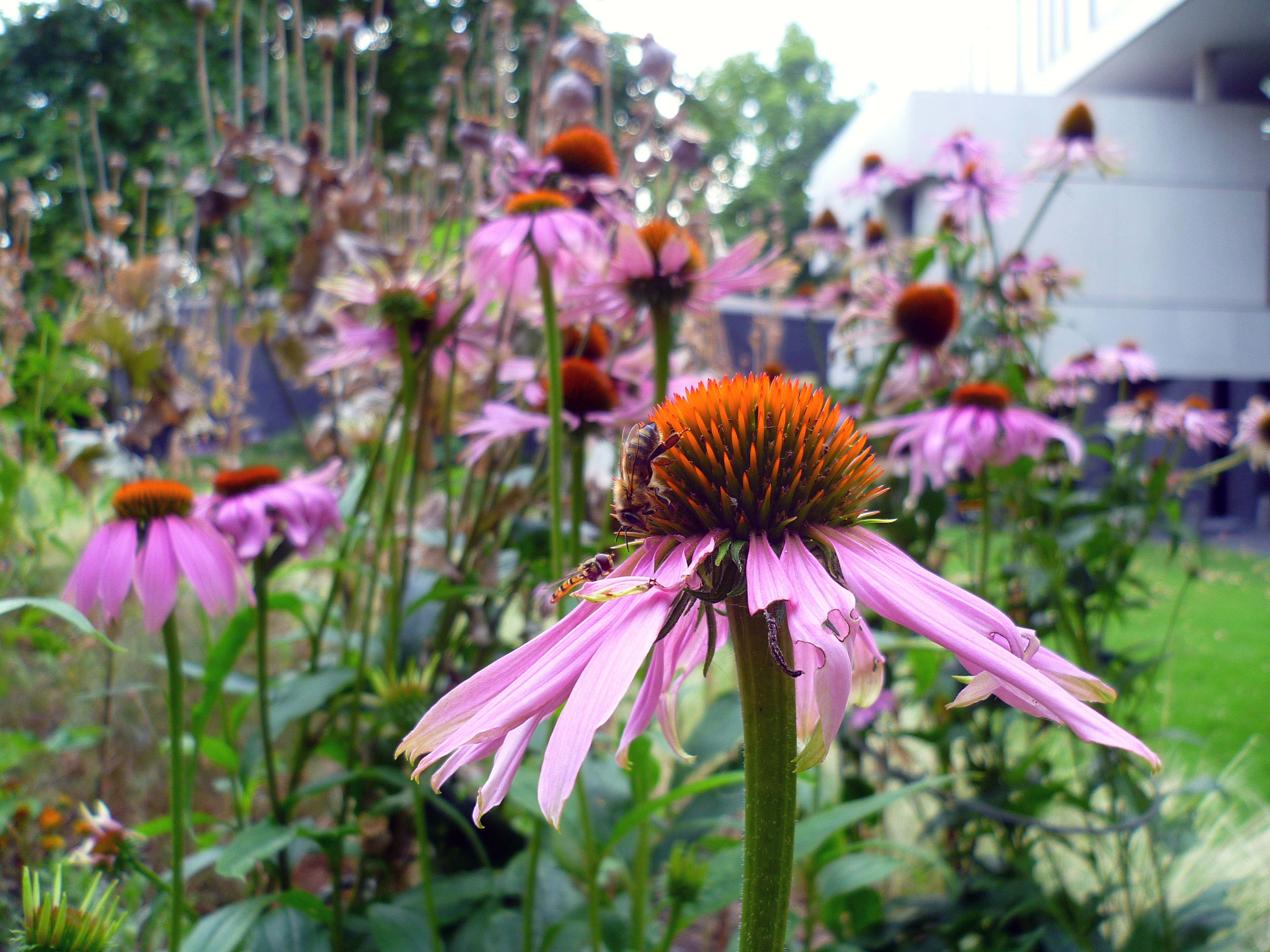
Last summer I spotted this honeybee foraging with a hoverfly on echinacea in the RCP medicinal garden. She was moving very slowly and seemed to be at the end of her lifespan.

We paused to stop at a slide of a honeybee foraging on a flower. ‘Look closer and you’ll see that her wings are frayed and falling apart,’ said Peter. Honeybees have limited flying miles and spend them carrying nectar and pollen back to the hive. ‘She will work, work, work until she drops down dead,’ said Peter dramatically.

Bees also use their wings to fan the nectar inside cells to evaporate its water content. When the water level is low enough the newly made honey is capped off by the bees and ready for beekeepers to harvest. The water viscosity of honey must be 20% or less because honey is hydroscopic, meaning that it attracts water. If you leave the lid off a jar of honey it will draw water from the air, and honey with high water viscosity could ferment. ‘That’s how mead was discovered, someone left the lid off the jar,’ mused Peter. Did bees introduce us to alcohol too? It’s a nice thought. Peter passed around a refractor with a drop of honey so that we could all look at the viscosity.

Then it was time to taste the honey.

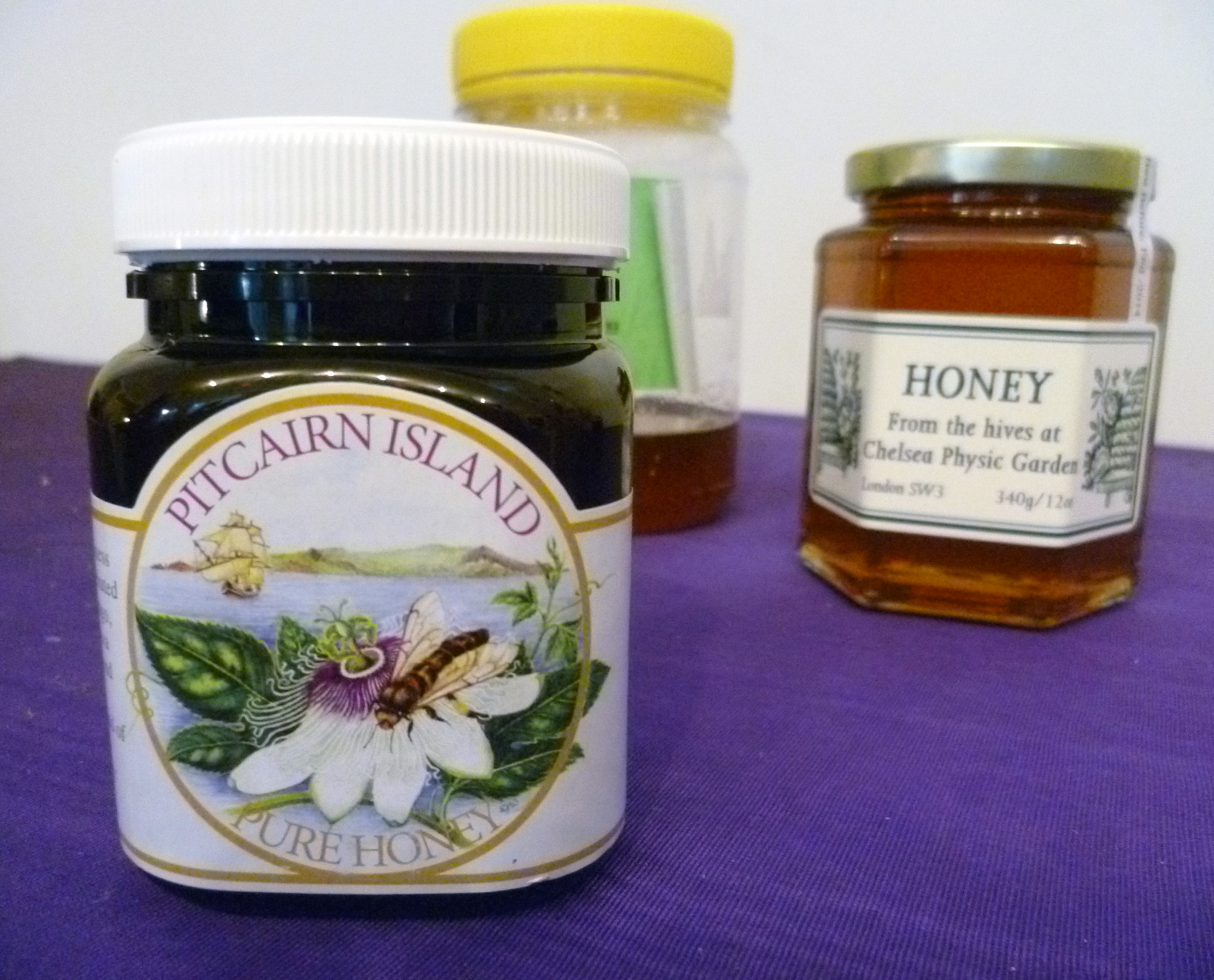
'Mutiny on the Bounty' honey from the Pitcairn Islands tasted dark and interesting.

The first honey pot was a delicate acacia the colour of white gold and elegantly floral. Peter asked us to describe our taste experience and it was interesting how much this varied from ‘like flowers’ to ‘woody’, and even ‘Inoffensive, it didn’t taste of honey’.

Next we tried a honey harvested from the lavender fields of France. It smelt and tasted like lavender, but it was also buttery and mellow with citrusy notes.

Two honeys from the Chelsea Physic Garden crop showed what a difference a season makes: the spring honey was full of mint and the summer honey was bursting with ripe fruit. Chelsea’s bees have a rich diet thanks to the botanical garden’s trees and flowers.

My favourite was ‘Mutiny on the Bounty’ honey from the Pitcairn Islands, which was dark in colour and complex in flavour. Its taste created a vivid image of tropical rainforests followed by layers of sweet sensations from woody, minty, caramel and toffee.

Last but not least, Peter let us sample a tiny jar of South American honey foraged from Yucatan trees. It was almost black and treacly with a strong exotic flavour a bit like rum. Someone said ‘aggressive’.

Home-made honey cake drizzled in honey with crème fraîche.

The day was getting on and usually by three o’clock on a Saturday Ealing beekeepers are full of tea and cake. Emily and me were starting to feel a bit fidgety, but luckily Peter must have known we were coming because he had arranged a great spread of tea and honey cake with crème fraîche.

It was an afternoon well spent and though the first event of its kind, Peter said the Chelsea Physic Garden was planning to hold more honey tastings. All that honey and cake had warmed-up our appetites, so Emily and me rushed off to the garden’s Tangerine Dream Café to enjoy a spinach and cheese tart with lentil, olive and pomegranate salad.

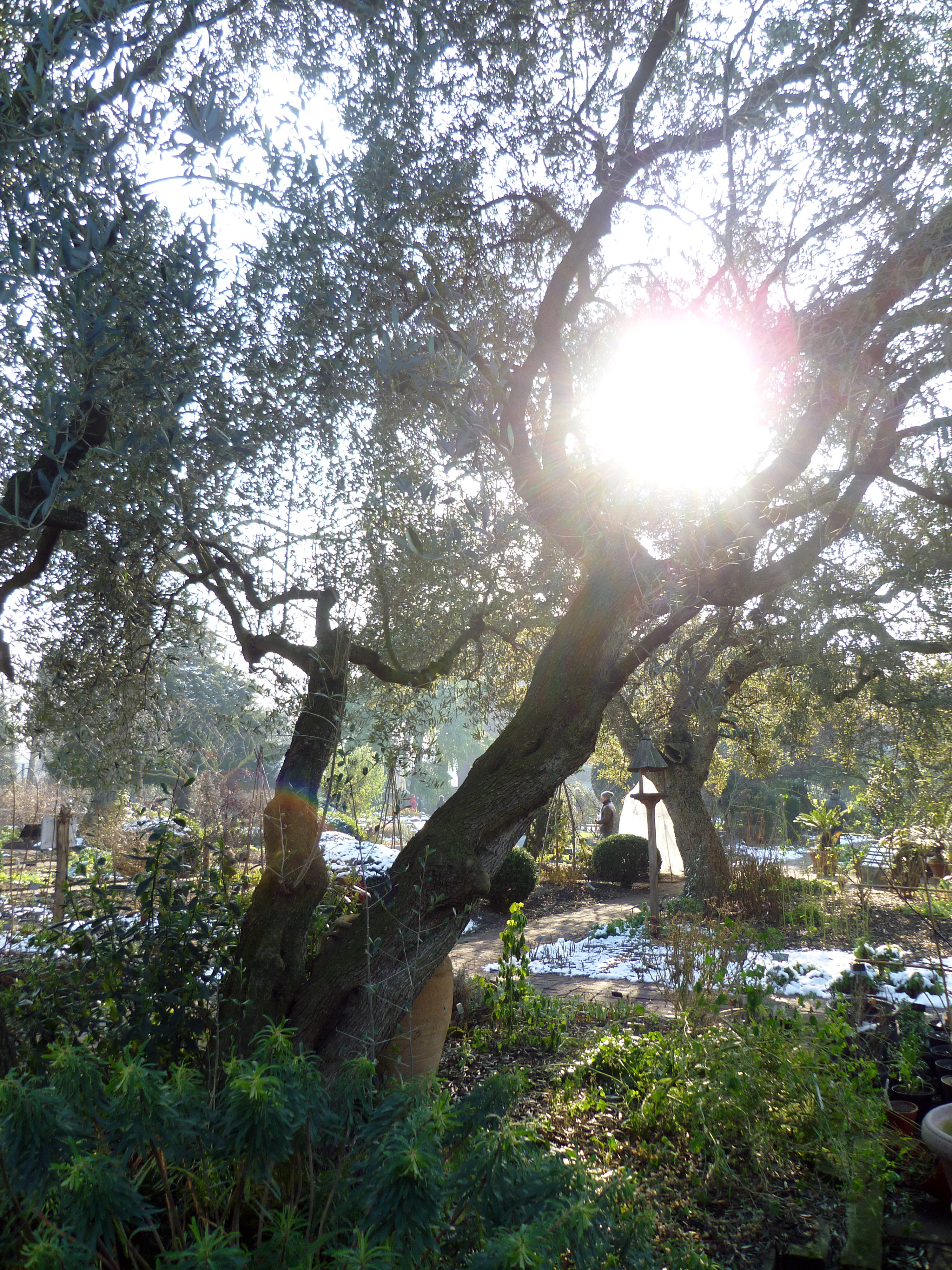
The Chelsea Physic Garden is a great place to visit and even in winter there are interesting things to see, like these four trees in a row…

A tree full of grapefruit. It smelt lovely.

A tree made of cork. It felt spongy and warm.

And late afternoon sunshine melting snow from branches.

Last year I wrote a blog on: ‘How to extract honey‘, and you can read more about our honey exploits in ‘Hunny time‘ and ‘Bringing home the honey‘ on Emily’s blog.

Perfume alchemy for Valentine’s Day

I have loved making fragrances ever since my mother introduced me to the magical world of perfume. One summer she took us to visit a perfumery in Grasse, France, the birthplace of the world’s perfume industry. We took a bus from Cannes and had a long, bumpy ride up the steep hills of southern France. As we got closer the air became thick with perfume and wonderful aromas flew in through the bus windows.

The perfumers showed us the secrets of their trade, and my mum remembers that I was amazed how many petals were needed to make one bottle of perfume. I was transfixed by the whole process. It was alchemy.

I spent every penny in my purse to buy four tiny vials of the most exquisite fragrances that I have ever smelt. The perfumes from Grasse sat on my bedroom windowsill for years, never worn but occasionally opened to enjoy the heavenly scents. Over the years the aromas faded, until one day I returned home from university to find that the precious bottles held only coloured water.

The visit to Grasse sparked an obsession with smell that eventually led to aromatherapy. Floral and citrus oils are my favourite fragrances, although I also love the woods and resins.

Valentine’s Day is full of romance and so also nostalgia. For this Valentine’s I have tried to recreate the fresh, sweet smells of Grasse, which I remember were as beautiful as they were simple.

There are lots of complicated perfume recipes available using various base mixes and perfumer’s alcohol. I prefer to keep things easy. The recipe below uses vodka, which can be substituted for distilled water or flower water (orange or rose) to make an eau de cologne. I chose three of my favourite oils – rose, jasmine and neroli – for a rich floral base, and enhanced with leafy petitgrain and uplifting, citrusy grapefruit.

You will need:

  • 60ml vodka (80% proof)
  • 9 drops rose absolute
  • 2 drops jasmine absolute
  • 4 drops neroli essential oil
  • 2 drops grapefruit essential oil
  • 4 drops petitgrain essential oil

Pour the vodka into a bottle with a spray pump top and add the absolutes and essential oils drop by drop. Fix the bottle top and shake well. The oils will make the vodka cloudy, which is normal. Spray the perfume on neck and wrists, and enjoy.

The fragrance is how I like my perfumes – subtle. If you prefer, increase the strength of the aroma by doubling the amount of drops.

Store the perfume out of direct sunlight or heat and it will keep for a long time or as quickly as you use it!

You can read more about the essentials oils used here: rose, jasmine, neroli, grapefruit and petitgrain.

I buy my essential oils from Neal’s Yard Remedies, where I was trained as an aromatherapist. They also have lots of smelly ideas for Valentine’s Day!

A story in which there is snow, bees and snowdrops

The snow queen visited London this weekend and our plans were changed from going to the Chelsea Physic Garden snowdrop theatre to exploring my new home, Northolt Village, under spell of winter.

Hans Christian Andersen’s The Snow Queen was my favourite fairytale – as a child I would breathe a hole on frosted windows to look outside for her snow bees – so I couldn’t resist going to the apiary to see if our bees were enjoying the snow too.

Here are a few of my favourite photos from the day in a short video story.

My first video movie created in iMovie! I hope that you enjoyed it.

If you are interested, the Chelsea Physic Garden is running snowdrop days until 12 February 2012.